May’s Wild Edible: Ramps

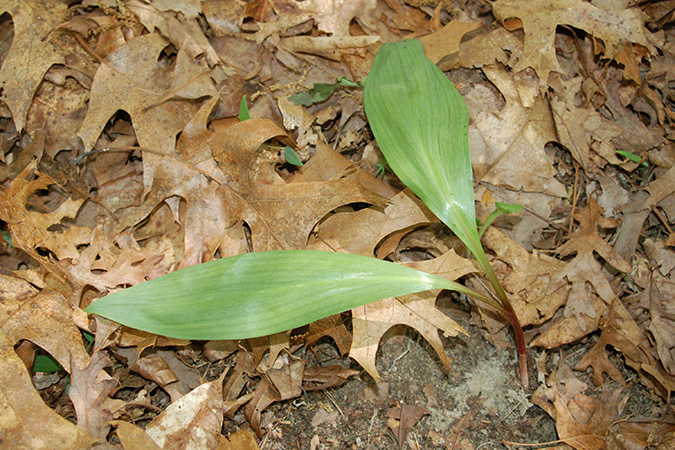
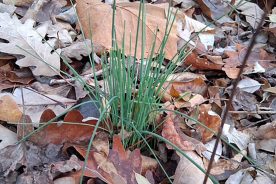
These ramps came from a Monroe County, West Virginia mountain. I won’t be more specific.

Mention the topic of eating ramps to a gathering of Blue Ridge Mountain foragers, and you’re likely hear a wide variety of answers. Many of these folks will respond rapturously, pontificating on the bliss of consuming a “mess” raw and drizzled with bacon drippings. Others will recoil in horror at the mere mention of tasting an uncooked sprig of Allium tricoccum, perhaps the most pungent member of the onion family, claiming that their breath and even their pores will be reeking of ramps for days afterwards.

I fall somewhere in the middle of this spectrum, unable to tolerate “ramsons” fresh from the ground but recognizing that they can add enticing flavor to any egg, soup, or potato dish. Honestly, I hope to goodness I’m never asked to eat a raw ramp and its garlic-on-steroids taste again.
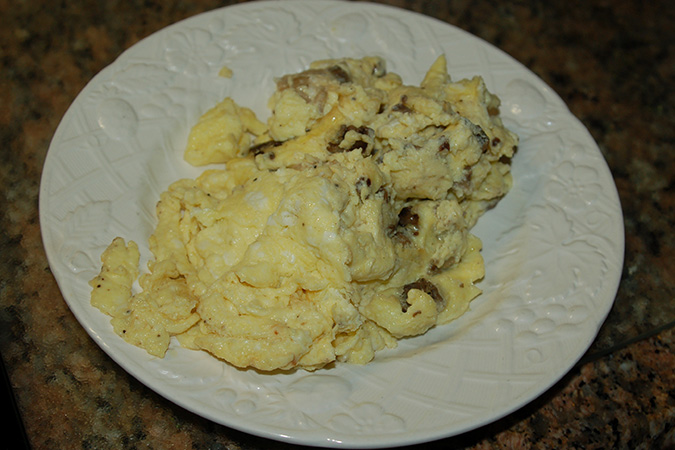
Scrambled eggs with morels and ramps. The author recommends going easy on the ramps addition.

My favorite ramp patch lies above 3,000 feet at the top of a Monroe County, West Virginia mountain. Come the first week of May or so, these wild leeks (usually with two or three broad leaves, three to five inches long) will blanket much of a hollow where black and yellow morels and brown cup mushrooms also thrive. The cove is a forager’s mecca for sure, and forgive me that I’m not more specific about its location. So seek out ramps this spring; how and if you cook them is definitely up to you.


Bruce and Elaine Ingram will profile a different wild edible every month. For more information on their book Living the Locavore Lifestyle, contact them at bruceingramoutdoors@gmail.com

You Might Also Like:

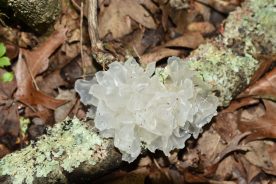
White jelly snow fungus growing in the author’s Botetourt County, Virginia woodlot.

May’s Wild Edible: White Jelly Snow Fungus

“Pass the fungus,” is not common dinnertime conversation in the Blue Ridge Mountains region, but that’s because folks perhaps have not heard of the white jelly snow fungus.
Owner Jennifer Hughes is a constant and comforting presence at Elizabethton’s City Market.

Connecting a Community Through Chicken Salad and Chocolate Pie

City Market in East Tennessee has always stepped up to take care of its neighbors.
Wild garlic growing in Fayette County, West Virginia.

April’s Wild Edible: Wild Garlic

Fayette County, West Virginia’s Mitchell Dech is one of my foraging mentors, and when he wants me to try an edible new to me … I’m ready to learn about it.
The Giovanni is an Italian-American creation born in West Virginia.

Discovering the West Virginia Giovanni

This flavorful sandwich is a product of the rich Italian heritage of the Mountain State.
A May apple in bloom in Southwest Virginia.

March’s Wild Edible: May Apple

Sometime this month in the Blue Ridge Mountains, one of these highlands’ signature spring plants will ease from the soil … the May apple (Podophyllum peltatum).
e1b70596-05c8-11f1-92e0-1248ae80e59d-3-2026rueanemone--credit-Joe-Cook

March’s Mountain Wildflower: Rue Anemone

A member of the buttercup family and found in the open woodlands, rue anemone (Thalictrum thalictroides) has long, thin stems that tremble in the slightest of winds—prompting its other common name, windflower.
Pokeweed growing in Floyd County, Virginia.

January’s Wild Edible: Pokeweed

Pokeweed is one of the wild plants that is most associated with the Blue Ridge Region.
The pawpaw version of Ale-8-One debuted in the summer of 2025, in a limited edition.

Ale-8-One: Welcome to ‘Tropical’ Kentucky

This 124-year-old soft drink company continues to innovate and thrive.
Arkansas Black apples sport an attractive reddish black color.

December’s Blue Ridge Mountain Apple Profile: Arkansas Black

Originating in the 1870s in, obviously, The Natural State, this variety is reputed to be a part of the Winesap family, which includes such esteemed members as the Black Twig, Stayman, and, of course, the Old Fashioned Winesap.
A purple-spored puffball growing in a field in Botetourt County, VA.

December’s Wild Edible: Purple-Spored Puffball

The purple-spored typically grows in this region’s fields, often appearing from October through December and into early January.

CALENDAR OF EVENTS