Skip to content


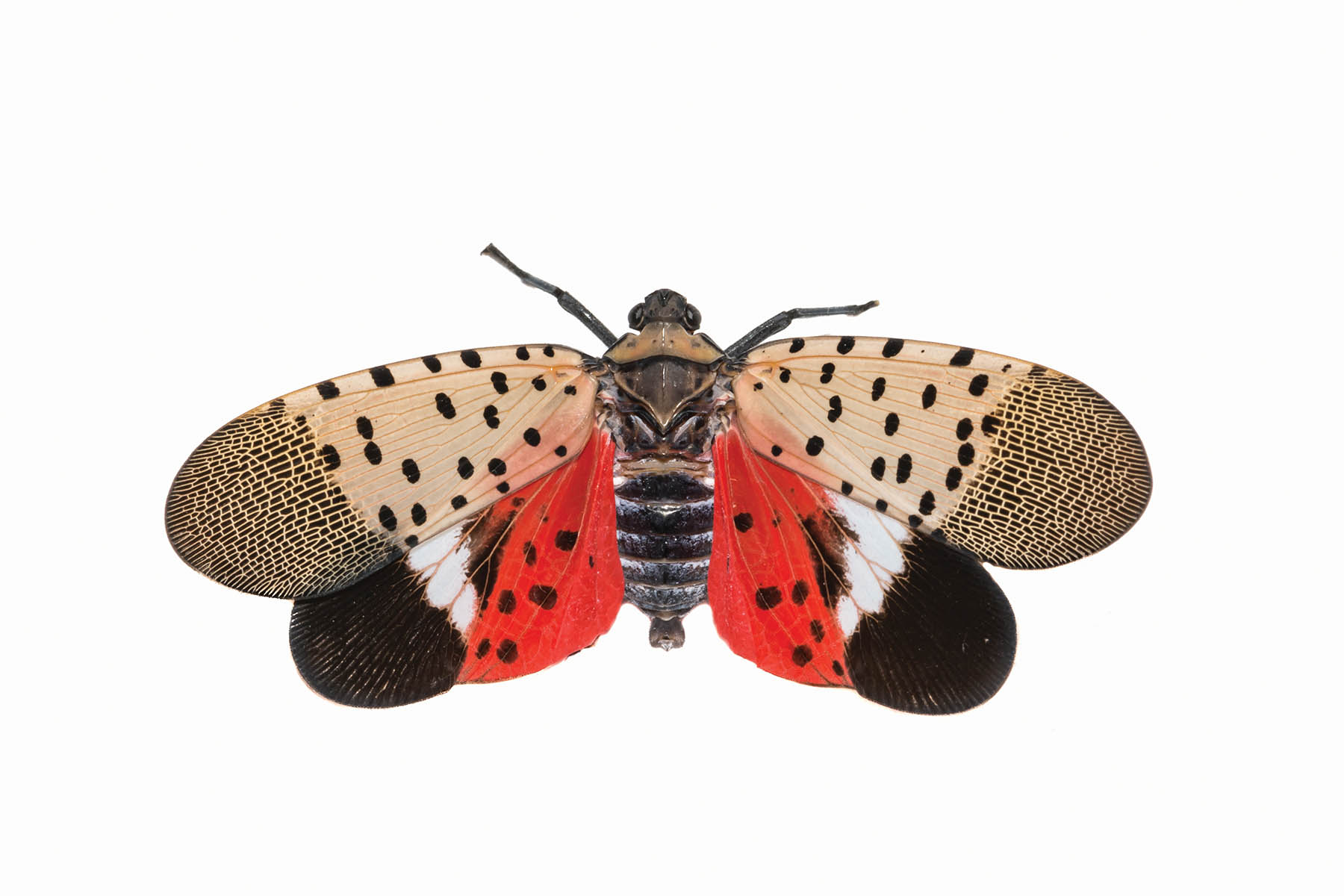
Don’t let the striking appearance of this troublesome pest fool you.
By Cat McCue
You’ve probably seen them by now, the moth-like bugs with polka dots and a distinctive flash of red. They’re quite beautiful, actually.

If you’ve visited any parks or public green spaces, you’ve probably seen signs urging you to squash, swat, stomp on, and kill them.
The Asian spotted lanternfly was first detected in the United States in 2014 in Pennsylvania. Within two weeks, a working group formed with hundreds of federal, state, and academic scientists to try to halt the voracious bug known to feed on many agricultural crops and to be especially devastating to vineyards. It is now found in 20 states, including most of those in the Blue Ridge region.
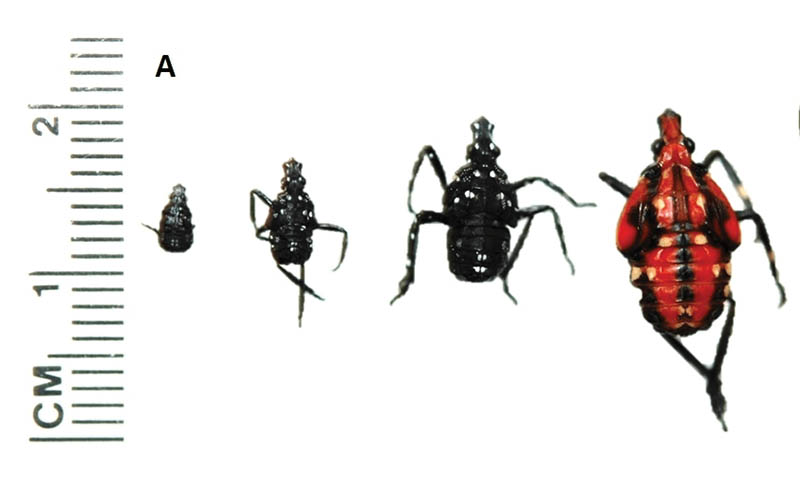
The “see it, kill it” public education campaign is just one defense. In some areas, officials are trying to aggressively manage stands of tree of heaven (Ailanthus altissima)—a lanternfly favorite that is also an invasive species—with insecticides and cutting. Researchers at Virginia Tech are studying whether a native fungus that attacks Ailanthus will slow the lanternfly. In Tennessee and other states, dogs are trained to sniff out the egg masses which attach to cars and other objects, spreading the population.
“There is no silver bullet,” said lead researcher Julie Urban earlier this year at the annual Spotted Lanternfly Summit. “[The spotted lanternfly] is highly mobile and is constantly moving and changing hosts.” Her recent research indicates the lanternfly feeds earlier and longer in warmer climates, which could mean higher impacts on southern crops as it continues to spread this way.
The California wine sector has already been engaged in research efforts to prepare for what is likely an inevitable spread westward. “Effective management requires multiple tools targeting all its life stages…because this is a super complex pest,” Urban said.
The story above first appeared in our September/October 2026 issue.