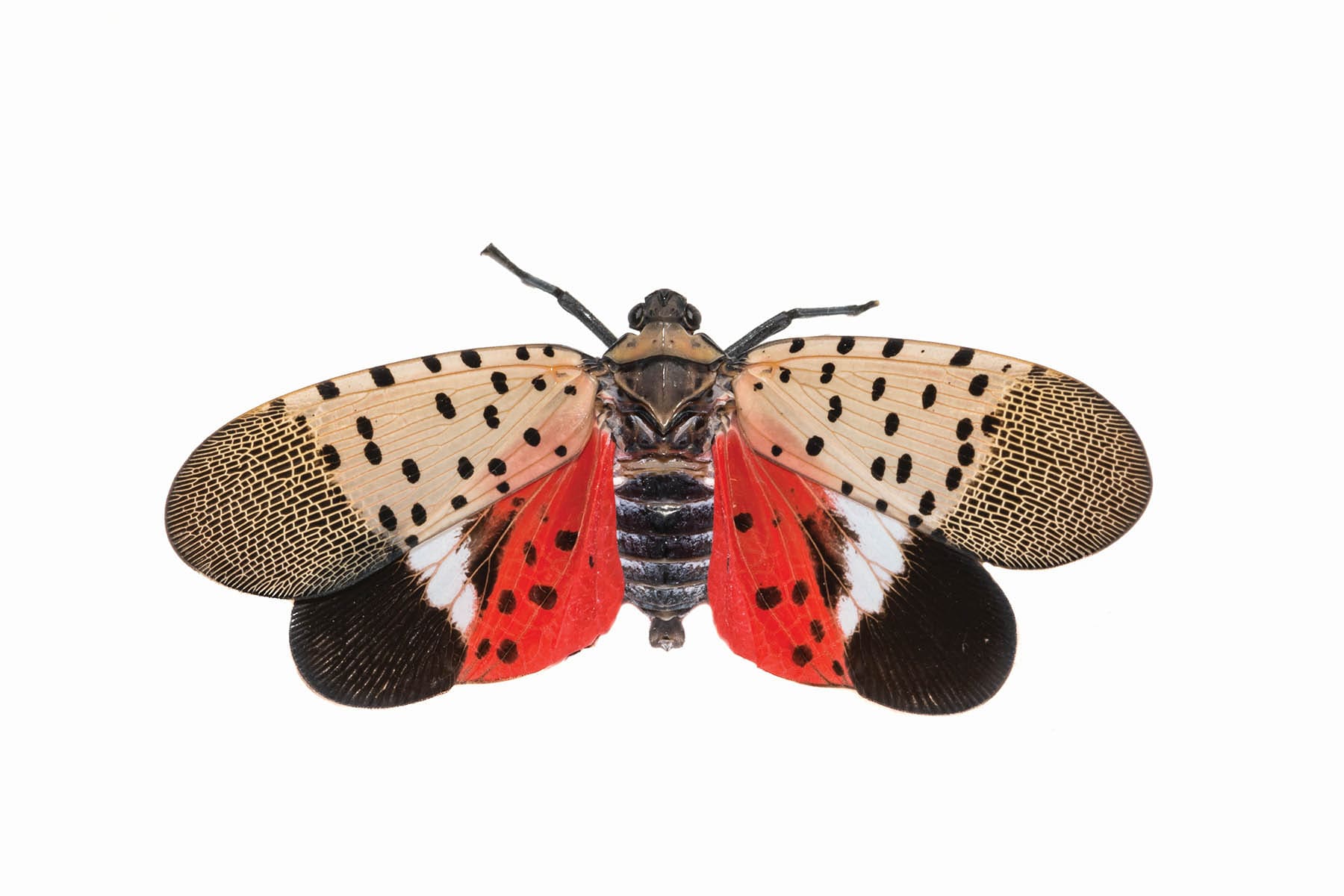
The March of the Spotted Lanternfly

Spotted Lanternfly

Don’t let the striking appearance of this troublesome pest fool you.

By Cat McCue

You’ve probably seen them by now, the moth-like bugs with polka dots and a distinctive flash of red. They’re quite beautiful, actually. 

If you’ve visited any parks or public green spaces, you’ve probably seen signs urging you to squash, swat, stomp on, and kill them.

The Asian spotted lanternfly was first detected in the United States in 2014 in Pennsylvania. Within two weeks, a working group formed with hundreds of federal, state, and academic scientists to try to halt the voracious bug known to feed on many agricultural crops and to be especially devastating to vineyards. It is now found in 20 states, including most of those in the Blue Ridge region. 
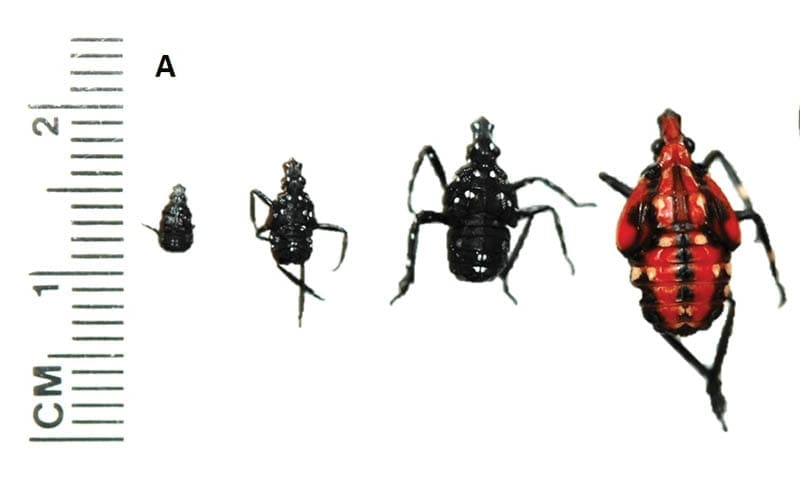
The Asian spotted lanternfly

The “see it, kill it” public education campaign is just one defense. In some areas, officials are trying to aggressively manage stands of tree of heaven (Ailanthus altissima)—a lanternfly favorite that is also an invasive species—with insecticides and cutting. Researchers at Virginia Tech are studying whether a native fungus that attacks Ailanthus will slow the lanternfly. In Tennessee and other states, dogs are trained to sniff out the egg masses which attach to cars and other objects, spreading the population. 

“There is no silver bullet,” said lead researcher Julie Urban earlier this year at the annual Spotted Lanternfly Summit. “[The spotted lanternfly] is highly mobile and is constantly moving and changing hosts.” Her recent research indicates the lanternfly feeds earlier and longer in warmer climates, which could mean higher impacts on southern crops as it continues to spread this way.

The California wine sector has already been engaged in research efforts to prepare for what is likely an inevitable spread westward. “Effective management requires multiple tools targeting all its life stages…because this is a super complex pest,” Urban said.


The story above first appeared in our September/October 2026 issue.

You Might Also Like:

This is a landscape photograph of the night sky with the Milky Way over rural Bryson City during summer in the Great Smoky Mountains North Carolina.

Skywatch: September/October 2026

Summer is winding down.
Coyote (Canis latrans) wandering out from the forest into the loop road on a summer late morning.

Critters Crossing! 

States across the Blue Ridge are investing in wildlife crossings to protect animals and improve roadway safety.
Eugenia Williams House. Photo courtesy of Bruce Cole

A Mystery on the River

The once-private estate of enigmatic heiress Eugenia Williams is now open to visitors. 
Virginia Creeper Trail in Damascus, photo by Town of Damascus. Photo courtesy of the Town of Damascus.

Damascus Renaissance

A project to repair the Virginia Creeper Trail is spurring growth in this beloved AT town.
At Coopers Rock State Forest, new Stargazer cabins invite guests to look up through skylights and telescopes.

Even Closer to Almost Heaven

New Stargazer cabins at Coopers Rock State Forest offer a skyward escape in the mountains of West Virginia.
This is a landscape photograph of the night sky with the Milky Way over rural Bryson City during summer in the Great Smoky Mountains North Carolina.

Skywatch: July/August 2026

How many stars can you see?
©Duncan Seaman

A Mountain Tradition Turns 90 

Visitors flock to Galax, Virginia, each summer for the Old Fiddlers’ Convention, a days-long celebration of Appalachian music.
NightFlight Expedition Takes Off at Dollywood

NightFlight Expedition Takes Off at Dollywood

The new coaster is the Tennessee theme park’s largest single attraction investment to date.
Ron Messina | Courtesy of the Department of Wildlife Resources

Historic Easement Protects SWVA Land, Opens It to the Public

Lovers of wildlife, woodlands, and waters will soon have a vast area to explore in Southwest Virginia.
This is a landscape photograph of the night sky with the Milky Way over rural Bryson City during summer in the Great Smoky Mountains North Carolina.

Skywatch: May/June 2026

The two planets that, at times, dominate the early evening sky are slowly heading toward each other for a dramatic showdown in early June.