Twist of Fate

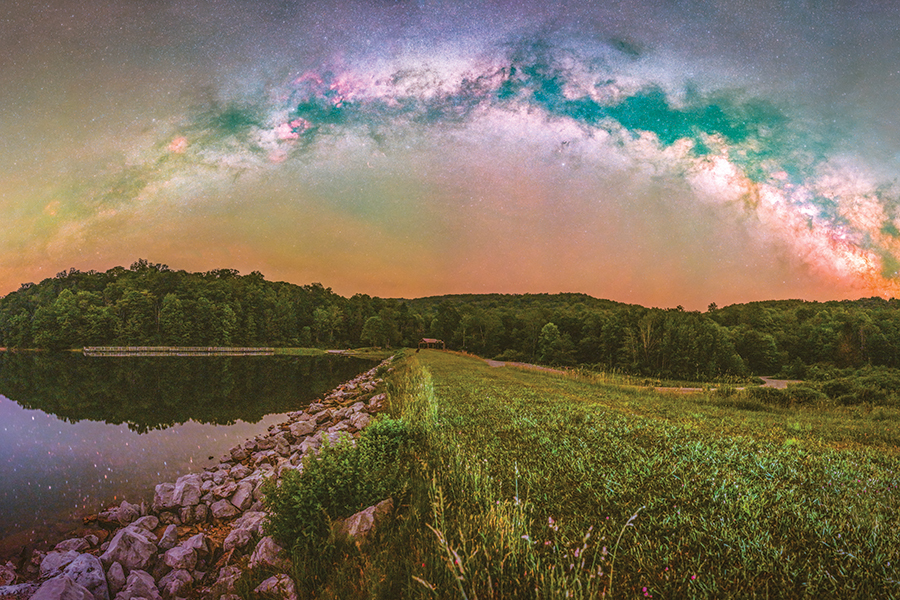
"Summit Lake is at 3,400’ in elevation and the Cranberry Glades Wilderness surround it to create a great place to shoot a springtime Milky Way panorama. North is to left, east at the center and the southern sky is on the right." —Dave Green

A surprise temporary assignment ignited a West Virginia coal miner’s passion for photographing night skies and other wonders.

Photo Above: “Summit Lake is at 3,400’ in elevation and the Cranberry Glades Wilderness surround it to create a great place to shoot a springtime Milky Way panorama. North is to left, east at the center and the southern sky is on the right.” —Dave Green
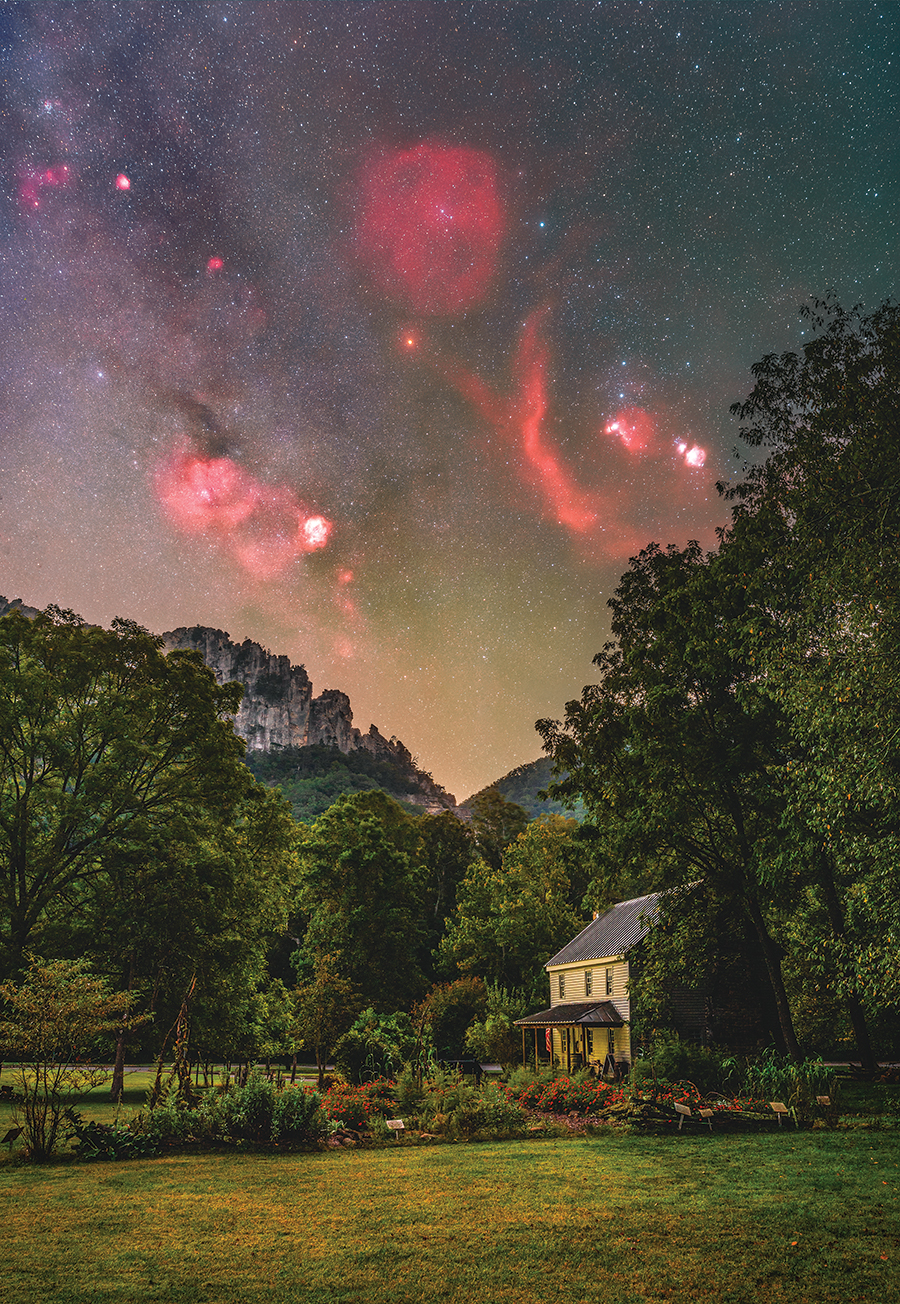
"I’d made every excuse in the world not to go out at 3 a.m., but all the ingredients for an epic landscape photo from the bottom of Seneca Rocks were there: rocky peaks, the old homestead, garden, and trees, the nebulous clouds aligning with it all." —Dave Green
“I’d made every excuse in the world not to go out at 3 a.m., but all the ingredients for an epic landscape photo from the bottom of Seneca Rocks were there: rocky peaks, the old homestead, garden, and trees, the nebulous clouds aligning with it all.” —Dave Green

Dave Green was born near the New River Gorge in Beckley, West Virginia, and grew up exploring its abundant wilderness areas. Most male family members worked for coal mines and he followed in their footsteps at age 21.

Green married, fathered two children, got promoted, was happy enough. Then an interim position introduced him to an unexpected passion.

“I was working as a mine rescue team member and safety instructor (as I still am), and when the staff videographer quit and, for some reason, my boss tells me to fill-in,” laughs Green, now 41. “Well, at that point, I couldn’t have told you how to turn a digital camera on.”

But it was his job and Green took it seriously. He read product manuals, combed online forums, watched hours of YouTube tutorials. Trial-and-error making training and safety videos brought steady improvement.

“I started out terrible, then sucked less as time went on,” says Green. Still, it didn’t take long to “realize this was something I really enjoyed.”

The epiphany led to post-work experiments with new techniques—like hiking with a shutterbug pal into the 17,371-acre Dolly Sods Wilderness to take time-elapsed photos of the night sky. The trip was novel, but capturing the smoky, galactic swirl of fluorescent colors and constellations moved him.

“It was nothing short of magical,” says Green. “I felt like a kid looking up at the stars, just overwhelmed with awe and wonder. I was hooked immediately.”
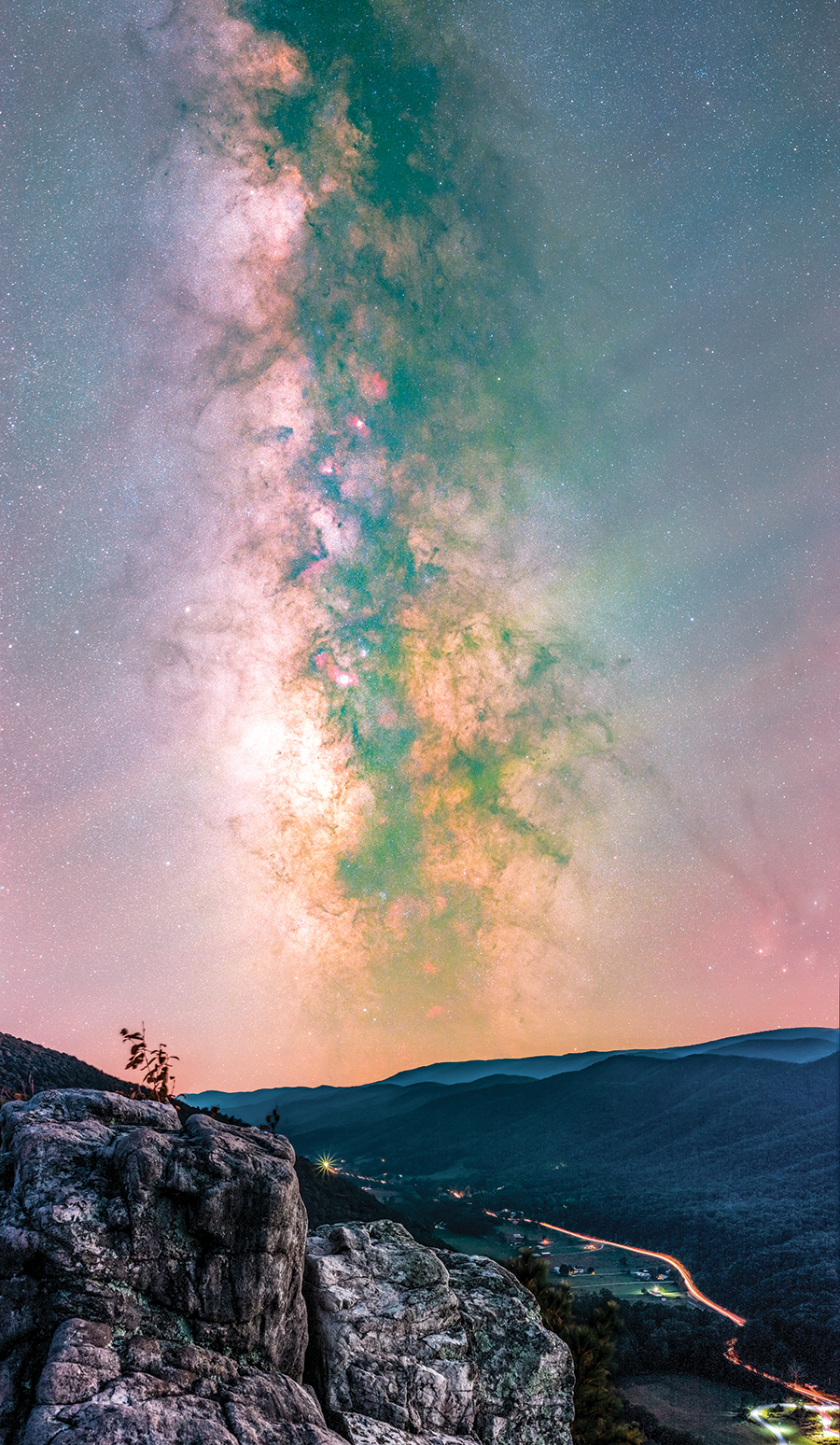
"Hiking the 2 miles to the top of Seneca Rocks with 60 pounds of camera gear is challenging, but I knew it would be a great location to shoot a tracked vertical panorama of the Milky Way. I used one of my first lenses—the trusty 50mm f1.8. It’s light. It’s fast. It’s sharp." —Dave Green
“Hiking the 2 miles to the top of Seneca Rocks with 60 pounds of camera gear is challenging, but I knew it would be a great location to shoot a tracked vertical panorama of the Milky Way. I used one of my first lenses—the trusty 50mm f1.8. It’s light. It’s fast. It’s sharp.” —Dave Green

Checking night sky maps revealed West Virginia is home to the best and most abundant viewing opportunities east of the Mississippi River. A rabbit hole of research brought theoretical know-how and heaps of new gear—like wide-angle lenses, star trackers and editing software—that fueled a spiraling obsession. Green began to keep track of astrological events and weather patterns, and plan weekends or vacation days around photos. He’d pick a natural area like Seneca Rocks, lug 50 pounds of gear up a trail, set up at an overlook, then snap photos through the night. Next came weeks of editing them into a large, composite image that showcases the startling beauty of a wild landscape beneath an incredulous blaze of stars. 

“I realized pretty quickly my photos were going to be about more than just the sky,” says Green. He aims to capture the experience of gazing up into the unfathomable expanse of the cosmos from a particular place—one that feels awe-inspiring in its own right.

Green’s skill grew with practice. When friends and family saw his work, they urged him to share it online. A dedicated website and social media pages launched in 2020 to positive reception: Requests for prints, portraits and special commissions flooded in. So too invitations to show at regional art galleries. But Green’s favorite accolade so far? NASA naming his composite of Orion rising over Green Bank Observatory its photo of the day. 

“I feel incredibly grateful for these experiences and to be able to share my love for West Virginia’s amazing nature areas with others,” says Green. “To me, my photos are a way of better appreciating the world and my place in it, and I hope that sense comes through to others.” 


The story above first appeared in our September / October 2024 issue.

You Might Also Like:

A Virginia Historical Marker stands at the entrance to Green Pastures.

Green Pastures’ picnic area was build by the Civilian Conservation Corps in the late 1930s.

Green Pastures Reborn

When it officially opened in 1940 — in the depths of the Jim Crow era — Green Pastures was likely the first U.S. Forest Service recreation area in the nation constructed for African Americans.
Chimney Tops Trail in Great Smoky Mountains National Park rewards a steep climb with exceptional mountain views.

Inset: Gatlinburg, Tennessee’s Chimneys Picnic Area sits beside the West Prong of the Little Pigeon RIver.

11 Picnics with a View

These bucket-list destinations are perfect spots to kick back, enjoy a delightful meal and take in the great outdoors.
Vernon and Toni Wright turn grains grown on their family farm into freshly distilled spirits.

Virginia Century Farm Home to New Distillery

For nearly 200 years, Vernon and Toni Wright’s family has raised corn, cattle and quarter horses at Hill High.
Spring wildflowers bloom early in the New River Gorge of West Virginia. From the photographer: “Bloodroot is one of the first to blossom, fittingly coming in around the first day of spring. The reddish sap that exudes from all parts of the plant — especially the root — when cut is what gives bloodroot its common name.”

Scenes of Spring: A Photo Essay

Our contributing photographers reveal the fresh sights and subtle joys of the season.
At Hayfields State Park in Highland County, Virginia, easy-to-moderate trails wind through quiet forests and past historic structures.

Greening the Blue Ridge Region

New Parks, Healthier Creeks, Solar Power, Protected Lands and More.
John Scrivani bags female flowers from atop a 40-plus-foot-tall chestnut.

The Good Steward

Veteran forester John Scrivani dedicated his career to restoring American chestnut trees — and helped lay the groundwork for the effort’s next generation.
The pond next to the visitor center entrance is easily accessible and a beautiful spot for a selfie or an afternoon of plein air painting.

How to Make a State Park

The opening of Virginia’s newest state park marked the culmination of a community dream carefully nurtured for more than a decade.
Daybreak at Elakala Falls in West Virginia’s Blackwater Falls State Park on a perfect winter morning.

Quiet Beauty of Mountain Winter: A Photo Essay

Our contributing photographers braved the chill to capture the calm of the cold months.
The original Academy burned in 1911.

Curios: When Lynchburg, Virginia, Was King

With the likes of Douglas Fairbanks, Duke Ellington and Louis Armstrong performing live, the little city with the highest per capita income in the U.S. was a national hotspot for entertainment.
Hendersonville, North Carolina, offers a walkable downtown.

Slow Travel in 7 States

It's perfect for the mountains!

CALENDAR OF EVENTS