Mountain Garden: Irresistable Irises

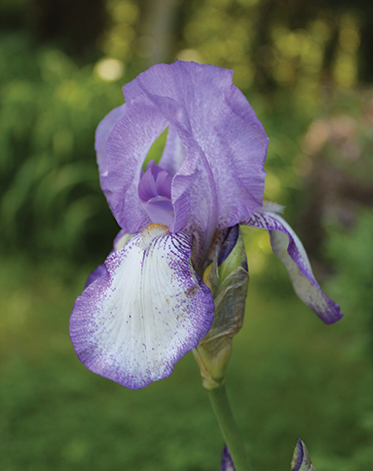
Worth the wait: A passed-along rhizome produced just leaves for several years. Then this.

The story below is an excerpt from our May/June 2014 issue. For the rest of this story and more like it subscribe today, view our digital edition or download our FREE iOS app!

“No plant more sweetly recalls the gardens of our grandmothers than the iris, or fleur-de-lis.” —Charles M. Skinner

I’m not sure either of my grandmothers were gardeners, but my mother’s father was, and my Great Aunt Mary, on my father’s side. Both of them loved irises. They were, in fact, my grandfather’s favorite. He cultivated them along a tall fence in his city backyard;  there were swaths of them in Aunt Mary’s rural Vermont flower garden. But Mr. Skinner, whose “Myths and Legends of Flowers, Trees, Fruits and Plants” appeared in 1911, was thinking of earlier iris lovers than they. Irises have been beloved by humans practically since they forswore hunting and gathering for agriculture.

From “The National Gardening Book”: “There are records of [the iris] in Babylon and in Egypt. A white variety was carried by the Mohammedan armies to plant on the graves of their soldiers. It is also written of by Dioscorides in the 6th Century. It was the Fleur de Lis of France. As early as 1576 the great botanist Carolus Clusius listed nine species from southern Europe. In 1601 he described 28 Tall Bearded varieties, noting that there is great variation among Iris grown from seed. It is because of this very fact that new varieties have increased until there is now a list of over 20,000.”
The story above is an excerpt from our May/June 2014 issue. For the rest of this story and more like it subscribe today, view our digital edition or download our FREE iOS app!

You Might Also Like:

©Ginny Neil

Singing in the Garden: Now, I Know it All

“The greatest enemy of knowledge is not ignorance; it is the illusion of knowledge.” —Stephen Hawking
f694340e-0373-11f1-ba61-1248ae80e59d-3.26_Main

Singing in the Garden: Drip! Drip! Drip!

In winter, unless there’s a blizzard roaring down the chimney and shaking the tin roof, the farm is mostly quiet.
7dbc050a-eb42-11f0-b253-1248ae80e59d-1.26_Main

Singing in the Garden: A Song for Living

In winter, unless there’s a blizzard roaring down the chimney and shaking the tin roof, the farm is mostly quiet.
6bbe4454-9f92-11f0-93fd-1248ae80e59d-11.25_Main

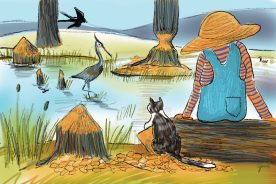
Singing in the Garden: Dam, Dam, Dam

"An adult beaver may consume … roughly the amount of bark and smaller branches obtained from a two-inch diameter tree every two days." — Jim Parkhurst, Virginia Cooperative Extension
ac749f9c-6e15-11f0-9181-1248ae80e59d-9.25

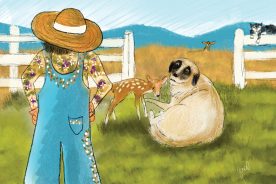
Singing in the Garden: One Small Fawn

The biggest act of rebellion ... is remaining defiantly hopeful. —Rupert Dreyfus
4960b88c-42c3-11f0-ae25-1248ae80e59d-7.25_Main_Art

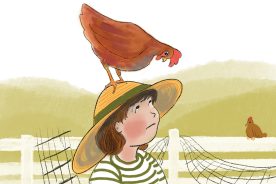
Singing in the Garden: Chasing Chickens

Why did the chicken cross the driveway? To get to the salad bar on the other side.
8822e358-206b-11f0-811e-12163087a831-5.25

Singing in the Garden: Telling the Truth

"If you tell the truth, you don't have to remember anything." ーMark Twain
88a95912-f5f8-11ef-b6a8-12163087a831-3.25_Main

Singing in the Garden: Mud

March is mud mucking, slop, sucking, streams flowing, grass growing, calves running, colts sunning, redwings singing, "Winter's gone, and spring is springing." ~Ginny Neil
b543fec4-cec4-11ef-9129-12163087a831-1113

Singing in the Garden: Beauty and Terror

"Let Everything happen to you, beauty and terror, just keep going, no feeling is final." ~Rainer Maria Rilke
7e53a66a-9afa-11ef-9413-12163087a831-112

Singing in the Garden: Tasting the Future

"There’s no such place as ‘away.’ When we throw anything away, it must go somewhere." ~Annie Leonard

CALENDAR OF EVENTS