Skip to content

“Life is like a box of chocolates. You never know what you’re gonna get.” —Forrest Gump
Images Courtesy of Ginny Neil.
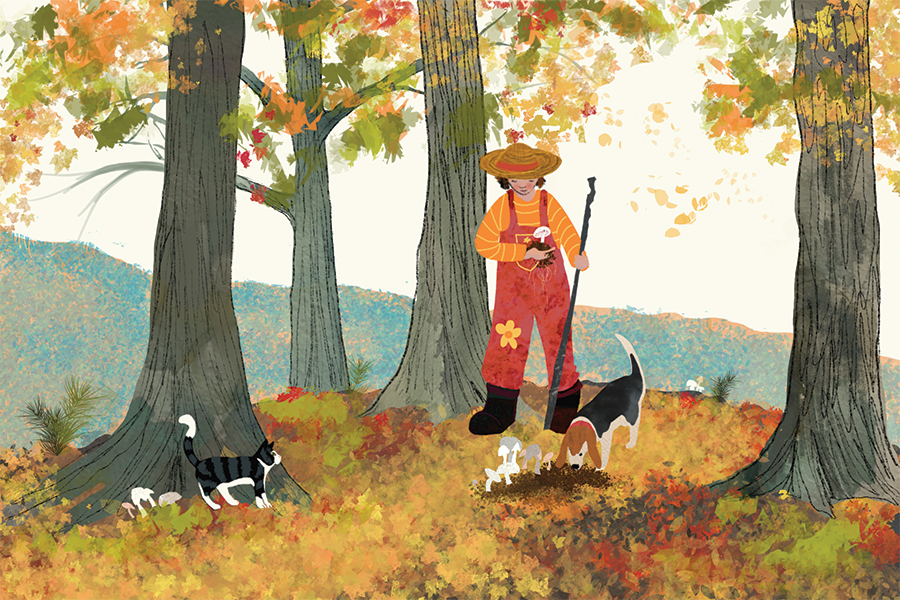
I’ve always loved trees. I would rather stroll through a forest than walk through an open field. The slant of light through limbs and leaves is a visual song. There’s some singing going on beneath my feet, as well. At least I like to imagine it as singing. Maybe it’s a completely silent, elegant exchange beyond the realm of my hearing. No one knows. But, what scientists do know is there is something called the “wood-wide web” and it links white oaks to white oaks, beeches to beeches, pines to pines, and other trees from the same families together that might not otherwise be able to interact.

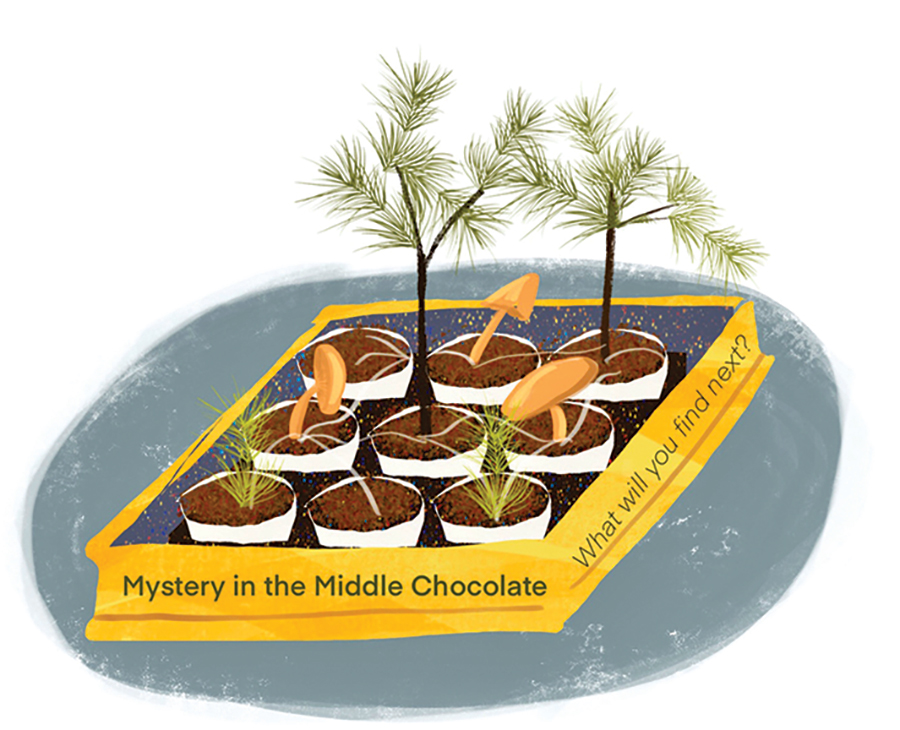
For example, the massive hickory dropping nuts on my head could also be sending sugars to its scrawny offspring across the clearing. Or, that deer snacking on baby red oak salad might be triggering the ancient red oak in front of me to scream out warnings. “Defend yourself! Pump up your tannins! Make your leaves bitter!”
How do the trees send these messages? Humans send messages through fiber optics. Trees send messages through fungal opportunists. It works like this. Trees depend on mycorrhizal fungi to live. These fibrous friends surround the roots of their “parent” trees and help them absorb more food and water. The trees show their love by sharing sugar.
Everything in the woods, both plants and animals, loves sugar as much as I love cookies. But fungi aresugar-a-holics. As they spread out looking for food, they create a fine web of fungal threads that extends far beyond their parent tree. These threads reach other trees and are responsible for all the passed messages.
Peter Wohhleben, in his book “Can You Hear the Trees Talking?” writes that some trees also communicate through smell. If we sweat, we stink. Acacia trees have a similar reaction. When a giraffe nibbles a leaf, the tree identifies its predator by the taste of the spit. The tree pumps a noxious liquid to the bite site and any acacias nearby will smell the message and prepare to defend themselves.
In my neck of the woods, if a beetle bites down on the bark of a fir, that tree also sends out a smelly alarm. Firs nearby get the message and prepare for the attack by oozing sticky sap: a perfect beetle trap. The spicy alarm smells a lot like Christmas.
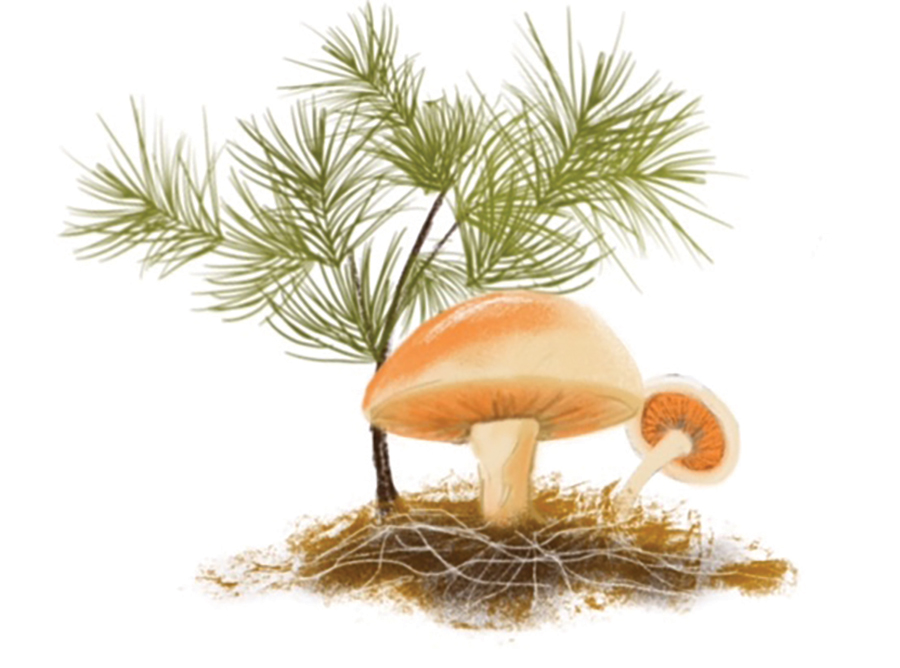
While I can sometimes sniff out the beetle traps being laid by panicky pines, I can’t see the web of threads beneath my feet that connects the trees. What I can see is mushrooms ballooning through the leaf litter. Mushrooms are the fruit of the fungi. And, mushrooms point the way.
I lean over and scrape away the upper, dry layer of forest duff. Digging down deeper brings me to the moist, rotting leaves. When I hold a handful to the light, it is tangled with tiny white strands. These are the fungal threads that carry the messages and food from tree to tree.
Like us, trees need each other to survive. A tiny oak, sprouting in a field off by itself has way less chance of growing to adulthood than an acorn rising to life in the company of other oaks. And old oaks live much longer surrounded by kin who share their sugars with the weakening one.
As we tear down more forests and replace them with concrete and asphalt, we are also tearing down networks that support the trees left behind. I am not sure how to fix this except to suggest that awareness might help create a solution. Perhaps there need to be islands and pathways of trees much like the wildlife corridors being created for bears and deer.
What I do know is that the world is a much bigger mystery than we could ever have imagined and we are right smack dab in the middle of it all.
The story above first appeared in our September / October 2023 issue.