History on the Road: The Coal Heritage Trail

West Virginia’s Coal Heritage Trail is built around unique towns, old rail lines and coal mines along with many other cultural and historical discoveries.

West Virginia’s Coal Heritage Trail is built around unique towns, old rail lines and coal mines along with many other cultural and historical discoveries.

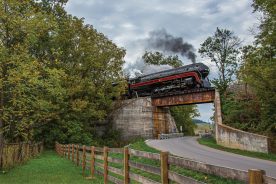
The West Virginia Coal Heritage Trail winds for nearly 200 miles, from Ansted south to Bluefield. I’ve driven it all—most of it twice—and if you want to see and touch and hear the unvarnished story of coal, there’s no better way to do it than traveling the roads that connect the Pocahontas Coalfield mining towns, following the rivers and rail tracks.

The names of the towns are music when you say them out loud:  Sophia and Helen, Mullens and Ashland, Coalwood and Pineville, Kimball and Bramwell.  Each town has its own story to tell, and each one is worth knowing. 

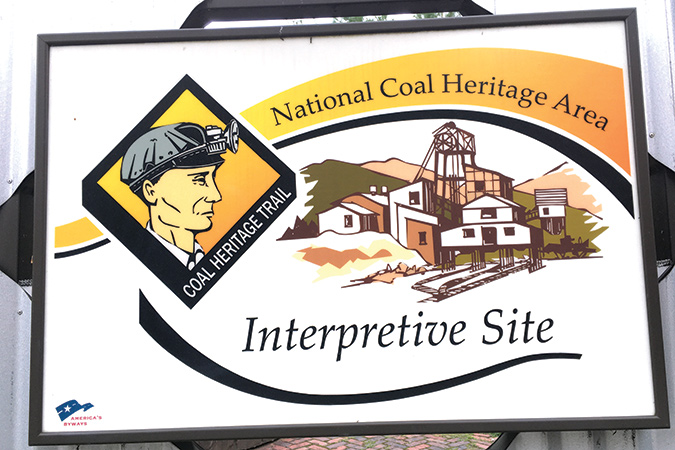
What they share, most of these towns, is a Coal Heritage Trail sign, well-used train tracks along a river, a coal miners’ memorials,  American flags, century-old downtown brick buildings, company housing in various states of repair, many churches, a Dollar Store, friendly people who’ll ask if you have kin in town. 

But don’t think that these towns are all alike.  Far from it.   Here are just a few of the things not to miss as you travel south from Fayetteville on the Coal Heritage Trail:

In New Hope, “The Phoenix City,” there’s a walking tour through a century-old downtown district and past coal baron mansions.

Itmann: a massive company store/coal office built by Italian stonemasons with elegance that shines despite its long-ago abandonment.

Pineville: its beautiful neoclassical “temple-style” courthouse sits high on a hill, cut from native stone.

Coalwood, recognized as a model coal town and setting of native son Homer Hickam’s memoir “October Sky.”

Welch: Its equally impressive courthouse was the site of Sheriff Sid Hatfield’s murder by Baldwin-Felts agents; home to American Realist painter Tom Acosta murals.

Kimball, site of the only remaining war memorial to Black WW I soldiers.

Bramwell, site of the Coal Heritage Trail Interpretive Center and museum and once considered the richest town per capita:  Fourteen millionaires lived there a century ago. 

Bluefield, where the One Thin Dime museum and House of Art are housed in the historic Ramsey School and well worth a stop.

I could go on…but better to go see for yourself.  The Coal Heritage Trail is a winding trip through towns whose fortunes followed coal and railroads—living history, honest as it gets.   


The story above first appeared in our January/ February 2022 issue.


You Might Also Like:

A Virginia Historical Marker stands at the entrance to Green Pastures.

Green Pastures’ picnic area was build by the Civilian Conservation Corps in the late 1930s.

Green Pastures Reborn

When it officially opened in 1940 — in the depths of the Jim Crow era — Green Pastures was likely the first U.S. Forest Service recreation area in the nation constructed for African Americans.
Chimney Tops Trail in Great Smoky Mountains National Park rewards a steep climb with exceptional mountain views.

Inset: Gatlinburg, Tennessee’s Chimneys Picnic Area sits beside the West Prong of the Little Pigeon RIver.

11 Picnics with a View

These bucket-list destinations are perfect spots to kick back, enjoy a delightful meal and take in the great outdoors.
At Hayfields State Park in Highland County, Virginia, easy-to-moderate trails wind through quiet forests and past historic structures.

Greening the Blue Ridge Region

New Parks, Healthier Creeks, Solar Power, Protected Lands and More.
Vernon and Toni Wright turn grains grown on their family farm into freshly distilled spirits.

Virginia Century Farm Home to New Distillery

For nearly 200 years, Vernon and Toni Wright’s family has raised corn, cattle and quarter horses at Hill High.
Spring wildflowers bloom early in the New River Gorge of West Virginia. From the photographer: “Bloodroot is one of the first to blossom, fittingly coming in around the first day of spring. The reddish sap that exudes from all parts of the plant — especially the root — when cut is what gives bloodroot its common name.”

Scenes of Spring: A Photo Essay

Our contributing photographers reveal the fresh sights and subtle joys of the season.
John Scrivani bags female flowers from atop a 40-plus-foot-tall chestnut.

The Good Steward

Veteran forester John Scrivani dedicated his career to restoring American chestnut trees — and helped lay the groundwork for the effort’s next generation.
The pond next to the visitor center entrance is easily accessible and a beautiful spot for a selfie or an afternoon of plein air painting.

How to Make a State Park

The opening of Virginia’s newest state park marked the culmination of a community dream carefully nurtured for more than a decade.
Several bridges help hikers make their way over the stream.

Kentucky’s Bad Branch Falls: A (Fairly) Tame Trek Through the Forest

You’ll know the impressive 60-foot cascade is near when the path turns rugged.
Daybreak at Elakala Falls in West Virginia’s Blackwater Falls State Park on a perfect winter morning.

Quiet Beauty of Mountain Winter: A Photo Essay

Our contributing photographers braved the chill to capture the calm of the cold months.
The original Academy burned in 1911.

Curios: When Lynchburg, Virginia, Was King

With the likes of Douglas Fairbanks, Duke Ellington and Louis Armstrong performing live, the little city with the highest per capita income in the U.S. was a national hotspot for entertainment.

CALENDAR OF EVENTS