Skip to content


Tuskegee, Alabama, claims him as its own. But Booker T. Washington was born and raised in our mountains … and what he learned here shaped him for life.
Photo Above: Booker T. Washington, 1903 (Library of Congress files).
On April 12, 1861, Confederate troops fired on Union-occupied Fort Sumter in Charleston, South Carolina, and the long-brewing Civil War was underway.

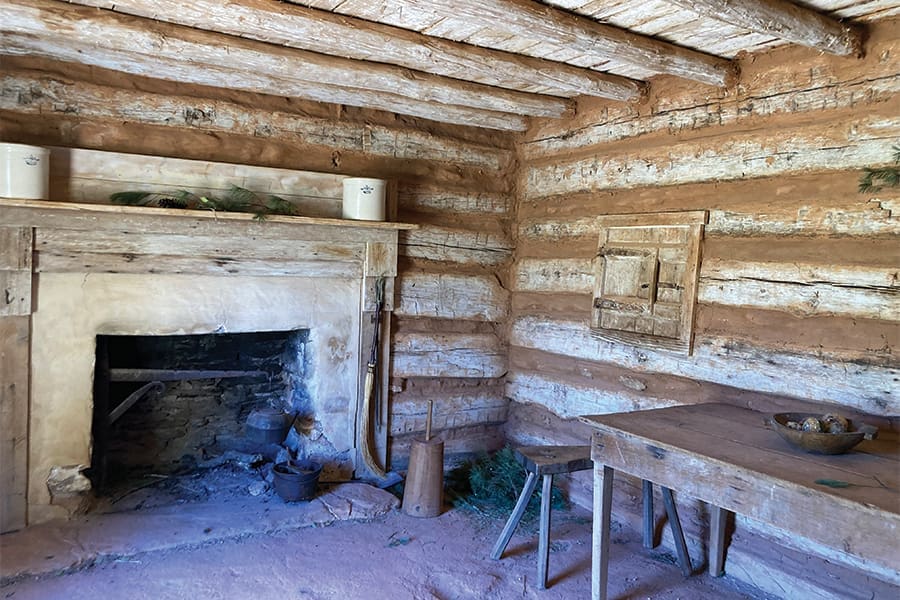
Booker T. Washington had just turned 5, part of an enslaved family living near what was then Hale’s Ford, Virginia.

© Joan Vannorsdall
That April day, maybe he was sweeping the front yard of James Burroughs’ plantation farmhouse.
Or carrying water to the tobacco field workers.
Or waving flies away from the table as the Burroughs family ate the food that Booker’s mother Jane had cooked.
Or maybe he was walking a horse loaded with sacks of corn to the mill 3 miles away, which often ended badly, with the corn sacks falling off the horse into the ditch. “The hours while waiting for some one were usually spent in crying … and by the time I got my corn ground and reached home it would be far into the night. The road was a lonely one, and often led through dense forests. I was always frightened,” Washington wrote in his autobiography, “Up from Slavery.”
Fast-forward two decades. On the Fourth of July, 1881, 25-year-old Booker T. Washington opened the Tuskegee Normal and Industrial Institute (now Tuskegee University) in “a one-room shack” adjacent to an AME Zion church. He served as its president until his death in 1915.
Fast-forward another two decades, to October 16, 1901. Booker T. Washington was eating dinner with President Theodore Roosevelt and his family — the first Black person in American history (and the last, for nearly 30 years) to do so.
You can’t not ask the obvious question: How does someone born into slavery, who spent the first nine years of his life sleeping “in and on a bundle of filthy rags laid upon the dirt floor” of a drafty log cabin, create a renowned school with a $2 million endowment? Become a frequent and trusted presidential advisor? Write two autobiographies and numerous other books in his too-brief life of 59 years?
All of this, in the depths of the Jim Crow era.

The answers, of course, aren’t simple. But start at the beginning — in the foothills of the Blue Ridge — and follow Washington’s trail west over the mountains to Malden, West Virginia, cradled in the Alleghenies. In our mountains, Booker T. Washington learned the value of education, mentorship, hard work and courage.
There’s no better place to learn the early chapters of his story than at the Booker T. Washington National Monument near Hardy (formerly Hale’s Ford), Virginia. Twenty miles south of Roanoke, the National Park Service maintains a reconstructed 200-acre tobacco farm and trail system on what was the nineteenth-century Burroughs plantation.
In the Monument Visitor Center, you can watch a short biographical movie, shop the bookstore and wander through exhibits tracking Washington’s life.
But to really understand the reality of Washington’s early life, you’ll want to walk the two trails winding out the back door of the Center: the quarter-mile Plantation Trail and the 1½-mile Jack-O-Lantern Trail. You’ll see the reconstructed kitchen house where Booker’s family (his mother Jane, half-brother John, and half-sister Amanda) lived just yards from the Burroughs’ “big house.” You’ll see the horse barn and corn crib, the tobacco barn, the smokehouse and blacksmith shed, the tobacco and corn fields.
Running along Jack-O-Lantern Branch, the marked trail and a detailed trail guide will teach you about the resources slaves relied upon for survival. Where they fished, hunted and foraged, sang and danced and prayed, found their medicinal plants and short periods of freedom from their owners.

You’ll learn a lot walking this trail — about sourwood and hickory and black cherry trees, marsh marigolds and morels, mayapples and goldenseal. You’ll pass the small Sparks Cemetery, with its chestnut-log fencing and its tilting, mostly illegible fieldstone markers. And if you stop for a rest at the last stop, you’ll see on the rise the Park Headquarters building, formerly a segregated African American school that operated from the fall of 1954 through the spring of 1966.
It was on this farm that Booker T. Washington lived as a slave for his first nine years. And his recollection of emancipation in 1865 is best told in his own words:
Word was sent to all the slaves, old and young, to gather at the house….All of our master’s family were either standing or seated on the veranda of the house, where they could see what was to take place and hear what was said. . . . .Some man who appeared to be a stranger (a United States officer, I presume) made a little speech and then read a rather long paper — the Emancipation Proclamation, I think. After the reading we were told that we were all free, and could go when and where we please. My mother, who was standing by my side, leaned over and kissed her children, while tears of joy ran down her cheeks. She explained to us what it all meant, that this was the day for which she had been long praying, but fearing that she would never live to see.
—From “Up from Slavery”
Washington finished the account with a thought-provoking assertion: that while the immediate response to being granted their freedom was joyous, the responsibility of faring for themselves in a postwar world weighed heavily on the former slaves. “These were the questions of a home, a living, the rearing of children, education, citizenship and the establishment and support of churches,” he wrote.
His mother’s response was to head west with her three children to join her husband Washington Ferguson, who’d fled Hale’s Ford during the Civil War and settled in Malden, West Virginia, just west of Charleston. With their belongings loaded in a small cart, the family walked and rode 200 miles over the Blue Ridge into West Virginia.

As described in “Up from Slavery,” their new life in Malden was far from easy:
At that time salt-mining was the great industry in that part of West Virginia, and the little town of Malden was right in the midst of the salt-furnaces. . . . Our new house was no better than the one we had left on the old plantation in Virginia. In fact, in one respect it was worse. Notwithstanding the poor condition of our plantation cabin, we were at all times sure of pure air. Our new home was in the midst of a cluster of cabins crowded closely together, and as there were no sanitary regulations, the filth about the cabins was often intolerable….Drinking, gambling, quarrels, fights and shockingly immoral practices were frequent.
Booker and his brother John were put to work in the salt furnaces and coal mines that fueled the furnaces, their daily 50-cent salary handed over to their stepfather. When a “colored” school was opened, and Booker begged to attend, Wash Ferguson told him no.
But Booker would not be dissuaded. Having walked several of his master’s daughters to school back in Virginia, eavesdropping beneath the windows hoping to learn his letters, he later wrote in his autobiography that “to get into a schoolhouse and study in this way would be about the same as getting into paradise.”
So he began teaching himself syllables from a worn copy of Webster’s “blue-back spelling-book” — the first book he’d ever held in his hands — that his mother had managed to find for him. Booker was tutored in the evenings by the local “colored school” teacher.
Finally, his stepfather relented, telling Booker that he could attend school if he continued to work before and after school. So from 4 a.m. to 9 a.m., Booker worked in the salt furnace, returning for several more hours of work after the school day ended.
The problem was that with school starting promptly at 9 o’clock, Booker usually arrived late. Here’s how he remedied that:
To get around this difficulty I yielded to a temptation for which most people, I suppose, will condemn me, but since it is a fact, I might as well state it. … There was a large clock in a little office in the furnace. … I got the idea that the way for me to reach school on time was to move the clock hands from half-past eight up to the nine o’clock mark. This I found myself doing morning after morning, till the furnace ‘boss’ discovered that something was wrong, and locked the clock in a case. I did not mean to inconvenience anybody. I simply meant to reach that schoolhouse in time.
—From “Up From Slavery”
But after a short time at the school, Washington was moved into the coal mines (which fueled the salt furnaces), and his school days were over. He wrote in his first autobiography, “The Story of My Life and Work,” that although going the long distance into the “damp and dark coal mine” terrified him, he didn’t give up his reading. “I took my book into the coal mine, and during the spare minutes I tried to read by the light of the little lamp which hung on my cap.”
It was in the mine that he overheard two workers talking about the Hampton Normal and Agricultural Institute back in Virginia, where students of any race and financial standing could work their way through training for a trade or industry. He knew that he’d find a way to get there, in spite of the long distance between Malden and Hampton.

© Joan Vannorsdall
When word came to him that the owner of the coal mine, Colonel Lewis Ruffner, was looking for a house servant, Washington saw his chance to escape the mines and earn money for Hampton.
Ruffner’s wife Viola was a “‘Yankee’ woman from Vermont,” with a reputation for being very strict with her servants, wanting things done immediately and well. Entering Mrs. Ruffner’s house was terrifying, Booker wrote. But he left there 18 months later considering her a close friend. “[T]he lessons I learned in the home of Mrs. Ruffner were as valuable to me as any education I have ever gotten anywhere.”
When Booker found his way to Hampton Institute, Mrs. Ruffner’s lessons were put into practice with great success. But first, he had to find a way to travel the 500 miles from the mountains of West Virginia to Virginia’s eastern shores — with nothing but a worn satchel and “a very few dollars.”
Washington described in detail what it was like to travel in 1872 as a black person back across the Alleghenies and the Blue Ridge to Richmond, Virginia:
By walking, begging rides both in wagons and in the cars,…after a number of days, I reached the city of Richmond, Virginia, about eighty-two miles from Hampton….I must have walked the streets till after midnight. At last I become so exhausted that I could walk no longer….I came upon a portion of the street where the board sidewalk was considerably elevated. I waited for a few minutes, till I was sure that no passers-by could see me, and then crept under the sidewalk and lay for the night upon the ground, with my satchel of clothing for a pillow. Nearly all night I could hear the tramp of feet over my head.
—From “Up From Slavery”
He worked in Richmond for a “kind-hearted” ship captain for several weeks to earn enough money to continue his journey, sleeping under the sidewalk every night. And several weeks later, he arrived.
“The first sight of the large, three-story, brick school building seemed to have rewarded me for all that I had undergone in order to reach the place….I felt that I had reached the promised land, and I resolved to let no obstacle prevent me from putting forth the highest effort to fit myself to accomplish the most good in the world,” he wrote.
But first, he had to be admitted. The “lady principal,” Miss Mary Mackie, seemed doubtful that this bedraggled 16-year-old who’d just walked 500 miles would be able to take advantage of what Hampton offered.

And here’s where those lessons Washington had learned from Viola Ruffner back in West Virginia tipped the scales. Miss Mackie told him to sweep the nearby “recitation room” … and Booker T. Washington swept.
It occurred to me at once that here was my chance. Never did I receive an order with more delight… I swept the recitation-room three times. Then I got a dusting cloth and dusted it four times. All the woodwork around the walls, every bench, table, and desk, I went over four times with my dusting cloth. … After a while, she came back into the room and rubbed the handkerchief over the tables and benches to see if I had left any dust, but not a particle could she find. She remarked with a smile, “I guess we will try you as a student.”
—From “The Story of My Life and Work”
Washington called his life at Hampton “a constant revelation….The matter of having meals at regular hours, of eating on a table cloth, using a napkin, the use of the bath-tub and of the tooth-brush, as well as the use of sheets upon the bed, were all new to me.”
When he graduated from Hampton in 1875, Washington was chosen as one of the graduation speakers. And then he went home to Malden, to teach at the colored school and prepare students to attend Hampton, including his stepbrother John and adopted brother James.
“This was the beginning of one of the happiest periods of my life. I now felt that I had the opportunity to help the people of my home town to a higher life.” He taught day classes and night classes. He set up a small reading room and a debating society. He lobbied throughout West Virginia to establish Charleston as the state capital. He taught Sunday School at his home church, African Zion Baptist, the first Black Baptist Church established in the new state of West Virginia.

After a few years back at Hampton teaching, Washington received word that he’d been selected to establish “a normal school for the colored people in the little town of Tuskegee.” And so in 1881, Booker T. Washington set out for Tuskegee, Alabama, to establish the Tuskegee Normal and Industrial Institute in a “shanty” located adjacent to the AME Zion Church.
The rest is Tuskegee University history, and well worth reading.
Over the next few decades, Booker T. Washington earned international recognition as a skilled fundraiser, orator and consensus builder, working to create educational opportunities for Black people across the south. But this didn’t come without conflict or criticism, sometimes from other Black people.
Most disturbing to many blacks was his 1895 opening address at the Cotton States and International Exposition in Atlanta, Georgia. It was attended by those with “the wealth and culture of the white South,” as well as prominent “Northern whites” and “representatives of foreign governments.” The speech (which was given the name “The Atlanta Compromise”) was reprinted verbatim across America and earned Washington accolades from coast to coast.
Even President Grover Cleveland reached out to him: “Your words cannot fail to delight and encourage all who wish well for your race; and if our colored fellow-citizens do not from your utterances gather new hope and form new determinations to gain every valuable advantage offered them by their citizenship, it will be strange indeed.”
But “new hope” was not what many heard that day. In “Up from Slavery,” Washington reported that when “the colored people began reading the speech in cold type, some of them seemed to feel … that I had been too liberal in my remarks toward the Southern whites, and that I had not spoken out strongly enough for what they termed the ‘rights’ of my race.”
Rising Black leaders like Harvard-educated W.E.B. Dubois criticized him roundly as an accommodationist. In his 1903 book “The Souls of Black Folk” Dubois was unequivocal:
Mr. Washington distinctly asks that black people give up, at least for the present, three things—
First, political power.
Second, insistence on civil rights,
Third, higher education of Negro youth — and concentrate all their energies on industrial education, and accumulation of wealth and the conciliation of the South.
Washington forged onward, focusing on what he believed to be the primary truth for his people: vocational skills and economic advancement that would lead them to equality.
In addition, he worked behind the scenes to end Jim Crow and quell racial violence, contributing secretly to efforts to end Black disenfranchisement.
Booker T. Washington went home to Malden, West Virginia, often to visit his sister Amanda, who raised her family there. But only once did he return to Hale’s Ford, Virginia, where he spent his early enslaved years. The story goes that in September of 1908, he stood on the porch of the Burroughs plantation house, reminiscing about his childhood and remembering the people with whom he’d lived and worked. In the audience were both former slaves and slave owners … and reporters from all over the country. As reported in a story in the Tuskegee student paper, Washington stayed true to who he was, saying that “he had learned a great many things about life coming up as he had, from that lowly condition.”
Washington died on November 14, 1915, of congestive heart failure. It’s tempting to think about what else he might have accomplished had he lived longer. But Washington himself would likely prefer that we honor what he did accomplish. Things like the fact that Tuskegee Institute, which had started with an appropriation of just $2,000 from the Alabama legislature, had a faculty of 200, an enrollment of 2,000, and an endowment of $2 million.
The final paragraphs of “Up from Slavery” speak plainly of what Washington most valued, having found his way from Virginia slavery to internationally shared grace:
As I write the closing words of this autobiography I find myself — not by design — in the city of Richmond, Virginia: the city which only a few decades ago was the capital of the Southern Confederacy, and where, about twenty-five years ago, because of my poverty I slept under a sidewalk.
This time I am in Richmond as the guest of the colored people of the city; and came at their request to deliver an address last night to both races in the Academy of Music, the largest and finest audience room in the city. This was the first time that the colored people had ever been permitted to use this hall. . . .In the presence of hundreds of colored people, many distinguished white citizens, the City Council, the state Legislature, and state officials, I delivered my message, which was one of hope and cheer; and from the bottom of my heart I thanked both races for this welcome back to the state that gave me birth.
Booker T. Washington African American Firsts
First to receive an honorary degree from Harvard (1896)
- First on a U.S. postage stamp (1940)
- First to have a U.S. Liberty ship named after him (1942)
- First on a U.S. coin (1946-51)
Booker T. Washington Quotes
“I have learned that success is to be measured not so much by the position that one has reached in life as by the obstacles which he has overcome while trying to succeed.”
“I will permit no man to narrow and degrade my soul by making me hate him.”
“If you want to lift yourself up, lift up someone else.”
“A lie doesn’t become truth, wrong doesn’t become right, and evil doesn’t become good, just because it’s accepted by the majority.”
“The happiest people are those who do the most for others. The most miserable are those who do the least.”
“There are two ways of exerting one’s strength; one is pushing down, the other is pulling up.”
The story above first appeared in our November / December 2025 issue.