Skip to content

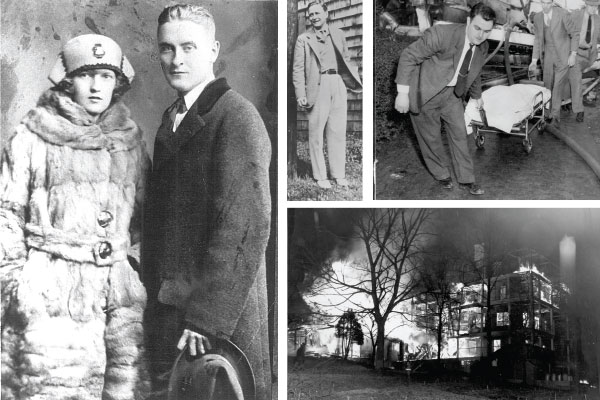
Ray Hardee’s piece in the May/June 1989 issue covered F. Scott Fitzgerald’s time at Asheville, North Carolina’s Grove Park Inn in 1935 and 1936, where he battled a mild case of tuberculosis, writer’s block, alcoholism and depression. Here, as part of our revisits to stories over the magazine’s first 30 years, he teams with his daughter, Marla—a long-time BRC contributing editor—to take a closer look at Scott’s wife, Zelda, and how she tragically burned to death at a mental hospital in Asheville.
F. Scott and Zelda Fitzgerald seem more like characters from a Greek tragedy than a real-life couple. Their storyline, punctuated with exhilarating highs and devastating lows, remains laced with intrigue among those smitten with the couple’s legacy as darlings of the Jazz Age.

Zelda, who was named after the gypsy heroine of an 1874 novel, was known as America’s first flapper as she and Scott enjoyed the spoils of high society. The pair married in 1920, just weeks after publication of Scott’s book “This Side of Paradise.” They basked in the fame and financial success of the book as they traveled, partied and lived the good life.
But the good life was really an illusion as the marriage began cracking with the strains of an excessive lifestyle, along with insecurities, mental instability, and creative competition.
By early 1921, Zelda was pregnant. Frances “Scottie” Fitzgerald arrived on October 26, 1921 and the family moved for a time to Long Island, NY. The addition of a child into the family really didn’t change their self-absorbed patterns. They simply hired a nanny when Scottie was young and sent her to a boarding school in Connecticut when she was older.
In 1924, with money becoming tighter, they moved to France. Friends had told them it was more economical to live there. While Scott worked on “The Great Gatsby,” Zelda turned her focus to painting.
She loved creating on canvas as well as writing stories. She also craved attention and developed a romance with a French aviator named Edouard Jozan while Scott was preoccupied with his novel. Whether the two actually had a sexual relationship is up for debate, but the association did produce a great deal of jealousy in Scott, and further strained their marriage.
When Zelda was 27 years old, she turned her attention to becoming a professional ballet dancer. She immersed herself into dance and would spend up to eight hours a day practicing. The Royal Ballet of Italy invited her to dance in 1928, but she declined the offer.
In the book “Zelda: An Illustrated Life,” her daughter, Scottie, is quoted as saying, “It was my mother’s misfortune to be born with the ability to write, to dance and to paint and then never to have acquired the discipline to make her talent work for, rather than against her.”
Zelda suffered her first mental breakdown in 1930 in Paris. Diagnosed with schizophrenia, she spent time at a variety of mental health institutions overseas and in the U.S. as she hoped for a solution to save her from her mental demons.
She found therapy in writing short stories and spent five months producing a novel, “Save Me the Waltz,” which was published in 1932. Reviews of the book were sharply critical.
Plagiarism marked their relationship as Scott would take chunks of her journals and incorporate them into his own writing. Some of her short stories were published under his name, and in others, publishers added his name to a joint byline to increase sales.
Zelda was Scott’s muse. They were both creative spirits who were drawn to each other and loved each other, but at the same time they really weren’t good for each other.
As Scott put it: “Perhaps 50 percent of our friends and relatives would tell you in all honest conviction that my drinking drove Zelda insane—the other half would assure you that her insanity drove me to drink.”
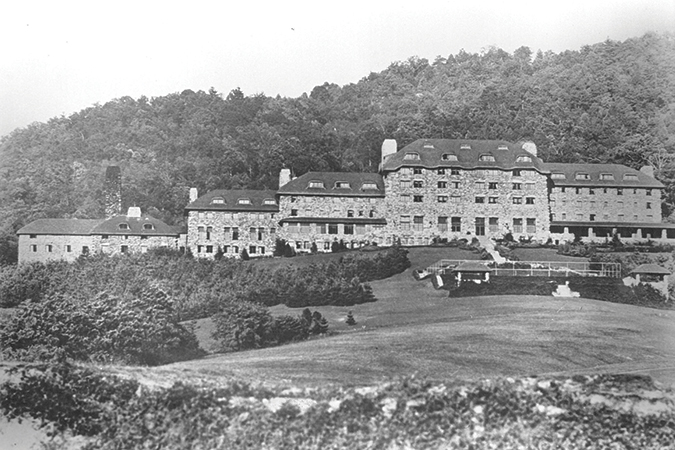
Suffering from a mild case of tuberculosis, Scott retreated to Western North Carolina in the summers of 1935 and 1936. He spent time in Tryon and Hendersonville before holing up at the Grove Park Inn in rooms 441 and 443. He tried to write, but housekeepers were carting out bins filled with beer bottles and wadded-up paper—the evidence that he was writing a bit and then rejecting his efforts.
Zelda was spending time at a mental hospital in Baltimore, but he ultimately moved her to Highland Hospital in Asheville in 1936.
Even though they did spend some time together, the cracks and strains of their marriage were evident. As Zelda’s biographer, Nancy Milford, wrote about their time at the Grove Park Inn: “When the Fitzgeralds met it was usually for lunch. They would sit in the dining room far away from the other guests. Scott did not introduce Zelda to anyone and frequently they would sit through an entire meal in silence. After lunch, they walked down the terraced gardens into meadows rimmed with pines and sat on white wicker settees overlooking the mountains, Scott smoking constantly, Zelda lost in silence.”
Scott broke his shoulder in a failed swan dive that summer and had to miss a lunch date with Zelda on her 36th birthday. He was in a plaster cast that kept his arm raised, and he also developed arthritis in that shoulder, adding to his pain and depression. That same summer, a reporter for the New York Post wrote a critical account of Fitzgerald’s life at 40. It proved devastating for Scott to read and to realize how far his life had spiraled down. He drank a small bottle of morphine in a suicide attempt, but it only made him vomit.
He found it difficult to write and even harder to make money. The pressure and bills were mounting with Zelda’s Highland Hospital treatment requiring a consistent flow of money, as did Scottie’s schooling. He jumped at an offer to move to Hollywood and write scripts for Metro-Goldwyn-Meyer for a fee of $1,000 a month, renewable after six months if his work was deemed satisfactory by the studio.
Zelda spent time in and out of Highland Hospital. She returned to her parents’ home in Montgomery, Alabama at Christmas 1938, and in February 1939, she went on a month-long vacation with friends to Sarasota, Florida. Scott also took her on a two-week tour to Cuba in 1939, but he was badly beaten when he tried to stop a cock fight. He spent two weeks in a U.S. hospital.
Scott returned to California and back to the arms of his lover, Sheilah Graham. She was the Hollywood gossip columnist he met shortly after moving to the West Coast. They were a couple for three years even though he never divorced Zelda. Scott immortalized Sheilah as the inspiration for Kathleen, the female lead in his novel “The Last Tycoon.”
He died of a massive heart attack in 1940 at the age of 44. Graham detailed their torturous romance in “Beloved Infidel,” a 1958 bestseller. It was later made into a movie starring Gregory Peck and Deborah Kerr.
Zelda spent portions of nine years (1936-1948) as a patient at Highland Hospital. At the beginning of March 1948, doctors told her she was well enough to be released, but she made a fateful decision to stay a few more weeks to make sure she was really well.
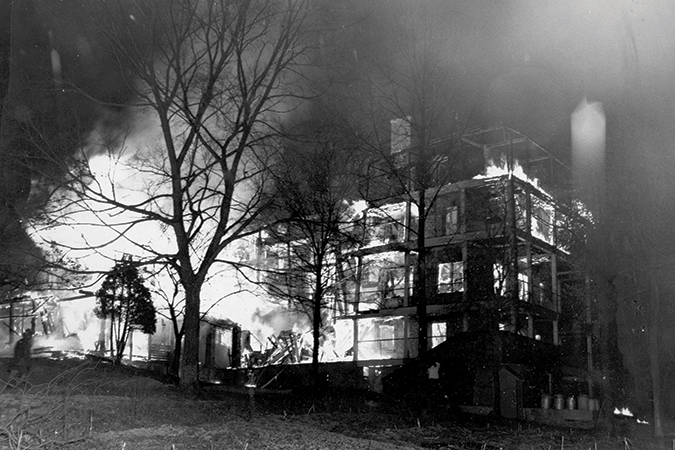
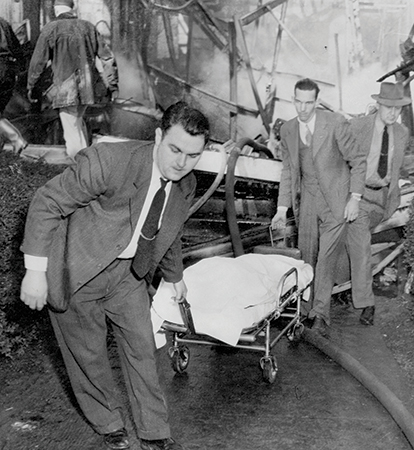
On the evening of March 10, 1948, a fire broke out in the Central Building at Highland Hospital where Zelda was staying. Witnesses could hear the harrowing, desperate screams of women on the top floor as flames held them hostage and consumed their lives. There was no way out—some of the windows were locked, others were barred by heavy chains. Corridor doors were locked. The building didn’t have alarms or sprinklers, and the wooden fire escape quickly went up in flames.
Testimony at a coroner’s inquest revealed that Zelda and four other women on the top floor had been given strong sedatives to induce sleep. In all, nine women died in the fire.
According to author Sally Cline’s research in her book “Zelda Fitzgerald: Her Voice in Paradise,” the night nurse supervisor, Willie Mae Hall, reportedly walked into police headquarters after the fire and asked to be locked up, telling officers she “may have” set the fire. No arson charges were ever filed, but reports state that Hall was committed to Grayson Mental Hospital at the Bowman Gray School of Medicine in Winston-Salem.
Zelda’s body was identified by a red leather slipper that she wore, its burnt remains somehow a symbol of the hamartia—the fatal flaw—of her own personal Greek Tragedy.