The Blue Ridge Parkway Detail

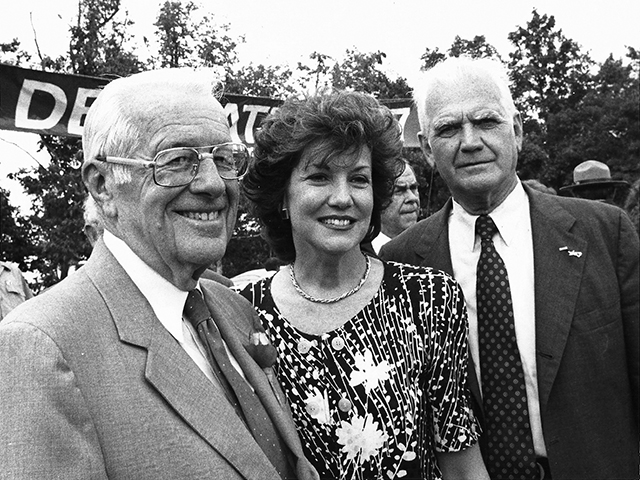
Director of the National Park Service William Penn Mott, U.S. Secretary of Transportation Elizabeth Dole and General William Westmorland.

The story below is an excerpt from our May/June 2014 issue. For the rest of this story and more like it subscribe today, view our digital edition or download our FREE iOS app!

Two days after the Boston Marathon bombings, The Boston Globe ran an ad for a pressure cooker on sale for $19.99. Ordinarily, this advertisement would have escaped the notice of most of us, but no longer. Now the pressure cooker – like bags of fertilizer and tennis shoes before it – has become a weapon of mass destruction.

It didn’t used to be this way. For many years, a bomb was a few sticks of TNT hooked up to an alarm clock. Sometimes it came with detonator wire. I know, because one summer I was asked to look for one.

I was working at the Carl Sandburg Home National Historic Site in Flat Rock, N.C. at the time, giving tours of the Sandburg Home and talking about Abraham Lincoln. One day, my boss asked me if I would like to make some overtime. The Park Service was putting together a work detail to provide support for a commemorative event to celebrate the completion of the Blue Ridge Parkway in 1987. The road had been started as a works project under the Franklin Delano Roosevelt administration on September 11, 1935.

Fifty-two years later, the 469-mile parkway stretching from Shenandoah National Park in Virginia to The Great Smoky Mountains in North Carolina was finally completed. The last section was an extended section of bridges called the Linn Cove Viaduct built on the side of Grandfather Mountain. As part of the dedication ceremony to be held on September 11, 1987, there was to be a motorcade of automobiles from each of the 53 years of the project, with General William Westmoreland, Commander of U.S. Forces during Vietnam and Army Chief of Staff under President Nixon, riding in the lead car.

The detail began with a full dress rehearsal of the event the day before. In the morning, we were issued two-way radios. Since many of us were interpretive rangers with little or no law enforcement training, we were given a very basic security protocol. If we noticed anything unusual, we were to call it in to the team leader. He would either come himself or send someone to us.

The story above is an excerpt from our May/June 2014 issue. For the rest of this story and more like it subscribe today, view our digital edition or download our FREE iOS app!

You Might Also Like:

A Virginia Historical Marker stands at the entrance to Green Pastures.

Green Pastures’ picnic area was build by the Civilian Conservation Corps in the late 1930s.

Green Pastures Reborn

When it officially opened in 1940 — in the depths of the Jim Crow era — Green Pastures was likely the first U.S. Forest Service recreation area in the nation constructed for African Americans.
Chimney Tops Trail in Great Smoky Mountains National Park rewards a steep climb with exceptional mountain views.

Inset: Gatlinburg, Tennessee’s Chimneys Picnic Area sits beside the West Prong of the Little Pigeon RIver.

11 Picnics with a View

These bucket-list destinations are perfect spots to kick back, enjoy a delightful meal and take in the great outdoors.
Vernon and Toni Wright turn grains grown on their family farm into freshly distilled spirits.

Virginia Century Farm Home to New Distillery

For nearly 200 years, Vernon and Toni Wright’s family has raised corn, cattle and quarter horses at Hill High.
Spring wildflowers bloom early in the New River Gorge of West Virginia. From the photographer: “Bloodroot is one of the first to blossom, fittingly coming in around the first day of spring. The reddish sap that exudes from all parts of the plant — especially the root — when cut is what gives bloodroot its common name.”

Scenes of Spring: A Photo Essay

Our contributing photographers reveal the fresh sights and subtle joys of the season.
At Hayfields State Park in Highland County, Virginia, easy-to-moderate trails wind through quiet forests and past historic structures.

Greening the Blue Ridge Region

New Parks, Healthier Creeks, Solar Power, Protected Lands and More.
John Scrivani bags female flowers from atop a 40-plus-foot-tall chestnut.

The Good Steward

Veteran forester John Scrivani dedicated his career to restoring American chestnut trees — and helped lay the groundwork for the effort’s next generation.
The pond next to the visitor center entrance is easily accessible and a beautiful spot for a selfie or an afternoon of plein air painting.

How to Make a State Park

The opening of Virginia’s newest state park marked the culmination of a community dream carefully nurtured for more than a decade.
Daybreak at Elakala Falls in West Virginia’s Blackwater Falls State Park on a perfect winter morning.

Quiet Beauty of Mountain Winter: A Photo Essay

Our contributing photographers braved the chill to capture the calm of the cold months.
The original Academy burned in 1911.

Curios: When Lynchburg, Virginia, Was King

With the likes of Douglas Fairbanks, Duke Ellington and Louis Armstrong performing live, the little city with the highest per capita income in the U.S. was a national hotspot for entertainment.
Hendersonville, North Carolina, offers a walkable downtown.

Slow Travel in 7 States

It's perfect for the mountains!

CALENDAR OF EVENTS