The Vagabond Tweetsie No. 12

Roll on, Tweetsie: Engine No. 12 pulls passenger cars over a wooden trestle at Tweetsie Railroad in Blowing Rock, North Carolina.

Yes, the little engine began its life where it rolls today, but made a trek to Virginia and nearly ended up in California. Gene Autry Nearly Owned It.

Had it not been for Hurricane Hazel hitting the Shenandoah Valley, the Dollywood theme park may not exist today in the Great Smoky Mountains of Pigeon Forge, Tennessee. And all that’s because of the little engine that could, Ol’ No. 12, the famed Tweetsie.

First, rewind the railroad tracks to the early 1900s, when the East Tennessee & Western North Carolina Railroad connected Johnson City, Tennessee, to North Carolina’s High Country.

Engine No. 12 pulled train cars through the Doe River Gorge and across the rocky terrain along the Tennessee-North Carolina border. And it ran on a path that later became known as the Tweetsie Trail, a rails-to-trails project linking Johnson City to Elizabethton in northeast Tennessee.

Folks called the ET&WNC railroad a nickname—“Eat Taters and Wear No Clothes.” And they called the shrill of the engine, No. 12, the “Tweetsie,” as an ode to the tweeting sound that the whistle seemed to blow.

When the railroad stopped running in 1950, the engine was acquired by some investors who had it shipped north to a farm near Harrisonburg, Virginia, where it was put in the service of the short-lived Shenandoah Central Railroad in 1953.

But damage from Hurricane Hazel wrecked the operation in 1954, and No. 12 was nearly shipped to California to become the life-size toy train of cowboy Gene Autry. But shipping the locomotive cost too much. So Autry gave up his purchase rights, and the engine became the property of the Robbins family of North Carolina.

The Robbins clan came up with a plan: Create the Tweetsie Railroad, a theme park just off the Blue Ridge Parkway at Blowing Rock, North Carolina. It opened on July 4, 1957, and became a favorite place for families anxious to meet real-life cowboys walking the Main Street of a make-believe western town.

What’s not make-believe is that antique locomotive is still snorting steam and is still powered by coal, just as it was when it first started operating in 1917.

By the early 1960s, Tweetsie Railroad proved so popular that the Robbins family opened another theme park, Rebel Railroad, that ultimately grew into the sprawling Dollywood, named for superstar Dolly Parton. Even so, Tweetsie Railroad remains an icon, staging shows with cowboys and Indians along the railroad while also providing rides and a petting zoo in the park.


The story above is from our January/February 2020 issue.


You Might Also Like:

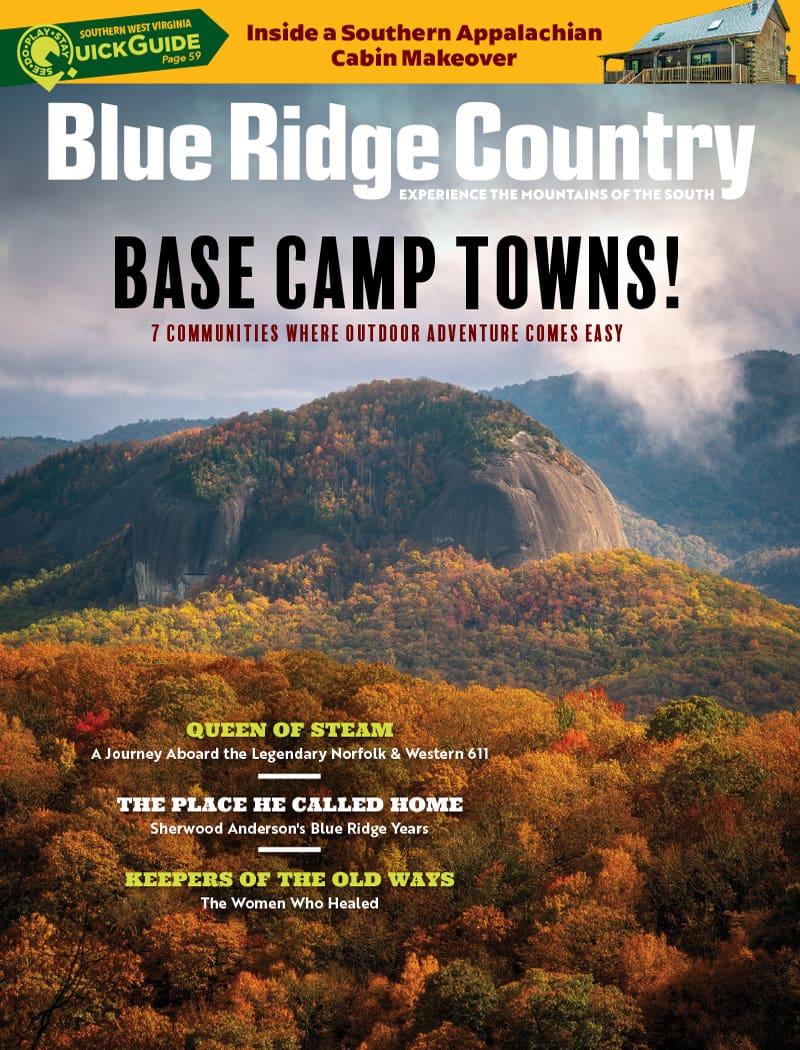
Built in Roanoke, Virginia, in the 1950s, the “Queen of Steam” remains one of the nation’s most celebrated steam locomotives.

The Queen Still Reigns

More than 70 years after she first took to the rails, the legendary Norfolk & Western Class J No. 611 continues to inspire both passengers and the volunteers who keep her running.
In West Virginia, the rugged trails of Dolly Sods Wilderness lead to sweeping overlooks and untamed mountain scenery.

Blue Ridge Base Camp Towns

More than outposts for gearing up, these seven mountain communities are destinations in their own right, pairing easy access to some of the region’s best outdoor adventures with walkable downtowns, local flavor, and much more.
Interior designer Maisie Leach and her pup Stella Bea traded Roanoke’s bustling Grandin Village for a slower pace of life in Eagle Rock

Refuge in the Woods

A log cabin in Eagle Rock, Virginia, is the latest project for Maisie Leach of Hermione Interiors—and her most personal.
Author Tim Carmichael’s grandmother, Granny Woman Stella Gosnell Norton, served her Madison County, North Carolina, community as a trusted healer and caregiver.

The Heart of the Hills

Long before modern healthcare reached many Appalachian communities, Granny Women became trusted healers and caregivers, delivering babies, treating illness and injury, and preserving generations of healing knowledge.
Sherwood Anderson and printer Howard White outside the Marion news office, in one of the last photos taken of Anderson.

Finding Home in the Mountains

In 1926, renowned writer Sherwood Anderson moved from center stage in Chicago to the mountains of far Southwest Virginia. Why?
Carly Pearson smiles at the summit of McAfee Knob in Virginia

Trailblazer

Former wildland firefighter Carly Pearson became an accidental advocate for people with disabilities.
The hotel’s rooftop terrace, affectionately known as The Perch, offers exceptional mountain views.

Walking in the Footsteps of an American First Lady

The owners of Wytheville’s Bolling Wilson Hotel and Graze on Main make sure the town never forgets her legacy.
Roanoke, Virginia, USA downtown skyline at dawn

2026 Happiest Mountain Towns

Ten years after this poll’s inaugural launch, we once again turned to our knowledgeable readers for their picks. The results? A brand-new collection of 71 exceptional Blue Ridge communities that excel at bringing big smiles to the faces of both residents and visitors.
Kayaks on Toccoa River Below the Falls

7 Fabulous Float-to-Stays

Paddling trips on scenic rivers to great mountain towns make for perfect summer getaways.
Blooming rosebay rhododendrons frame a lovely, fast-moving cascade along the Oconaluftee River in Great Smoky Mountains National Park near Cherokee, North Carolina. Photo by Robert Stephens

Currents & Cascades: A Photo Essay

Our contributing photographers followed the flow of summer.