 Skip to content

“Plant carrots in January and you’ll never have to eat carrots.” —Unknown
Images Courtesy of Ginny Neil.
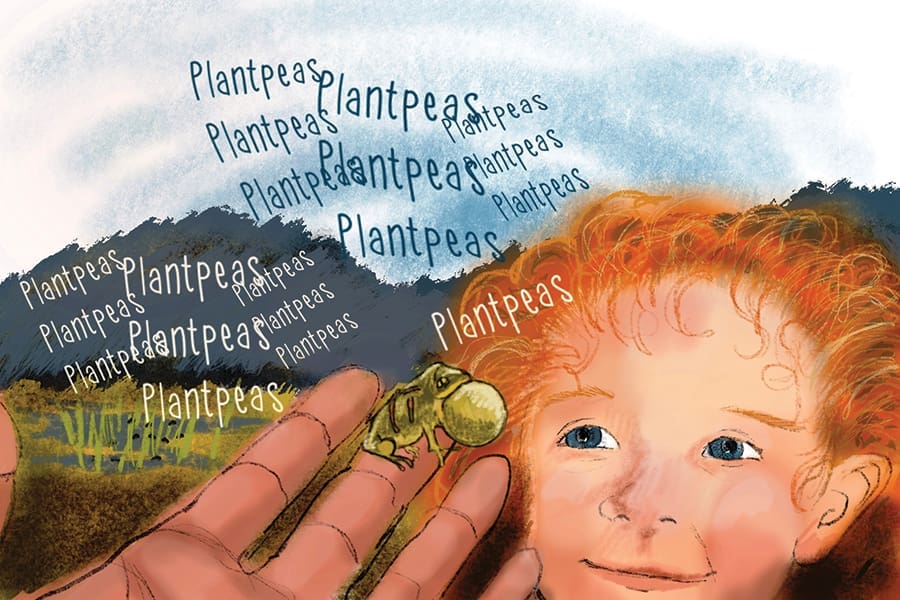
Outside my window, just at dusk, the lovesick chorus begins. Male peepers are advertising for mates. “PICK ME! PICK ME!” they jangle. Only, to me, it sounds more like “PLANT PEAS! PLANT PEAS!” so I start in with my own jangly request. “PLEASE TILL! PLEASE TILL!” My reluctant husband thinks it’s too early, but the peepers are never wrong.

Soon, the red-winged blackbirds shout, “Konka-ree, konka-ree!” in the marsh as they build their nests. Sounds like they are saying “Tomato seeds, tomato seeds,” to me, so I start some. The seedlings will be the perfect size for planting in late May.

A few weeks after the red-wings have settled down, the spring warblers arrive. They are migrating through on their way to warmer climes, and they chatter about their long trip from every leafless tree. Meanwhile, my friends and I chatter about our trips to the farm store to pick up cabbages, lettuce seed, potatoes and broccoli for our warming gardens.
Finally, the rising, rolling trill of toads calling from puddles and ponds “WAAAAARM, WAAARM,” they seem to say, signals that the ground is ready for first plantings of beans and other heat-loving crops. My heart trills right along with the lovesick toads as I drop the first cucumber and zucchini seeds in the ground.
I have never found my system of gardening by ear detailed anywhere, but it works most of the time for me. However, listening to and looking at nature for clues about when to plant is a tradition that harkens back to the first pioneers.
My neighbor, Millie, has been gardening for more than 50 years. She doesn’t garden by ear. She gardens by the signs. One day, in early March, I went to visit and spied five large flats of seedlings on a coffee table under her window. All of the little plants were sturdy and bright green. I hadn’t even started my seeds, yet, because I hadn’t heard the blackbirds singing about tomatoes from the marsh.
When I asked her why she had already planted, she pulled out an almanac and opened it to a page showing the dates for planting various crops in the correct sign. She consulted it and then gave me the bad news. “You should have planted your seeds, yesterday. We were in the light days of the moon, and it was also the sign of the feet. That makes great planting. Now, we’re headed into the dark of the moon, and we’ll be in the sign of the head. Things won’t sprout as well, then.”

Curious about gardening in the correct sign, I consulted many of my generational mountain neighbors. The ones whose families have lived and gardened here since God pushed up the first ridge and smooshed down the first valley. One of them, Robin, shared a whole list of signs he had collected over his lifetime: Plant corn when hickory buds are as big as a hawk’s bill, plant potatoes in the sign of the thighs, feet or knees and be sure to do it by the light of the moon.
Beulah told me that I shouldn’t plant my cucumbers in the sign of the posy because they would be all bloom and no fruit. Richard informed me that sauerkraut should never be harvested or processed in the sign of the bowels. I spent the rest of that spring and summer trying to plant and harvest things according to the rules outlined by my helpful neighbors. I had about the same luck I’d had planting by ear.
That fall, as I admired my neighbor Sarah’s beautiful dahlias, I announced. “You have so many blooms. You must have planted them in the sign of the posy.”
She laughed. “Don’t be silly. I don’t plant things in the sign. I plant them in the ground.”
Turns out that whatever method you use to determine how to plant your garden, some things will grow well and some won’t, so I’ll stick to gardening by ear. There are no charts to memorize and I don’t have to think about feet or bowels. Instead, each hopeful song carries a promise from my ears into my heart. My garden will be beautiful no matter what. After all, it’s spring and everything wants to grow.
The story above first appeared in our March / April 2023 issue.




