Skip to content

The story below is an excerpt from our May/June 2018 issue. For the rest of this story and more like it subscribe today, log in to read our digital edition or download our FREE iOS app. Thank you!
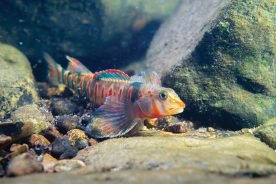
The non-profit Conservation Fisheries Inc. raises rare indigenous fish.
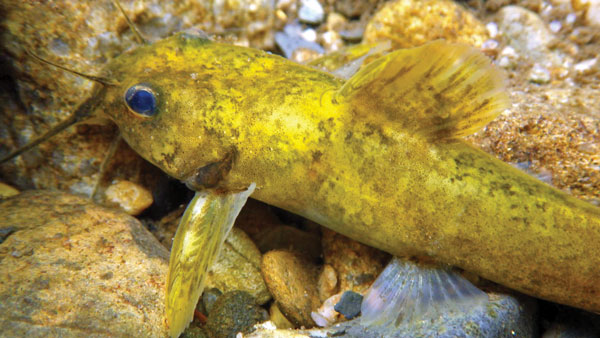
J.R. Shute still has the first aquarium he and his business partner, Pat Rakes, set up in 1986 to propagate rare Southeastern fish once headed for extinction. While earning their graduate degrees from the University of Tennessee at Knoxville, a professor had asked them if they were interested in working with the U.S. Fish and Wildlife Service to reintroduce a dwarf catfish called the madtom into Abrams Creek in the Great Smoky Mountains National Park. They jumped at the chance, but after graduation, no other students wanted to continue the research, so they got permission to take it with them.

“Back in the 1950s, a number of state and federal agencies decided that they wanted to do what they thought would improve trout fishing in Abrams Creek,” says Shute, co-director of Conservation Fisheries Inc. (CFI), a Knoxville-based non-profit dedicated to saving imperiled, non-game fish in the region’s rivers, lakes and streams. “They ended up poisoning out Abrams Creek to get rid of the ‘rough’ fish so the trout would have a better chance of survival. And it was later discovered that there were several rare fish living in there that they didn’t know about at the time.”
Snorkeling in the dark to survey the nocturnal smoky and yellowfin madtoms, and collecting eggs from the wild to bring back to their new hatchery, Shute and Rakes eventually figured out how to raise them in captivity, which, Shute says, “turned out to be much more difficult than we ever thought.” The first batch was released in 1986, and CFI was born.
The comeback of the madtoms is still Shute’s favorite success story. It took a long time, but by the 10th year, the two species were showing up again in Abrams Creek and, later, in the Tellico River.
“We were out this past year, snorkeling in one spot, looking for smoky madtoms and we found about 85 of them in a very short stretch of stream, which is unheard of,” says Shute. “They have done exceedingly well in there.”
Incorporated in 1992, the organization has moved several times over the years, doubling in size each time, and has worked with approximately 70 species of rare fishes, including darters, chubs and logperches, some of which have been removed from the Endangered Species List. Believed to be the only private, non-profit facility of its kind in the Southeast, CFI is now housed in a 5,000-square-foot facility with 600 tanks.