Skip to content

Before it became America’s Favorite Drive, the Blue Ridge Parkway was a farm family’s front yard, playground, and memory lane.
By Eula Golding Walters | Photos Courtesy of the Author
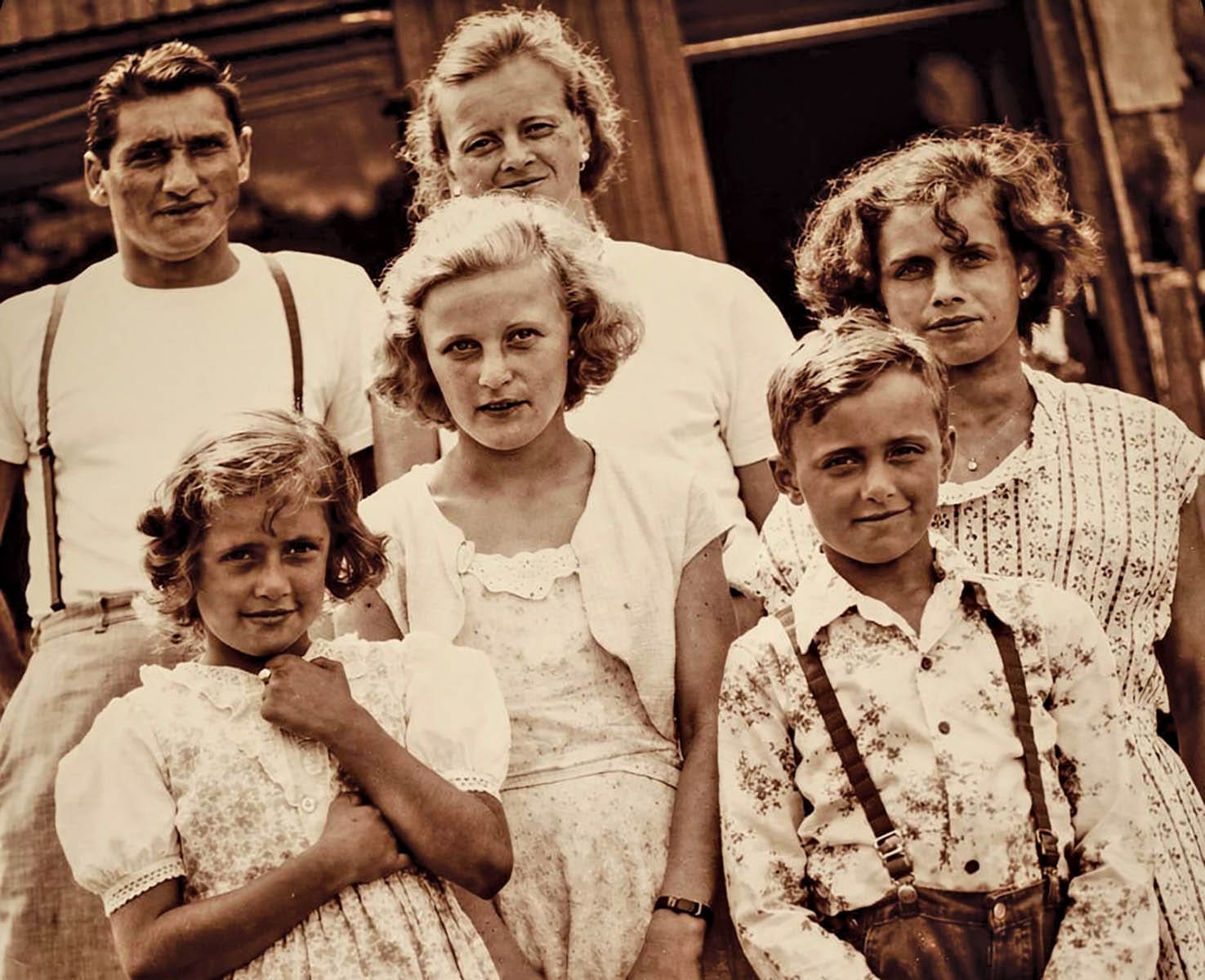
Photo Above: A happy 8-year-old Eula Mae standing in front of her father, Woodrow, in this Golding family photo taken in 1952.

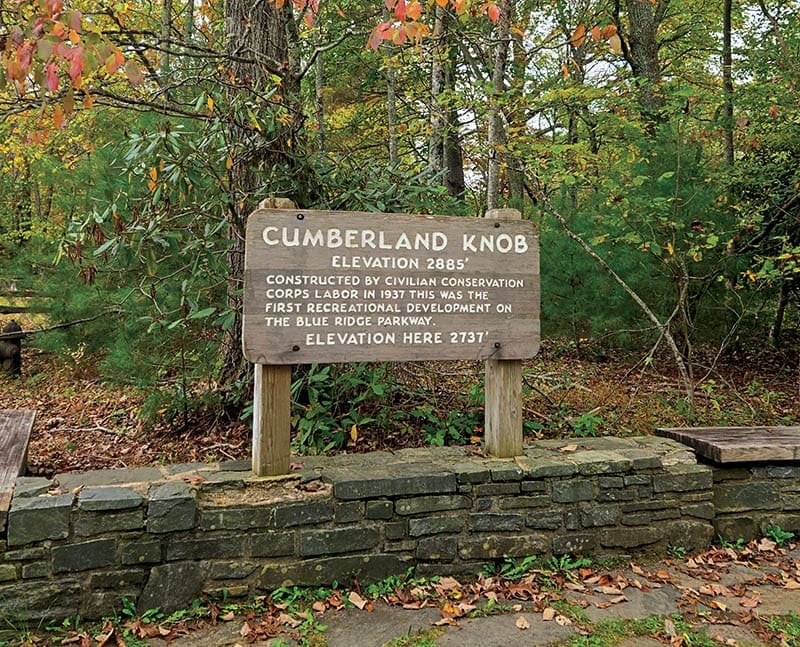
On a chilly September morning in 1935, two men working a crosscut saw felled a giant oak tree, signaling the birth of the Blue Ridge Parkway. Virgin forest along the mountain ridge above Low Gap, North Carolina, would soon give way to Cumberland Knob Park, the first attraction open to the public, and the beginning of the scenic highway that would stretch 469 miles when completed almost 52 years later. The road followed the Blue Ridge Mountains from Shenandoah National Park in Virginia, cutting through solid rock, along peaceful meadows, across roaring creeks, and ended at the mouth of the Great Smoky Mountains in North Carolina.
By 1938, it had crossed into Virginia, reaching the 65-acre farm my parents had purchased for $2,000 when they were married earlier that year. My dad joined the workforce, helping to take the road across our farm—the land that would sustain our family of 10 for many years to come.
Aptly named the Blue Ridge Parkway, the road was often described as a scenic highway. We simply called it “The Scenic.” Many attractions, parks, and historic landmarks can be explored along its length. If you stop at the Rocky Knob Visitor Center near Mabry Mill, you will see a case displaying a photo of my parents, Woodrow and Lavada Golding, stacking hay, taken by someone driving past around 1951.
My brother John and I spent much of our free time on the section of road that ran through the farm. We considered it to be our own personal highway. We waved at passing cars from every state while attempting to read all the bumper stickers as they sped past at 45 miles per hour. “See Rock City” was my favorite. I didn’t realize ‘til I was an adult that Rock City, Tennessee, wasn’t actually named “See Rock City.”
In late summer, John and I picked and sold chinquapins to passing motorists. When a car came in sight, John held out a snuff glass filled with the small chestnut-like nuts and yelled, “Chinquapins for sale, 10 cents a glass!” At the end of the day, we walked home with our empty paper poke and dimes jingling in our pockets.
When winter’s snow lay deep on the ground, Santy Clause used the Parkway as a landing strip to our house, hidden in the dark shadows of Fisher Peak Mountain, leaving us candy sticks, an orange, and a small toy before pushing deeper into the mountain to our cousins’ house, where they anxiously listened for the tinkling of bells announcing his arrival. Today, the Blue Ridge Music Center sits on the spot where their humble home stood those many years ago.
During warm school days, we walked barefooted 2 miles to the bus stop. A mild case of polio when I was 5 prevented me from picking my feet up quite high enough to keep from stubbing my toes on the rough surface of the road. By the end of the first week of school, all 10 of my toes would be wrapped in bloody rags.
A Sunday drive on the Parkway was popular with courting couples, usually ending in a picnic on the side of the road. Like many other newlyweds, I honeymooned on my much-loved Scenic.
In time, we eight children left the farm, seeking our own paths, but each July we gathered to celebrate family. We often spent a day at Cumberland Knob Park, picnicking and playing ball. Mother’s famous home run hit and belly slide across home plate will forever be a highlight.
My parents sold the farm in 1987 and never looked back. Not I. Those acres will forever be home to me.
By the late 1990s, the Blue Ridge Music Center had been built at Milepost 213, adjacent to the farm. Land and houses between the Center and the Parkway were acquired by the National Park Service, including my brother Ernie’s newly built home.
So an era ended and a new one began. Thankfully, memories override eras. Each year I travel 300 miles back to the home of my raising. I walk the fields, woods, and streams on the land I was blessed to grow up on, allowing my mind to sift through the years now past.
I then check my toes to make sure they aren’t wrapped in bloody rags, climb into my car, and drive slowly away on The Scenic—the road my daddy helped build. The same one that belonged to my brother John and me for a time. My very own beloved Scenic, a memory lane of my past.
The story above first appeared in our May/June 2026 issue.