Skip to content

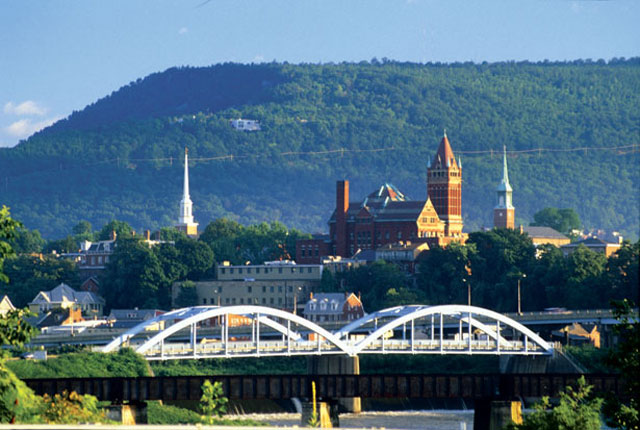
There is much to love about our Blue Ridge towns. Toss out any notion that in small towns there is “nothing” to do – pick any community and discover historic Main Streets, scenic state parks, exciting festivals, thriving arts and eclectic cuisine. The only thing missing from these quaint towns is the hurried pace and headaches of living in major metropolitan areas.
“It’s never been 80 degrees on our porch,” says Midge Rothermel, “and we don’t have air conditioning.”

Eight years ago, Rothermel and her husband, Jim, a retired obstetrician/gynecologist, packed up their lives in St. Petersburg, Fla., where AC was an essential, and headed for the mountains.
“It’s the first cool weather heading north, only a one day drive from central Florida,” Rothermel explains. They discovered Highlands, N.C. after visiting fellow Floridians at their summer homes in the rolling mountains.
“Once you’re here, it’s an incredible community,” Rothermel says. “It has all the joys of a small town.” With a population of about 3,000, Highlands has more than a view to offer its residents.
“There is as much to do here as in any big city,” says Rothermel – “art, culture, theater, outdoor and indoor activities, the restaurants are wonderful, hotels are great and the people are friendly and welcoming.”
While not seeking solace from weather, artist Andy Vick was also looking for an escape – from the mind-numbing traffic and reeling pace of the D.C. area. He and his wife, Beth Piver, after doing some research up and down the east coast, happened upon Cumberland, Md.
Cumberland offered Vick and Piver the less intense, affordable and thriving arts community they were seeking. As full-time artists living in a tiny townhouse in Fairfax, Va., the couple found that Cumberland was “in wonderful geographical proximity to major markets [such as Baltimore, Philadelphia and D.C.],” Vick says, “and the cost of living is phenomenally low.”
Eight years later, Vick is the executive director of the Allegany Arts Council while his wife continues working as a full-time artist. In order to revitalize the community, Vick and other Cumberland officials have made a cooperative effort to draw interest in the town.
“There is something of an artistic renaissance in downtown Cumberland,” says Vick. Efforts have included designating the heart of the town as a state arts and entertainment area, and offering tax deductions and incentives to both artists and businessmen who move to the area.
Retirees – and younger folks, too – are making moves to the Blue Ridge, and creating a multi-billion dollar industry. What draws the baby boomers to small Blue Ridge towns? Dr. Mark Fagan, head of the Department of Sociology and Social Work at Jacksonville State University, offers some insight:
• moderate four-season climate
• scenic beauty
• commercial opportunities
• access to healthcare
• cultural attractions
• volunteer and part-time work opportunities
• outdoor recreation
• close proximity to family (within driving distance of major metropolitan areas)
• quiet, safe neighborhoods
Gerald Sweitzer, co-author (with Kathy M. Fields) of “The 50 Best Small Southern Towns” (Peachtree 2001), explains that many great places are working on revamping their image.
Of those that made his list, “40 to 50 percent of the towns had been through a main-street redevelopment program,” Sweitzer says. “The towns had to be progressive – steadily growing, not dead or dying. These were inviting places where they are welcoming new people.”
Sweitzer’s guide is geared for those interested in abandoning the urban and suburban lifestyle for a less congested, hometown environment.
Sweitzer receives inquiries regularly about recommendations and further information on many of the towns suggested in his book.
As prices continue to soar, “the cost of living is a major factor,” Sweitzer says, and in many metropolitan areas has become of great concern to families of all ages.
Town photography by Pat and Chuck Blackley and Frank Ceravalo.