Courtesy: Ginny Neil
To everything there is a season, and a time for every purpose under heaven. —Ecclesiastes 3:1-8

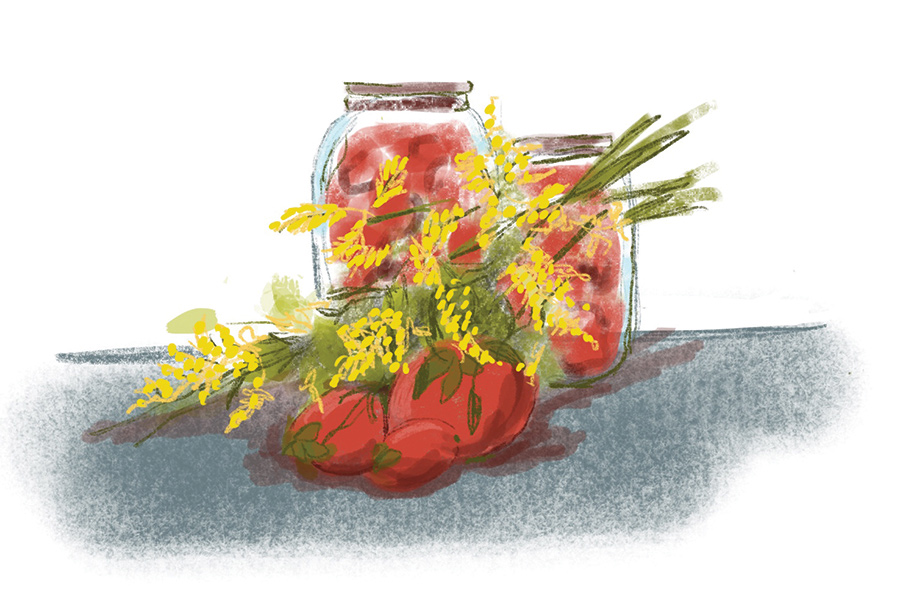
By the end of July and all the way through August the tomatoes, which I have severely overplanted, are holding me hostage in my kitchen. Pick, blanch, peel, can. Pick, blanch, peel, can. The urgency of the harvest season defines my days.
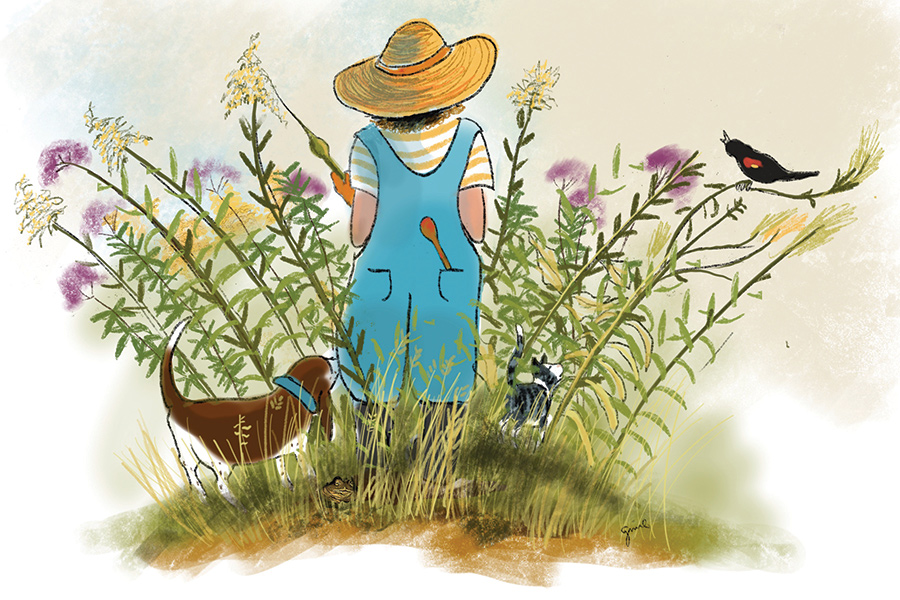
Finally, there is a break so I sneak off into the front forty where the goldenrods are beginning to stretch up to the sky. They won’t be in full bloom for another couple of weeks, but in late summer they hold a wonder that gives me a perfect excuse to escape the hot kitchen.
I wade into flowers almost as tall as I am. I’m looking for golf ball shaped overgrowths: goldenrod galls. The bulging spheres lodged in the leggy stems remind me of a rat snake I once caught in my henhouse working on digesting an egg.
If I were to cut one of the galls in half it would reveal a spongy, lemon-colored center with a wriggly larva curled up in the middle: a goldenrod gall fly. These tiny insects rely on Canada goldenrod (Solidago canadensis) in the same way that monarch butterflies depend on milkweed. They are species-specific critters.
In the spring, a tiny female gall fly chooses exactly the right stem by walking around tasting various possibilities with her feet and antenna. What does a good site taste like? Who knows? But, once she has taste-tested her way to the perfect spot, the gall fly injects an egg. When it hatches, the saliva from the larva causes the stem to overproduce cells. The result is a perfectly spherical nursery.
Summer progresses and the little worm eats its nursery from the inside out. If a black-capped chickadee or downy woodpecker doesn’t peck through and eat it, the larva will spend the winter just beneath the outer wall.
Spring arrives and the larva pupates into an adult fly. It inflates a special sac between its eyes and rams its way to the surface. After crawling into the light, the gall fly will only live long enough to breed and lay eggs.
Goldenrod galls and their tiny inhabitants are just one of the mysterious, precisely timed wonders of the natural world. I have seen thousands of earthworms locked together in a mass breeding event on the side of a warm, wet spring road. I have seen my lawn alive with hundreds of pupating June bugs as they popped out like groupies into a starry summer night. I have seen a carpet of eyes glowing in the headlights of my vehicle as spiders scurried like a herd of buffalo across a dry autumn road. How do they know it’s time?
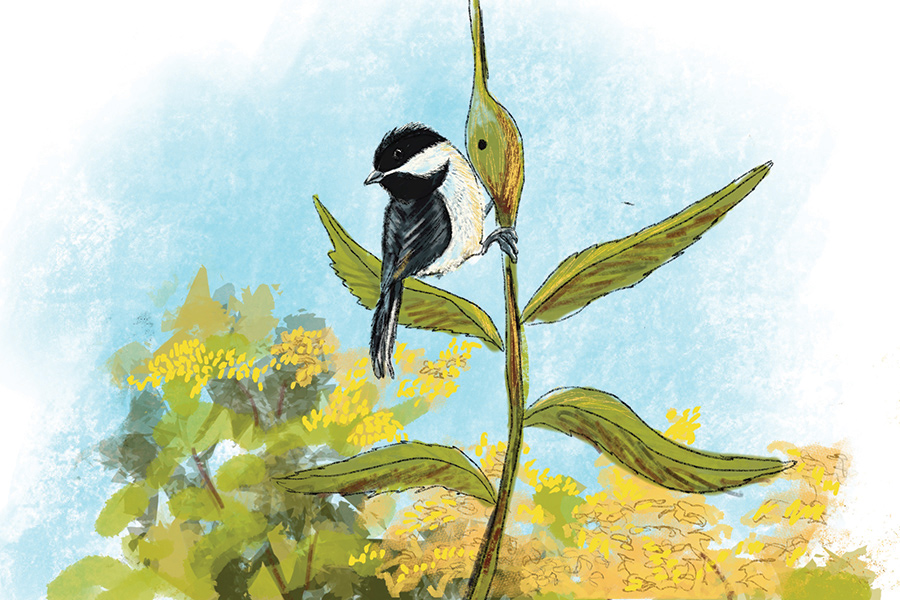
In his speech at the March on Washington, Martin Luther King, Jr. urged followers to act together in “the fierce urgency of now.” Worms, June bugs, spiders, gall flies; all of nature operates on a seasonal urgency of now. One tiny fly, suited for only one specific type of flower, produces offspring that will emerge just exactly when every other gall fly greets the light.
They will meet, mate, lay eggs and die. Their larvae will feed wasps, black-capped chickadees and downy woodpeckers, all of whom are in the midst of their own seasonal urgencies. Meanwhile, those globe-shaped nurseries, bulging into being at the end of my urgent season of harvest, remind me of the wonder of it all.
The story above first appeared in our July / August 2022 issue.