Skip to content

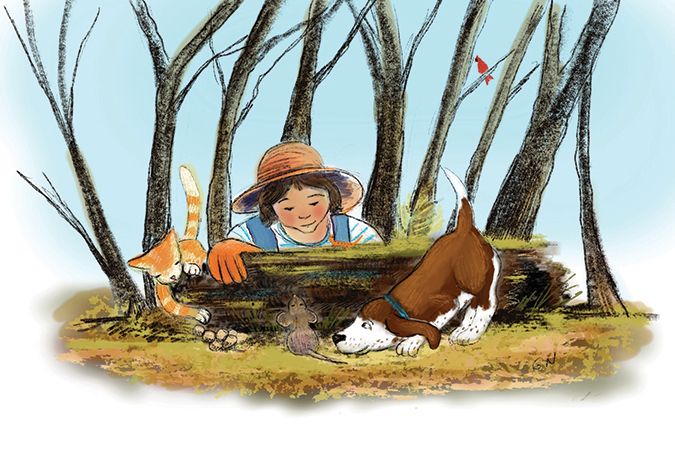
It starts in the summer. As we walk through our woods checking fence lines or searching for missing sheep, my husband and I look for something else as well: dying or dead trees, still standing, but no longer living. Future firewood. We note the location. We’ll be back when the weather cools.
Images Courtesy of Ginny Neil.
Before I moved to the mountains, I never thought much about where my heat came from. I didn’t need to. There was a thermostat in every room of the house so winters were warm and summers were cool: at least inside.

Here in my high valley, summers are cool because a breeze sifts through each window. Winters are warm because a woodstove glows in the great room. But, the woodstove won’t fill itself. It requires work, and that work is first pondered in the summer with the spotting of those trees.
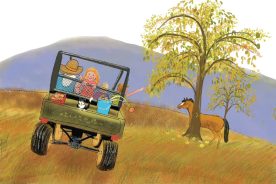
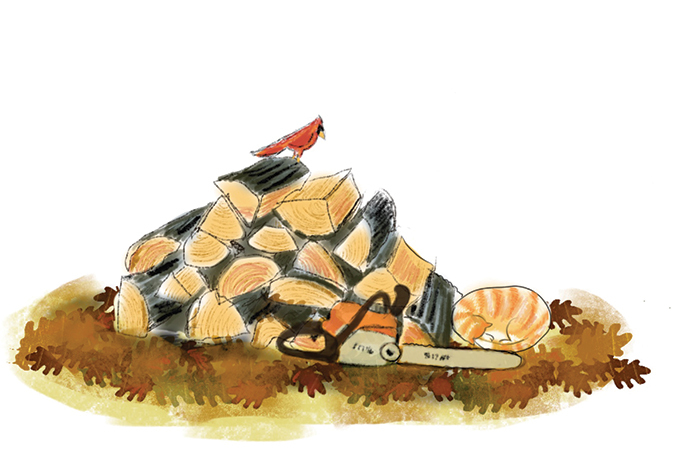
Woodcutting begins as the leaves start their show. On the first cool day, we load the pick-up with a splitting maul, some chainsaws, a gas can, some oil, a file and a gallon jug of ice water. Wood-cutting is thirsty work.
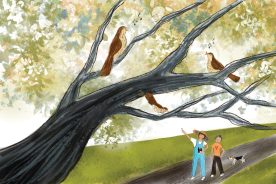
I call woodcutting work, but it is really pleasure disguised as work. The skies are high and blue. The air is crisp. Woodpeckers pound and squirrels scold. The limbs above us hold up the roof of sky. We will sweat and breathe hard and lift and load. We will be pleasantly tired by the end of the day.
Woodcutting is also family time. Our sons join us and the air fills with the smell of dry oak chips and the buzzing of saws. While the men are cutting limbs and logs into lengths small enough for me to toss onto the truck, I explore the snags and nurse logs scattered across the forest.
The average traveler in the woods won’t see these leftover logs and tree trunks as anything more than a rotten length of wood, but they are full of secrets and surprises. Picture this: a tree dies. It doesn’t fall right away. First it starts losing limbs. If my hubby and I don’t find it and turn it into winter warmth, then it becomes a barkless, pockmarked apartment building for woodpeckers, owls, raccoons, bats and small mammals. All that life breaks the tree down more and one day it falls. The decaying trunk, or nurse log, feeds ferns, mosses, mushrooms and lichen.
Nurse logs attract millipedes, spiders, ants and more. Those insects are a snack bar for small mammals, bears, and birds. I have seen signs of bears scratching out a living in the same fallen logs where woodpeckers still whittle. All this activity turns the tree into a perfect, nutrient dense tree nursery.
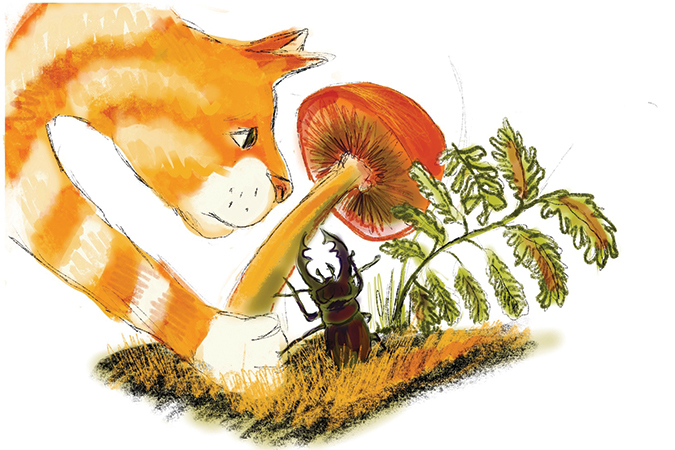
If you are inspired to look, go find a nurse log. Peel back the spongy bark or mosses to reveal yellow, orange and white threads of mycelia. Look out for bark beetles scurrying, roly-polys curling, earthworms wriggling, wooly larvae waiting for spring.
Roll the log over. Did a white-footed mouse leave a grassy nest? Do salamanders slide out of sight? Did you jump when that snake slithered?
My husband always says that wood warms you twice. First in the cutting, then, again, in the burning. I maintain that there’s a third warming. Finding so much life where everything appears dead, will warm your soul.
The story above appears in our November / December 2020 issue.