Skip to content


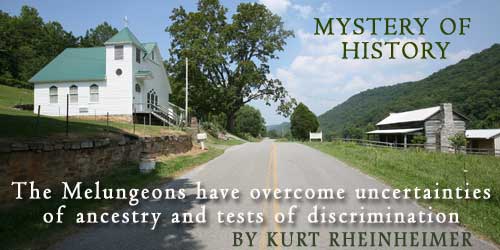
Uncertain of their ancestry during pioneer times, viewed as “the boogeyman” in the 19th century, denied the right to vote or own land even into the 20th century, and unable to fully embrace their heritage until as recently as 1969, the Melungeons of the Cumberland Gap area of Virginia, Tennessee and Kentucky have in the early years of the 21st century created a hallowed hall to commemorate their proud and challenging history. We took a driving tour to pay a visit.
Modern Melungeon Chronology: From Hide To Pride
Wayne Winkler, author of “Walking Toward Sunset,” begins a discussion of the history of the Melungeons’ view of themselves with the observation that as recently as a few generations ago, people of his heritage were the regional boogeymen, with non-Melungeon children being told if they didn’t do what they should, the Melungeons would get them.

In this context, Winkler asserts strongly that the name Melungeon was imposed on, rather than adopted by, the people who now carry the name with pride. (It should be noted that noted Melungeon scholar N. Brent Kennedy disagrees, feeling that the possible Turkish genetic and linguistic connection suggest that the name was taken on rather than assigned.)
A few dates in the evolution of the movement from the era of Melungeon families telling children never to use “that word” to an era of a group of people that meets once a year to celebrate heritage and to explore further the ancient reaches of their history:
Late 1700s: Melungeon families migrate to the Hancock County, Tenn./Lee and Scott counties, Va. area, about the same time as white settlers arrive.
1813: Stony Creek Baptist Church (Scott County, Va.) records include the first written record of the word “Melungeon.”
1834: The Tennessee Constitutional Convention classifies Melungeons as “free persons of color,” which has the effects of removing land rights and assigning Melungeons to “Negro” schools, which they decline to attend.
Civil War era: Melungeon families, like their white neighbors of the region, side primarily with the Union, with a significant minority siding with the Confederacy.
1890: A series of newspaper and national magazine articles by a 29-year-old woman named Will Allen Dromgoole carry a racist, stereotyping caste; the articles will form the foundation of much of what is written about the Melungeons for the ensuing century.
1899: The Northern Presbyterian Mission Church establishes a mission in the Vardy Valley in present-day Hancock County, Tenn.
1924: Virginia’s Racial Integrity Act stipulates in part that “the term ‘white person’ shall apply only to the person who has no trace whatsoever of any blood other than Caucasian.” Of course no anthropologist has been able to establish the existence of a “pure” Caucasian, the act in effect decreed Melungeons “colored” and thereby forbidden by law to marry “white” people.
1930s-’40s: The Melungeons are again the subject of magazine pieces, including one in the Saturday Evening Post, which, while carrying some of the stereotyping of the Dromgoole pieces, are enlightened at least to the point of recognizing the Melungeons’ wariness in both talking to reporters and in uttering the name apparently assigned to them by history.
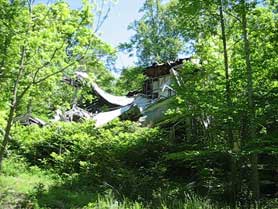
These years are also perhaps the high point of the Vardy School, as run by Reverend Chester Leonard and nurse Mary Rankin. The imposing wooden school (built in ‘29) and neighboring church are the focal point of life for the eight-mile Vardy Valley of Tennessee and Virginia.
1960s: As Wayne Winkler writes, “the stigma of being a Melungeon was disappearing, but so were the Melungeons themselves,” as dispersal and intermarriage continued.
1969: As if in final proof of the “coming out” of those of Melungeon heritage, the Hancock County Drama Association produces the outdoor drama “Walking Toward The Sunset,” a celebration of heritage. The drama is produced annually until 1976, long enough, according to Winkler, “to bring a sense of pride to the Melungeons.”
Late 1980s-early ’90s: N. Brent Kennedy discovers, in part through an article in the July/August 1991 edition of this magazine, his family’s heritage, and dedicates much of his life to work on that heritage, in the process founding the Melungeon Research Committe. Kennedy’s subsequent book “The Melungeons: the Resurrection of a Proud People; An Untold Story of Ethnic Cleansing in America” (1994), along with his leadership and personal magnetism, serve to throw open the doors of Melungeon scholarship and celebration of heritage.
July 1997: Some 600 people arrive in tiny Wise, Va. for a gathering called First Union, with the name (as opposed to Reunion) emphasizing the first-time-ever coming together of a people who, until just a few decades earlier “could not have been here… wouldn’t have been allowed to be here,” as Connie Clark, a high school teacher from Big Stone Gap, Va., said of the gathering that was expected to draw no more than 50 people.
2000s: The flow of research and publication (especially through Mercer University Press’s Melugeon Series, with Brent Kennedy serving as editor) continues in something approaching a celebratory gush.
And the little cluster of buildings along Vardy Road – the church/museum, the Mullins cabin and the ghost of the school – are in full flower as the repository of the history of a proud people