Skip to content

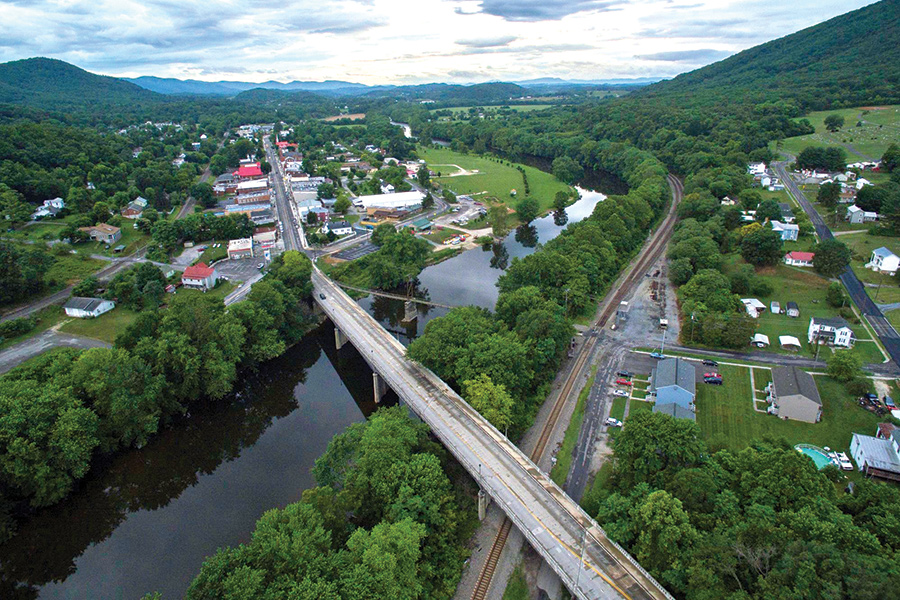
Buchanan is nestled along old U.S. 11 and flanked by the James River. STAR CITY SKYCAMS
Resting at the southern end of the Shenandoah Valley and the northern end of the Roanoke Valley, Buchanan is the best of both worlds: a river town and a mountain town.

Here are a few things you’ll notice immediately turning onto Buchanan’s Main Street:
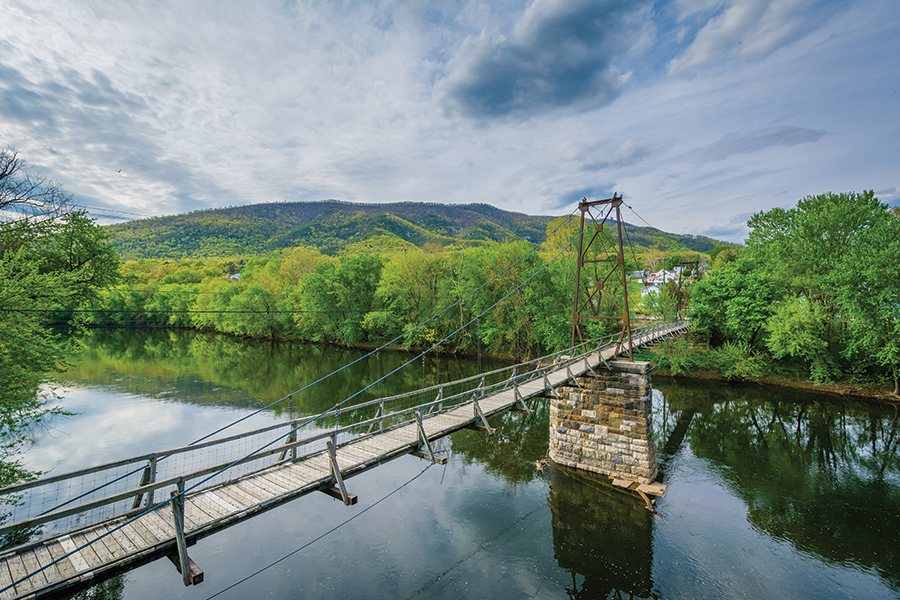
- The swinging bridge spanning the James River
- A long stretch of well-kept historic homes on both sides of Main Street (Route 11)
- Rail tracks hugging both the north and south sides of town
- The century-old Buchanan Theatre—with current movies on the marquee
- A coffee shop. A book store. Antique shops, restaurants, a 1940s diner housed in an old drugstore, a library. And even in the empty storefronts, great artwork in progress.
They’ve sloganed this place Simply Buchanan. Home to just 1,177 people, Buchanan is quintessential small town, in all the right ways. No surprise that last year, Travel and Leisure magazine named Buchanan “one of the 12 best small towns in Virginia to add to your travel list.”
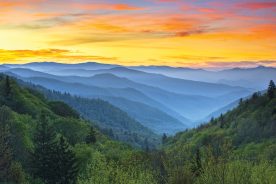
Buchanan is a geographic dream come true for hikers and Blue Ridge Parkway travelers. Just four miles off the Blue Ridge Parkway (Milepost 90.9) and the Appalachian Trail, Buchanan is a stopover for AT hikers and visitors to the Parkway’s Peaks of Otter trails and lodge.
They can, for example, get locally roasted S&H coffee and regionally famous Homestead Creamery ice cream at James River Drip, where June and Keith Morse remodeled an empty storefront at the far end of Main Street.
“I wanted to keep it local. I grew up in this area—it matters to me,” June says.
The inset on their menu says it all: “Our vision is to brighten our local community, one cup, one scoop and one smile at a time by doing what we love: making someone’s day!” (When was the last time you heard that at Starbucks; or Dairy Queen?)
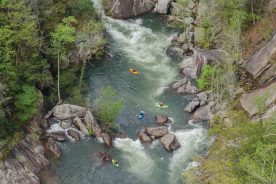
And if you’re seeking time on the water, Buchanan has one of western Virginia’s largest paddle sport operations. Twin brothers John and Dan Mays set up Twin River Outfitters in Buchanan 17 years ago, and haven’t looked back. Last season, they had 14,000 river adventurers depart from their current location on Lowe Street, at the edge of Buchanan Town Park and near the famed Swinging Bridge.
“Buchanan’s growing—it’s a neat town to base out of,” Dan says. Open April through October, Twin River employs 25 seasonal employees guiding rafting, kayaking, river tubing, canoeing and glamping trips on the Upper James.
The James River is central to Buchanan’s history. Just outside of town, you’ll see a national historic registry marker for Looney’s Ferry. This is where, in 1742, the first ferry across the James was established in western Virginia. Travelers on the Great Valley Road crossed the river here, and goods brought by wagon from southwestern Virginia were loaded onto barges and carried to Richmond, the Tidewater and Chesapeake. There are 280 years of history in this town, ready to be discovered.
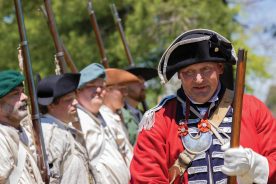
You can’t stand by the James in Buchanan without seeing the swinging bridge stretching 366 feet across and 57 feet above the river. The only one of its type the entire length of the James, the bridge still has the original 1834 stone piers supporting it. (The bridge itself was burned in 1864 by Confederate General John McCausland in an effort to keep Federal troops from crossing the river and heading to Lynchburg. The town’s Civil War history is celebrated at the end of April each year in a three-day festival and reenactment.)
In the 1850s, crossing the swinging bridge would have cost you five cents—and an additional five for each horse, oxen and wagon coming behind. Today, you can cross it for free to watch the river rolling 57 feet below, feel the suspended sway, and know that a bridge like this is pretty much impossible to find anywhere else.
Like most mountain towns, Buchanan lost its industrial base after World War II, with the coming of interstates and the population centers along them. For Buchanan, it was textiles—and, interestingly, bone button manufacturing—that came and went.
Town Manager Susan McCulloch has been on the job just a year, and she’s focused on bringing the town forward. She’s working to evaluate historic town buildings with an EPA Targeted Brownfield Assessment grant, the first step in opening doors to investors.
“We’re testing and removing issues, so buildings can be sold—and part of our process is doing window art as the remedial work is going on,” she says.
McCulloch is also focused on creating a master plan for the entire community. “We’re starting with downtown and the parks. But eventually, we’ll have a large vision and plan for the entire town. We want to get the community’s input on where they want to go. Even if their goal is to stay exactly what we are—that’s okay, too.
“This is a giving and kind community,” she says. “It’s a place where a little girl can leave her bike at the school bus stop, and it’ll be there when she gets off the bus in the afternoon.”
Things are moving forward in tiny, beautiful Buchanan, a place where the mountains and a wide river come together with real grace. An abandoned factory is about to become 22 apartments, with an adjacent brewery. New businesses are taking root. Take a look at the town newsletter—it’s filled with thank-yous, encouragement, appreciation and accomplishments.
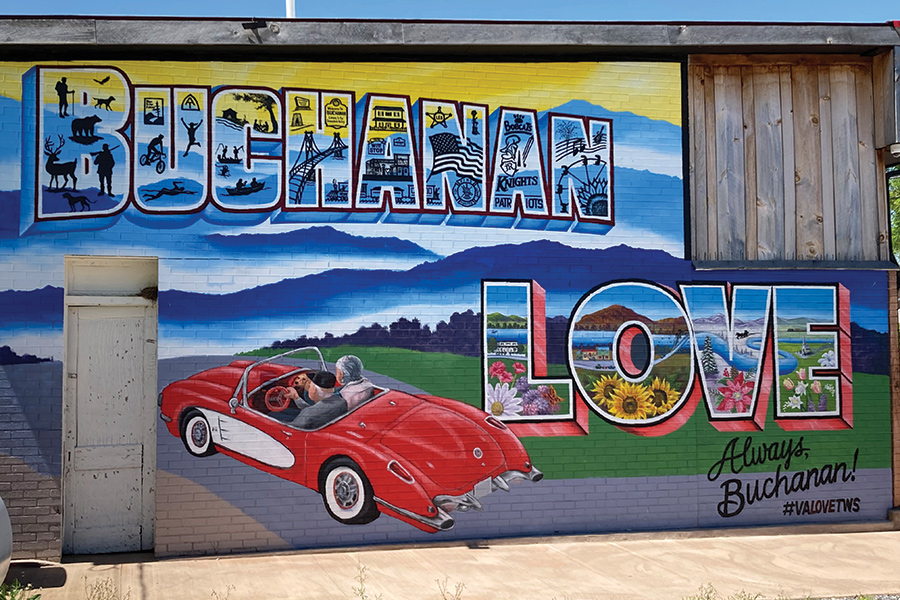
I think that the new LOVE sign at the end of Main Street says it all. It’s solid and simple and unadorned, and it’ll be there for a very long time. It’s uncomplicated and straightforward and grounded. Simply Buchanan.
Mary Johnston: Buchanan’s Native Daughter
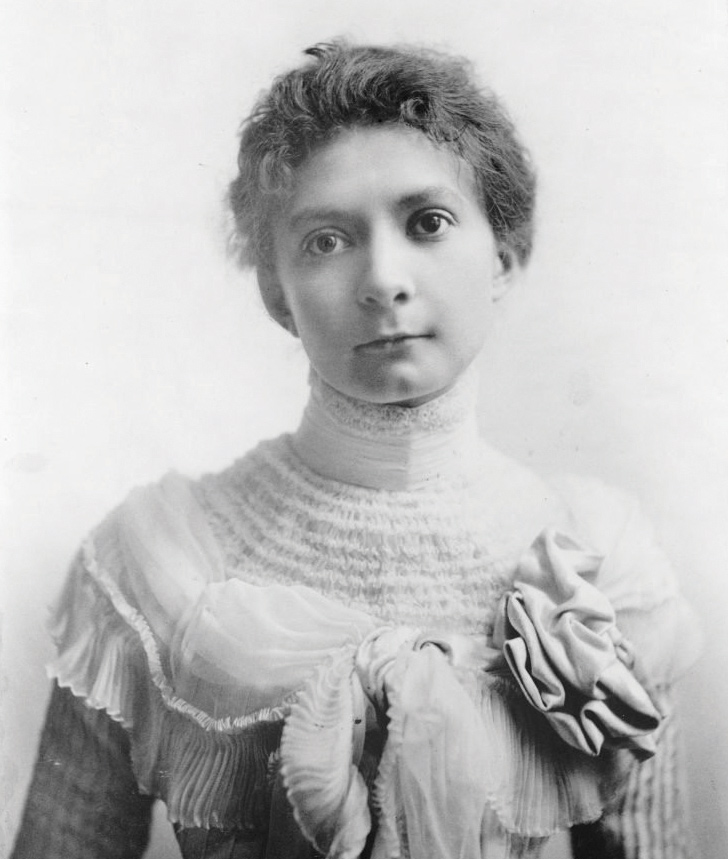
She was the first woman to get a book on the New York Times bestseller list. She wrote the most popular American novel published between “Uncle Tom’s Cabin” (1852) and “Gone with the Wind” (1936), “To Have and to Hold.” And she was born in Buchanan.
Mary Johnston took up her pen to help support her family, and her second novel hit it big. Described as “a romantic tale of colonial Virginia,” “To Have and to Hold” broke publishing records by selling more than 60,000 advance copies and 135,000 copies the first post-publication week.
Perhaps more significant than her literary output was her active role in the women’s suffrage movement. Using her status as “a southern lady,” Johnston stood firm on women’s voting rights.
Thanks, Buchanan, for sharing Mary Johnston with America.
The story above first appeared in our September / October 2022 issue.