Skip to content


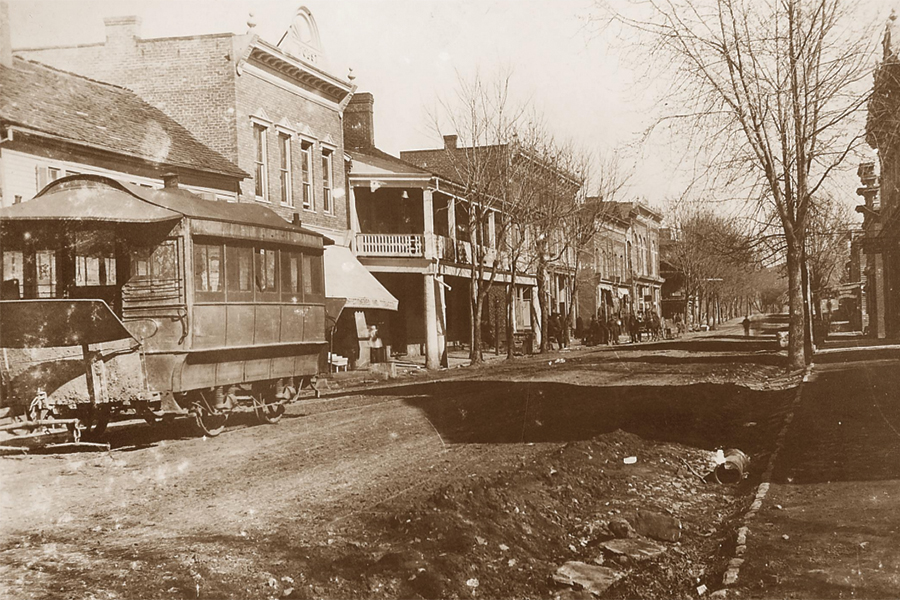
America’s smallest-town streetcar ferried just about everything — and everyone — between Tazewell and North Tazewell throughout the late 19th and early 20th centuries.
Photo Above: The first Tazewell trolley was horse-drawn. Courtesy of Cindy Lowe
Despite the 19-teens being the era of jazz and flappers, it was still a time of dignity and modesty in the mountains of the South, as witnessed by one young lady in Tazewell, Virginia, who each day asked the trolley conductor to turn his head while she retrieved her fare from her stocking.

What the two may not have considered — but what a local newspaper editorial declared at the time — was this: “The streetcar is all right and Tazewell is it.”
With a combined population of less than 2,000 people, the mountain towns of Tazewell and North Tazewell were the smallest in the United States operating a complete railway system including an electric streetcar.
The line had humble beginnings as a horsecar in the 1890s, but by 1905, electricity had arrived. “Tazewell will step to the front,” proclaimed the local paper, and the Tazewell Railway and Light Company was chartered. In its very first week of operation, the new electric trolley carried more than twice the towns’ combined population.
The streetcar ran between two very different worlds. In North Tazewell, trains rumbled in and out of the depot, factories clanged and freight moved steadily through a town alive with the industrial hum of its ice, bottling, machine, cleaning and power plants. On the other end of the line, the trolley would roll into the slower-paced, more-tranquil county seat of Tazewell proper where government offices, hotels, businesses and restaurants lined Main Street.
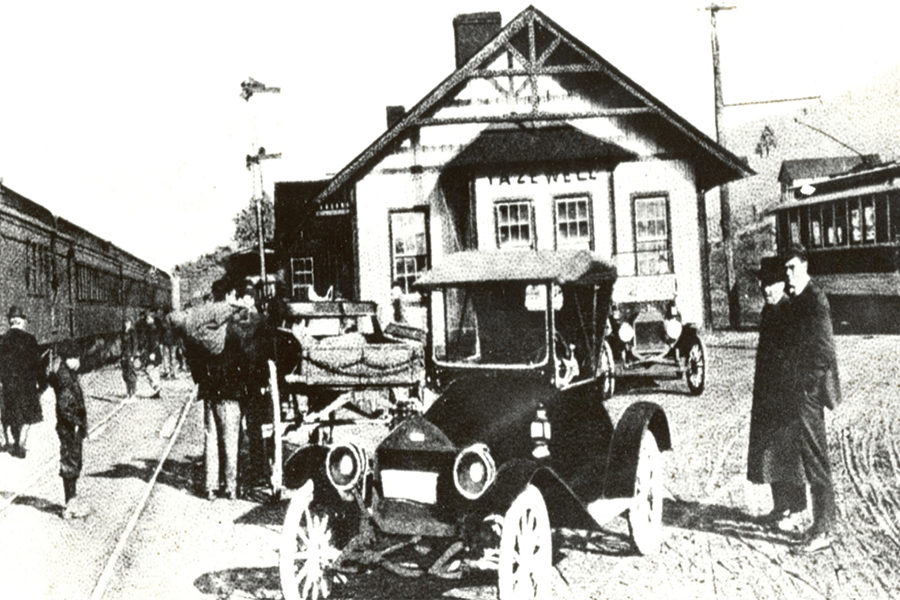
While staying dry on a rainy day was well worth the five-cent fare, locals recall that it was the streetcar’s charm and the ride itself that often proved to be the real highlight. Billboards along the car advertised movies and local businesses in both towns, and the accommodating crew was known far and wide for its courtesy. They often made unscheduled stops to help mothers and their children cross the street and would happily help with “buying a spool of thread” or “getting a pound of butter for dinner” that would be dropped off to the requester on the return trip. Town residents would often send their laundry down the carline. It would return cleaned and ironed later in the day.
For decades, the streetcar was the heartbeat of daily life. But by the 1920s, it began to share the road with automobiles and even a few buses. Ridership declined, and in 1933, much to the regret of locals who would long remember its role in the community, the Tazewell Trolley made its final run.
No one seems to know for certain what became of the cars themselves. One may have found new life as a hot dog stand on Brushy Mountain. Another reportedly became a backyard playhouse. Fitting ends, perhaps, for a streetcar that never took itself too seriously, even as it quietly made transportation history in towns few would expect to find on the transit map.
The story above first appeared in our January / February 2026 issue.