Skip to content


The history of the West Virginia resort’s water goes back more than 150 years, with endorsements from people ranging from Olympians to congressmen.
In the 1920s, Louis Austin reached an agreement to sell Capon Springs Mineral Water in Philadelphia. This was at a time when Hampshire County, West Virginia’s Capon Springs and Baths were virtually abandoned, but whose owners nonetheless offered contracts for individuals such as Austin to collect its waters.
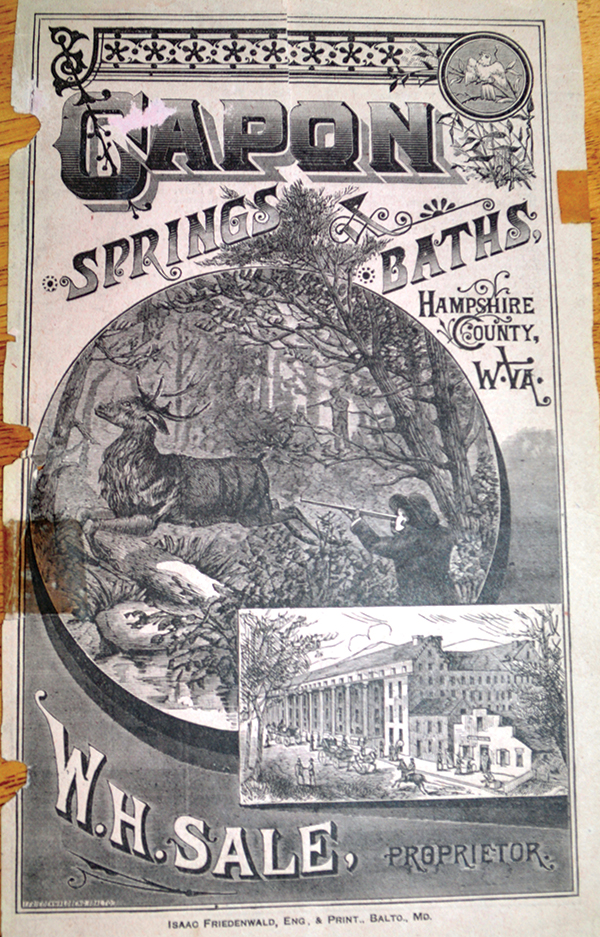
Austin would go on to buy the spring that was the source of that water in 1932 at a real estate auction. And he dearly wanted that water—a liquid so pure and invigorating that it was favored by both the U.S. Congress and the U.S. Olympics teams in the 1920s. But, Austin was not necessarily interested in what came with it—the old resort property.

Still, he let his friends stay at Capon Springs. His wife, Virginia, became a popular hostess. And friends who stayed told more friends, until a clientele began building ever bigger. Church groups came out. So did families on reunions.
Even so, Austin kept trying to unload this place—until finally realizing running a resort was more easy-flowing than trying to sell spring water. This retreat actually kept itself afloat while the water industry faced ever-stifling rules and regulations.
Today, it may be sheer fate that Capon Springs still thrives while so many other spring resorts of the mid-1800s have since faded back into the wilderness.
The original resort was established in 1851 as part of the Commonwealth of Virginia.
“But it was way overbuilt and never became much—they just didn’t have enough people come,” says Jonathan Bellingham, one of Austin’s grandsons and now the marketing and recreation manager at Capon Springs and Farms.
West Virginia acquired Capon Springs when Hampshire County became part of the Mountain State in 1863. Still, it struggled—until the 1870s when it became easier to reach, says Bellingham, and overflowed with visitors “when a lot of people were looking for these mountain resorts.”
The property passed into private hands a few years later. But its “Mountain House” burned to the ground in 1911, and its lodging business dried up.
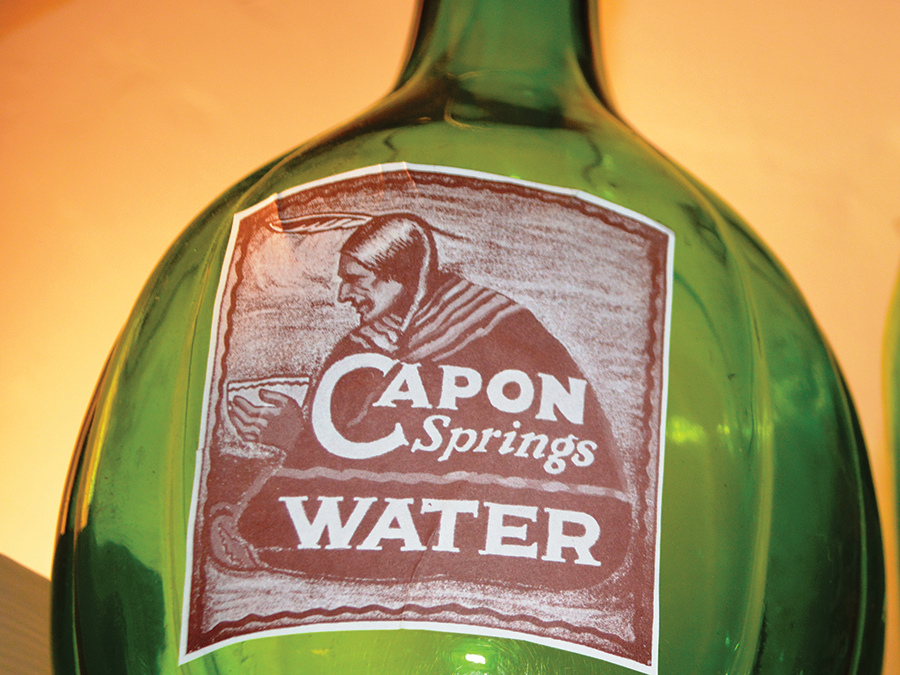
Still, the water kept flowing, and so did its popularity. During the early 1900s, Capon Water was bottled and distributed up and down the East Coast, and 25 major cities had both home and office delivery of this liquid gold.
More deliveries went to the U.S. Congress.
This water won fans with many, including longtime Congressmen Strom Thurmond. In a letter dated March 25, 1955, Thurmond praised the “delicious water,” writing, “Perhaps the fact that American Olympic teams favor the use of this water accounts in part for their success in competition.”
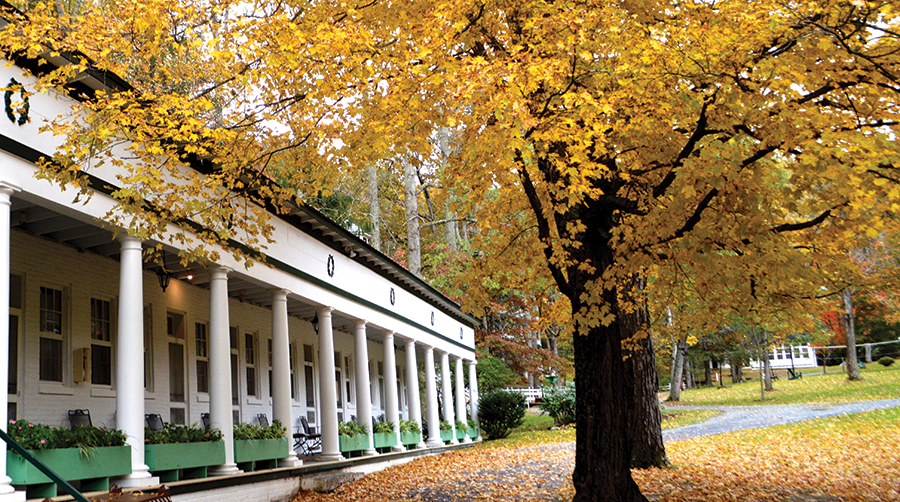
Yet while elected officials loved it, the Food and Drug Administration railed against spring water suppliers touting health benefits, says Bellingham.
“Water was only one on the many lists of things. There were a lot of lotions and potions that people were selling that weren’t doing anything. But, then, you had these spring waters with 50 or 60 years of evidence of doctors prescribing it and it being helpful to people. So, they were all lumped in together.”
Doctors did, indeed, prescribe Capon Water—for more than 60 years, Bellingham says.
“Anything from a hangnail to cancer was cured with Capon Water,” says Bellingham. “And we got these couples who said that after years and years of trying to conceive, it was only after drinking this water that something happened. So we joke and say, ‘Oh, it’s powerful stuff.’”
Such “powerful stuff” now flows freely at Capon Springs. It’s running in taps. It fills the swimming pool. It’s available in the spa. And, of course, it’s on tables in pitchers for communal meals in the resort’s dining room, a laid-back hall where men are forbidden to wear neckties.
You can also simply stop at this remote resort and fill your jugs with Capon Water—for free.
Capon Springs & Farms: 3818 Capon Springs Rd., Capon Springs, West Virginia; 304-874-3695; caponsprings.net.
END OF PREVIEW
The story above appears in our Jan./Feb. 2019 issue.