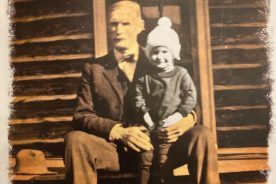
Want to learn more about the Hatfields and McCoys? Check out these great resources!
Editor’s Note: This story was originally published in the March/April 1996 issue of Blue Ridge Country.

Hers is the classic story of a girl who loved too much. Young and starry-eyed, she blinded herself to clan hatreds, and one spring afternoon, claimed Johnse Hatfield as her lover and intended husband. Little did she know how completely her happiness was doomed. Nor that she would become fuel in America’s most famous, brutal feud. Before she died of a broken heart eight years later, she would become a casualty in the mountain war that left her alone, pregnant, a family traitor, bereaved of five dead siblings and betrayed by lover, parent and, at last, her own mind and body.
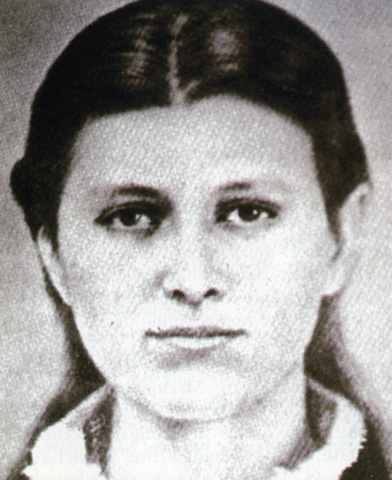
She is the heroine of myth, music and movies.
Even today, more than a century later, her life and that of her kinsmen form the compelling center for books and films. It is one in a horde of retellings . . . from major movies and love songs to old texts, many with widely varying version of dates, names, times and what occurred.
Yet one fact remains:
Nothing like the Hatfield-McCoy feud has ever happened in American life. Nor could it happen today.
First, there are the people … Giants with fierce pride and strange names like Devil Anse. Cotton Top. Bad ‘Lias. And “Squirrel Hunting” Sam. Men bred from the rugged individuals who scorned the courtesies and restrictions of their native, stifling Virginia society and chose to strike out for open spaces to the west, a wilderness where they could be free.
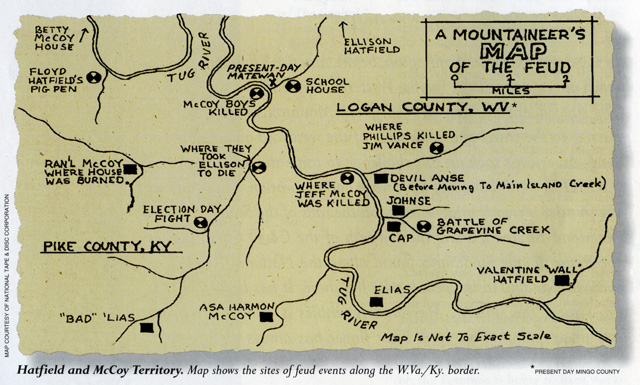
Here in the mountain terrain among the wildest in eastern America, the twisting Tug Fork River sliced West Virginia’s Logan (now Mingo) County with its Hatfields and Kentucky’s Pike County with its McCoys into separate and independent-minded states. And never would that independence be more challenged than with the coming of the War Between the States, when Kentuckians and West Virginians fought and died for both the Union and the South’s honor and cause.
Strangely, if not for the war and its divisions, the tragedy of the Hatfields, the McCoys and Roseanna might never have been.
Or perhaps, if there had not been that damnable pig…
The People on the Peaks
Peace was never natural along the Tug’s banks. Especially not in the mid-19th century.
The men here doted on their skills at guns and fights, their spit-the-devil-in-the-eye fearlessness, their huge families, their freedom. For them, government barely existed. Courts were few and police protection almost nonexistent, with public servants dreading to venture into the hollows and backwoods near today’s Matewan, W.Va. and Pikeville, Ky.
Rugged outdoorsmen, often intelligent and usually illiterate, they made whiskey, logged timber, fished and hunted. And they excelled at their crafts. Many were such uncanny marksmen that the story is told of a shy mountain boy who put a bullseye through a coin thrown into the air without any of those present having seen him even draw his gun. The stuff of legend? Likely, but indicative at least of the tenor of the time and region.
Still, before the Civil War, there was a certain quiet harmony in that uncompromising land.
With romance in mind, both Kentuckians and West Virginians frequently crossed the Tug in search of sweethearts, courted their choices and, as young couples, turned their relatives into relations. With so few families in the vicinity, there was limited variety. Cousins often married cousins. Hatfields married McCoys. And as babies swelled their ranks, all was well with the growing clans.
The Reigning Patriarchs
On either side of the river, men stepped forward to assume the mantle of leadership for their kin.
In Kentucky, that mantle went to Randolph (Randall, Ole Ran’l) McCoy, a tall, broad-shouldered man of property with gray eyes, full beard and serious, almost morbid, bent of personality. Married to his cousin Sarah, the couple produced 16 children, one dead at birth but a surviving brood that included nine fighting-age sons and six daughters, among them the ill-fated Roseanna. Described by a sympathetic author as “a kindly old man,” he nonetheless seldom laughed and lacked the natural charisma of his West Virginia counterpart.
Ruling the West Virginia bank was Capt. William Anderson (Devil Anse) Hatfield, also tall, gray-eyed and bearded, with a striking resemblance to Stonewall Jackson. Gifted with an innate talent for tall tales, a love of pranks and almost clownish sense of humor, the former Confederate officer was a legend in his own time, thanks to his incredible marksmanship and legendary feats.
With finite detail in his book, “The Hatfields & The McCoys,” Virgil Carrington Jones describes an instance when Devil Anse single-handedly cowed a large band of Union soldiers from his perch on a mountaintop. Methodically pivoting from one position to another and with unerring accuracy, he held them at bay in the ravine below until the band, under cover of darkness, turned tail and silently stole away.
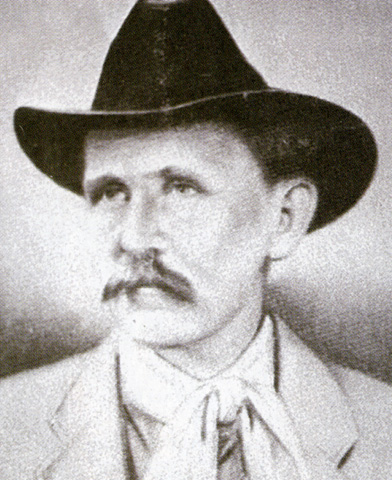
Once described as a man who had “never killed anyone just for the pleasure of it,” it’s told that at some point in his youth, Devil Anse came across a sleeping bear and kicked it to consciousness, apparently for the sport of it. He then stood guard over it, without food, drink or ammunition, through two days and a night. When worried family and friends rescued him, he insisted the food go first to his dogs, then shot the animal in its hiding place and vowed, according to some accounts, that after such an adventure he was “ready to face the devil.” Apochryphal perhaps, but a good fit for the nickname he would carry later in life.
Like McCoy a prolific father, Hatfield and his wife Levicy filled their home with 13 children, four daughters and nine sons. It was his oldest, Johnson (Johnse), who would become Roseanna McCoy’s object of love, lust and broken dreams. Yet the senior Hatfield and McCoy were not, by nature, totally at odds. At the heart of it, each was a “simple, hospitable mountaineer. . . affectionate and home-loving.” And perhaps sharing the same mortal flaw: an overpowering family pride that grew to murderous proportions in sons who were too quick to take offense and too stubborn to forgive.
The Divided Banks
If only there had been no war …
If only the neighbors had all fought together …
But reality was bitter. With West Virginia’s admittance to the Union in 1863, Devil Anse Hatfield realized that, as a Southern sympathizer, he, his family and property were in real danger. Now, in the name of home defense, he formed the Logan Wildcats, which as one of the most feared guerrilla bands to patrol the Tug’s banks, too often forgot its honorable objective and cashed in on the less-than-honorable spoils of war. In a tit-for-tat aggression, guerrillas from both sides seized and stole hogs and horses and hides. Always, in the midst of the fracas, McCoys and Hatfields took turns as victims and attackers. And always, the clans’ hostilities grew to increasingly dangerous new heights.
Finally, on Jan. 7, 1865, they claimed their first victim.
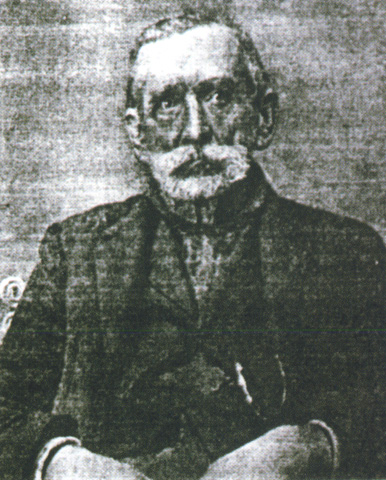
A Union veteran who had waited two years to enlist, Harmon McCoy, younger brother of Ole Ran’l, had defied his family’s loyalties by joining Northern forces as a private for 12 months.
Suffering a broken leg and discharged on Christmas Eve 1864, he returned home to a chilly welcome and a chilly warning from Devil Anse’s ruthless uncle, Jim Vance, that he could expect a visit from Devil Anse’s Wildcats.
Frightened by gunshots as he drew water from his well, Harmon hid in a nearby cave, supplied with food and necessities each day by his slave, Pete. But Harmon’s fate was sealed. His tormentors followed Pete’s tracks in the snow, discovered the ailing Harmon and shot him dead.
At first, Devil Anse Hatfield was the prime suspect.
Later, after finding the Wildcats’ leader had been confined to his bed, the guilt turned squarely on Vance and, according to some accounts, “Wheeler” Wilson, the real gunman. But in an area where Harmon’s military service was an act of disloyalty, even his family believed the man had brought his murder on himself.
In the end, the case died with no suspect brought to trial.
Even so, it was a frightening reminder of the brutality that the families’ hostilities could bring to life.
A Pig in Court
For 13 years, peace reigned along the Tug.
With the passing of time, Hatfields and McCoys forgot the tensions and injustices of the war years. Again, the families intermarried. Even the patriarchs, with Ole Ran’l considerably older, added to their expansive families.
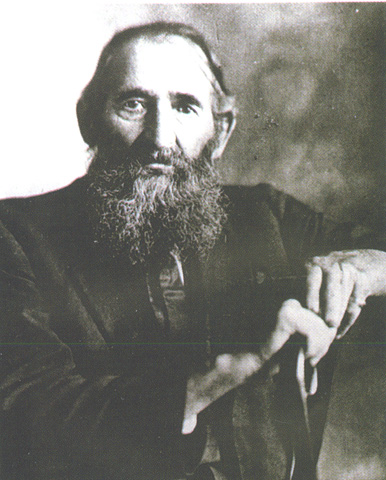
In West Virginia, times were good. Devil Anse’s logging enterprise prospered and his crew grew to 30 men. Through a lawsuit against Perry Cline, he gained 5,000 acres along Grapevine Creek, turning him into one of Logan County’s wealthiest men.
But near Kentucky’s Blackberry Creek, the tide was about to turn.
It happened one autumn day in 1878 when Ole Ran’l stopped to visit a Kentucky Hatfield, his wife’s brother-in-law, Floyd. There Ran’l spotted a familiar-looking pig and claimed it as his own, accusing Floyd of theft. (Pigs in those days roamed free until herding time, marked only with an identifying ear notch.) Tempers flared and soon the two faced off in court.
Ironically, Preacher Ans Hatfield, a hard-shell Baptist minister and justice of the peace, presided over the jury of six McCoys, six Hatfields and a courtroom littered with jugs and rifles. The final verdict rested on the testimony of Bill Staton, a nephew of Ole Ran’l and brother-in-law of Ellison Hatfield, who swore to Floyd Hatfield’s ownership.
It was enough. Floyd won.
But Staton was marked for death. Within months he found it at the hands of Paris and Sam McCoy. Though Sam was tried for the shooting in a Hatfield court, which writers believe Devil Anse had instructed to acquit for the sake of peace, the gesture was futile. The McCoys were enraged that Sam had stood trial at all. Instead of gratitude, they felt an even greater hatred for the Hatfield clan, and it would take little more for the seething frustrations to burst into all-out war.
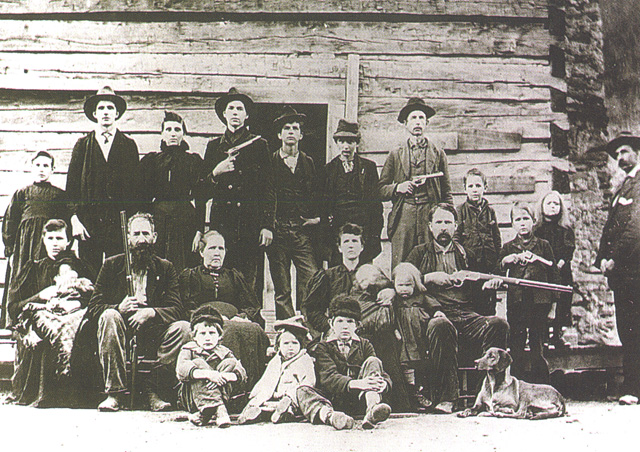
Enter Romeo and Juliet
Against this background of bubbling resentment, nothing could seem more foolhardy than a love affair between a daughter of Ole Ran’l and a son of Devil Anse.
But Roseanna McCoy was not wise.
By the best measure, the spring election of 1880 proved her downfall.
To mountain folk, elections were great social events. Men came to swap goods and stories, to drink and laugh and doze in the sun. The women grabbed the chance to visit, gossip and show off their gingerbread, a token bribe to influence votes of their choice. All in all, elections were not to be missed.
Johnse Hatfield understood that. Though only 18 and a West Virginia resident, he descended on Jerry Hatfield’s Kentucky grounds that day dressed in his finest yellow shoes and new mail-order suit. A notorious lady’s man whose looks set hearts aflutter, he had romance in mind.
Then he spied Roseanna.
Though her age varies from source to source, as does the spelling of her name, she was at least a year older than Johnse, by then a well-established bootlegger with stacks of ignored violations against him in Kentucky. The attraction was instant and magical.
Soon Roseanna, considered one of Pike County’s most beautiful girls, sauntered away into the nearby bushes with Johnse. The two returned hours later, when the sun was beginning to set and Roseanna realized her brother, Tolbert, had left for home without her.
Panic-stricken and with fear in her eyes, she turned to her new lover.
Johnse rose to the occasion, suggesting that she come home with him to the Hatfield cabin.
It seemed the only thing to do.
The Devil Resists
But though Roseanna had, quite unexpectedly joined his household, Devil Anse was far from pleased at the idea of the couple’s marriage.
Some say he thought Johnse too young. Others swear he simply refused to have his own blood mixed with that of Randall McCoy. Whatever his reason, he turned deaf ears to Roseanna’s pleading and when, months later, her mother sent her sisters to beg for her return, Roseanna went, in part, according to some historians, because of Johnse’s wandering eye. But her stay with her own family, punctuated by Ole Ran’l’s nagging and reproaches, was short-lived.
In desperation, Roseanna fled to her aunt, Betty McCoy, at Stringtown, Ky., a spot closer to her lover and where the two could meet again with no prying brothers’ eyes to disturb them.
But Roseanna had underestimated the male McCoys.
One night, as the lovers rekindled the magic of their attraction, her kinsmen surrounded them, took Johnse prisoner and set out for the Pikeville jail. The alleged destination didn’t fool Roseanna, who understood Johnse would be killed at the first convenient spot. In an act of sheer devotion and family disloyalty, Roseanna borrowed a neighbor’s horse and rode, hatless, coatless and saddleless, to Devil Anse. Quickly gathering sons and neighbors, he led his forces over a shortcut, cut off the McCoys and reclaimed his son without a scratch.
For her bravery, Roseanna received a cruel reward. From that day, Johnse never again risked returning to her side. Hopeless and pregnant, she went back to the father who considered her ride an unforgivable sin. There, amid hostility and shame, she contracted measles and miscarried her child.
To add to her heartbreak, Johnse married Roseanna’s 16-year-old cousin, Nancy McCoy, only months later, on May 14, 1881.
Declaration of War
In little more than a year, the Hatfield-McCoy feud would burst into flames, perhaps not coincidentally at Jerry Hatfield’s home during the 1882 election.
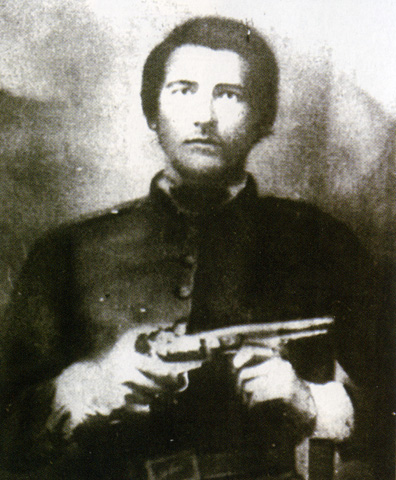
There in the shadow of Roseanna’s first blush of love, her brothers, Tolbert, Pharmer and Bud, would, without seeming provocation, stab Devil Anse’s brother Ellison 26 times and finish him with a shot in the back. After his death three days later, the trio paid with their own lives, tied to paw paw bushes and riddled with bullets, despite their mother’s cries for mercy.
Soon after, when the Hatfields decided someone was leaking their plans, they turned on Nancy McCoy Hatfield’s sister, Mary Elliott, bursting into her home and switching her and her daughter with a cow’s tail. When her brother Jeff McCoy tried to seek revenge, he was arrested, escaped and quickly shot at the banks of the Tug.
Before the feud’s end around 1891, the death toll numbered 13.
To answer a legion of real and imagined wrongs from Ole Ran’l and with considerable influence from his political ally Perry Cline – the man who had lost 5,000 acres to Devil Anse so long before – Kentucky’s governor appointed special officer Frank Phillips in 1887 to arrest the murderers of the McCoy brothers. To sweeten the pot, he also offered outlandish reward money that unleashed an army of bounty hunters on the West Virginia ridges.
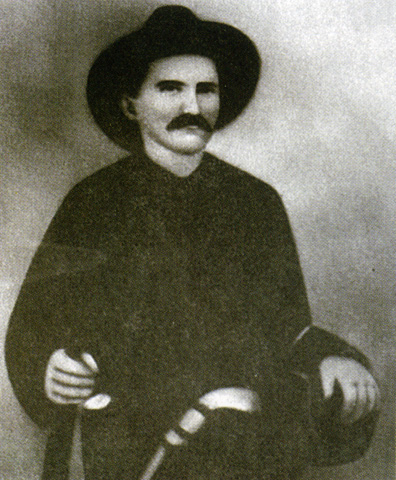
Determined to leave no living witnesses to convict them of their crime, the Hatfields raided the McCoy family home on New Year’s Day 1888, killing daughter Alifair and son Calvin and burning the cabin to the ground.
Suddenly public opinion shifted against the Hatfields, and Phillips began his work with glee and new names on his list, though he lacked properly executed extradition papers.
In response, West Virginia’s governor put up his own reward offers, sued his neighboring state for unlawful arrest of nine prisoners and eventually saw the case to the United States Supreme Court before the men were returned to Kentucky for sentences of death and prison terms.
But there was little joy at the verdicts.
Roseanna herself was gone. After tending her mother’s wounds from the New Year’s Day raid, Roseanna grew more and more depressed, slipping away from life soon after. Less than 30 at her death, she lies today buried in Dils Cemetery at Pikeville.
In a twist of fate, Johnse Hatfield, convicted separately and later than the others of feud crimes, was pardoned when he saved the life of Lt. Gov. William Pryor Thorne as the latter was attacked by an inmate during the official’s prison inspection. Johnse’s wife Nancy had long since left him, moved in with and, upon the pair’s mutual divorces, eventually married his pursuer, Frank Phillips. She died at 36.
The evil Jim Vance was killed in the feud. His young comrade, Cap Hatfield, went on to become an attorney and the father of Logan County’s first woman lawyer.
And Those Left Untouched
When the smoke had cleared, there remained the greatest irony of all. With all the bloodshed around them, both Devil Anse and Ole Ran’l were left unharmed. Both lived well into their 80s. Randolph McCoy died of burns on March 28, 1914. Devil Anse, who had become a baptized, born-again Christian in 1911, succumbed to pneumonia on Jan. 6, 1921. His funeral, at Sarah Ann, W.Va. was the largest ever held in Logan County.
Descendants of both men went on to honor their states and nation as governors, educators and physicians, and in December of 1995 the site of Devil Anse Hatfield’s burial was dedicated as a national monument. It’s not known how many McCoys were in attendance.
Want to learn more about the Hatfields and McCoys? Visit our resource page!