Skip to content


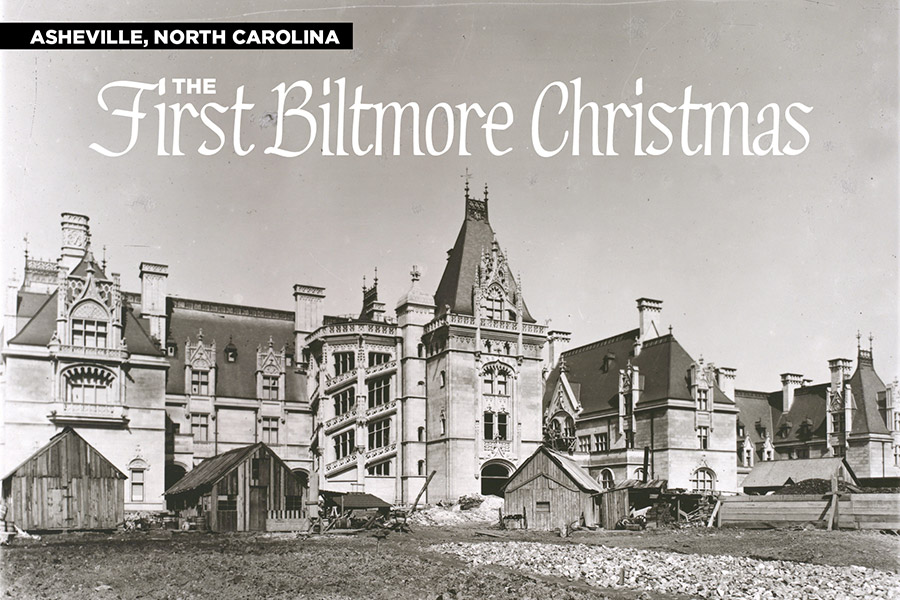
George W. Vanderbilt III saw to every detail before welcoming family and friends to the 1895 holiday season. Alas, no known photographs of the celebrations survive.
On December 22, 1895, George W. Vanderbilt III, America’s most eligible bachelor, awaited the arrival of his first guests—his mother and 26 of his relatives. It would be the largest gathering of his family since the death of his father, William H. Vanderbilt, 10 years earlier, and the official opening of Biltmore House in Asheville, North Carolina.
Construction of his new home in the remote, rugged mountains of western North Carolina had been a six-year undertaking and, despite hiring additional workers, the 250-room French chateau was still not complete. Vanderbilt moved into the Bachelors’ Wing on October 26, as his own room remained unfinished. Amidst the daily pounding, yelling, thumping and thudding of construction, he focused on finalizing as many details as possible before his family and, later, close friends arrived.

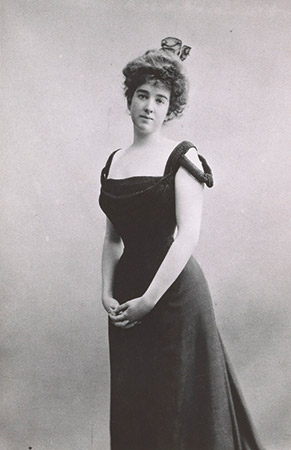
There was much to be done. “Boy Stealing Geese,” the centerpiece sculpture of the glass-roofed Winter Garden, was not in place, and would not even ship until December 10. Work on the dome above the grand staircase continued well into the month, as evidenced by the date December 18, 1895, memorialized in plaster by a worker. As the holiday approached, it became evident the library, music room, secondary staircases and other features would not be finished in time.
Undeterred, Vanderbilt, the consummate host, was determined to make this very special Christmas—the first at Biltmore House—meaningful and memorable; and although the house was unfinished, decorating and preparations for guests began. Vanderbilt and his estate managers attended to each detail, including the appropriate height for the tree in the enormous Banquet Hall.
Chauncey Beadle, nursery superintendent, wrote to Estate Manager Charles McNamee, “I quite agree with you that we should have a very large tree for this occasion; in fact, I think a twenty foot tree in that large Banquet Hall would be rather dwarfed.”
They also discussed where to get the best holly and mistletoe. On December 14, McNamee contacted Vanderbilt’s secretary, Thomas Morch, requesting a daily supply of fish be sent from New York, “Mr. Vanderbilt will require fish enough to make a course for fifty people every day and lobsters for the same number twice a week.”
The New York Times reported, “G.W. Vanderbilt has for two weeks past personally directed a corps of carvers, joiners, decorators, and florists in giving finishing touches to the great mansion . . . .”
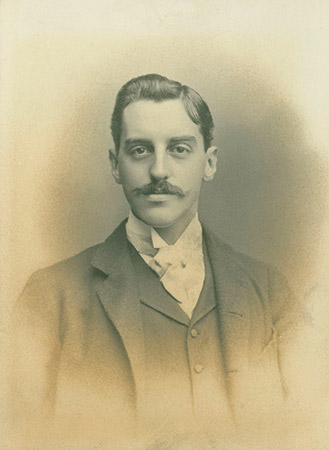
Biltmore was designed to entertain. Vanderbilt wanted a place where family and friends could come to rest, relax and enjoy his beautiful mountain retreat. He included the latest modern conveniences: plumbing, hot water, electricity and even had a telegraph line installed in the house a few days before Christmas.
On Christmas Eve, the ladies, dressed in their finest jewels and gowns, and gentlemen, in formal white tie, gathered in the Banquet Hall. The majestic 40-foot spruce, glowing with the latest innovation—electric lights—and decorated with hundreds of gifts for estate workers and their families, must have been an impressive sight. The smell of fresh-cut evergreen and the sound of English Christmas carols, played by the Imperial Trio, filled the air, while roaring fires, from three massive hearths at the end of the room, added a cozy warmth to the festive occasion.
The Asheville News and Hotel Reporter described the setting, “. . . the soft lights and the tastefully draped garlands of evergreen and mistletoe, interspersed with the shining leaves and red berries of the holly, create a scene beautiful to look at.” Following dinner the family exchanged gifts.
At 11:00 on Christmas morning, Vanderbilt welcomed the estate employees and their families, over 200 people, to Biltmore House. Gathering everyone in the Banquet Hall, he wished them a merry Christmas and, with his family’s assistance, presented gifts to one and all. The Asheville Citizen and Hotel Reporter wrote, “A beautiful Christmas tree that stood in the Banquet Hall causing the liveliest anticipation of the little folks, was then stripped of its heavy trimming of gifts.” The festivities continued in the Carriage House where a bountiful feast was enjoyed.
Over a dozen of Vanderbilt’s closest friends from New York arrived on December 28. William B. Osgood Field arrived after dark and wrote to his mother, “. . . to describe the scene of the house in the moonlight with lights would be out of the power of anyone, no stage effect ever was more beautiful or perfect.” For the next few days, Vanderbilt and his guests enjoyed coach and horseback rides, hunting, fox chasing, quail shooting, fishing, and bottle pool.
On New Year’s Eve, Vanderbilt and his guests enjoyed an elaborate dinner, then adjourned to the Tapestry Gallery for a delightful evening of cards, chess, and musical interludes. At 11:00 p.m. the festivities continued with dancing in the Banquet Hall. At the stroke of midnight, The Imperial Trio transitioned from a Strauss waltz to “Auld Lang Syne” as the company raised their glasses toasting the New Year and their gracious host. Vanderbilt gave a short response and the party resumed. Mr. Field later wrote, “We danced the old year out.” As one year passed into memory and a new one began, a light snow began falling, transforming the mountains, fields, and forests into a scene of winter enchantment, a fitting and beautiful end to the first Christmas at Biltmore.
Christmas at Biltmore 2019
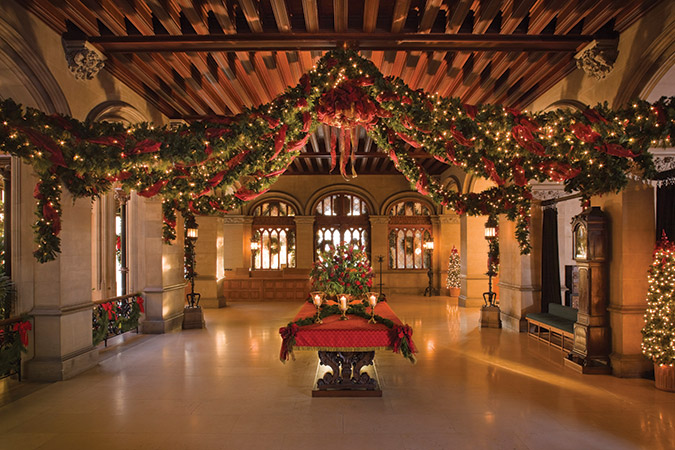
Christmas today is inspired by documented stories, traditions, grace, elegance and hospitality the Vanderbilts always showed their guests. The timeless beauty of Biltmore House is especially enchanting when the rooms are exquisitely decorated for the holiday. Daytime Christmas tours run from November 1, 2019 through January 5, 2020. Candlelight Evening tours begin November 1, 2019 and conclude January 4, 2020. Additional information: biltmore.com/visit/buy-tickets/christmas-at-biltmore
The story above is from our November/December 2019 issue.