Skip to content


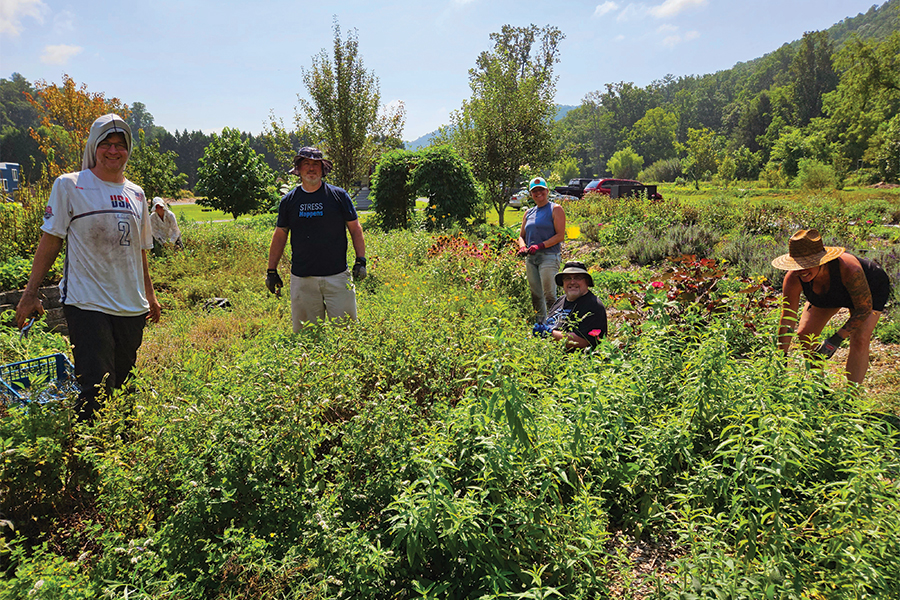
At the Veterans Healing Farm in Western North Carolina, veterans are discovering the therapeutic power of dirt.
Photo Above: Agri-therapy promotes healing through the act of digging in the dirt.
Photos Courtesy of Vets Healing Farm
In 2020, when Bradley Knudson retired from the Air Force after 20 years of service, he felt lost. The Wisconsin native had spent his entire adult life serving his country, only to be left with anxiety, depression and a long list of physical ailments.


“I couldn’t sleep,” he remembers. “And when you’re experiencing pain and can’t sleep, you get really desperate. It definitely starts to affect your mental health.”
Things reached the point where Knudson packed up his life and headed for the mountains of Western North Carolina to start anew. Once settled, he sought support at the Charles George Department of Veterans Affairs Medical Center in Asheville but quickly realized he needed more than prescription medications and traditional counseling. That’s how he found himself at the Veterans Healing Farm (VHF).
Established in 2013 by John and Nicole Mahshie, VHF is a sanctuary dedicated to supporting veterans’ mental, emotional and physical well-being. Set on 11 bucolic acres in Mills River, the farm offers a peaceful, restorative space where veterans work side by side — planting, growing and harvesting organic produce, flowers, mushrooms and herbs.
“If I were to say, ‘Come to the farm for therapy,’ veterans would turn around and run,” says Executive Director Alan Yeck. “So, we don’t ask for their stories or for discharge papers or for medical referrals. That’s not what we do here.”
Instead, the nonprofit’s model is rooted in agri-therapy. Better known as horticultural therapy, this modality is less about talking and more about doing. Instead of confronting trauma on a counselor’s couch, agri-therapy promotes healing through the simple, grounding act of digging in the dirt.
Yeck admits this sounds a little woo-woo. But it works. Countless studies have demonstrated the profound benefits of horticultural therapy, showing it can enhance mood, ease symptoms of depression and relieve stress. Research also shows that horticultural therapy can be effective in addressing symptoms of PTSD, a condition that approximately seven percent of all veterans will experience at some point in their lives.
“With PTSD, you’re thinking about what happened yesterday or what could happen tomorrow,” says Yeck. “You completely miss the good that’s happening right in front of you. But on the farm, mindfulness is in every direction.”
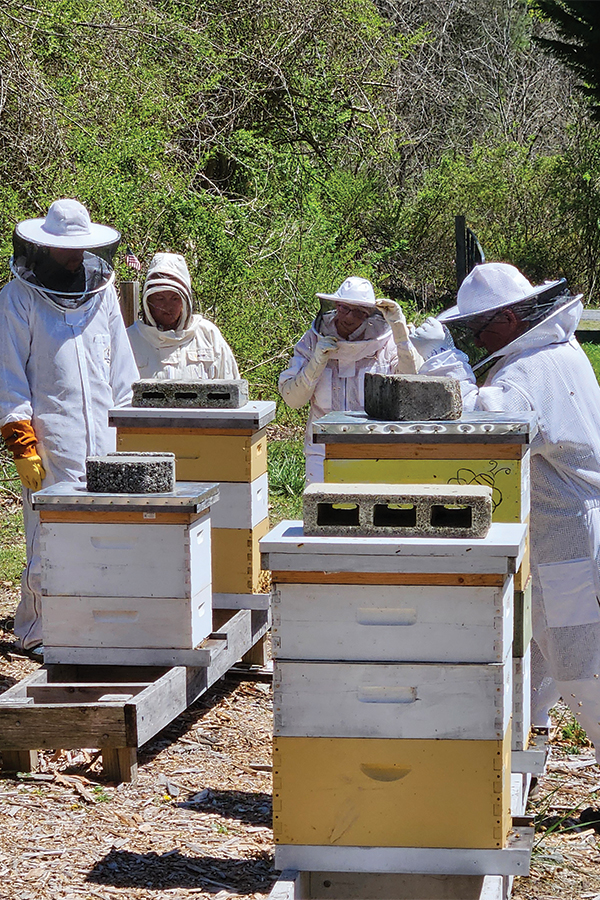
At VHF, veterans finally feel safe enough to focus on the here and now — the soft brush of a mountain breeze, the gentle hum of native bees buzzing around plants, the earthy aroma of fresh herbs. This connection to the present moment helps quiet the whir of thoughts while opening the door for conversation.
“One day, you’ll find yourself talking to somebody about their experiences in Vietnam,” says Yeck. “You never said, ‘Tell me about Vietnam.’ They never said, ‘Hey, let me tell you about my time in Vietnam.’ It just happened organically. Finally, after so many years, they can set down that weight they’ve been carrying.”
Soil aids this therapeutic process. Studies have shown that a specific bacterium found in dirt, Mycobacterium vaccae, can stimulate the brain to produce more serotonin, the neurotransmitter that helps regulate mood. Because of this, simply being in a field — whether planting seeds or pulling weeds — can offer a natural antidepressant effect.
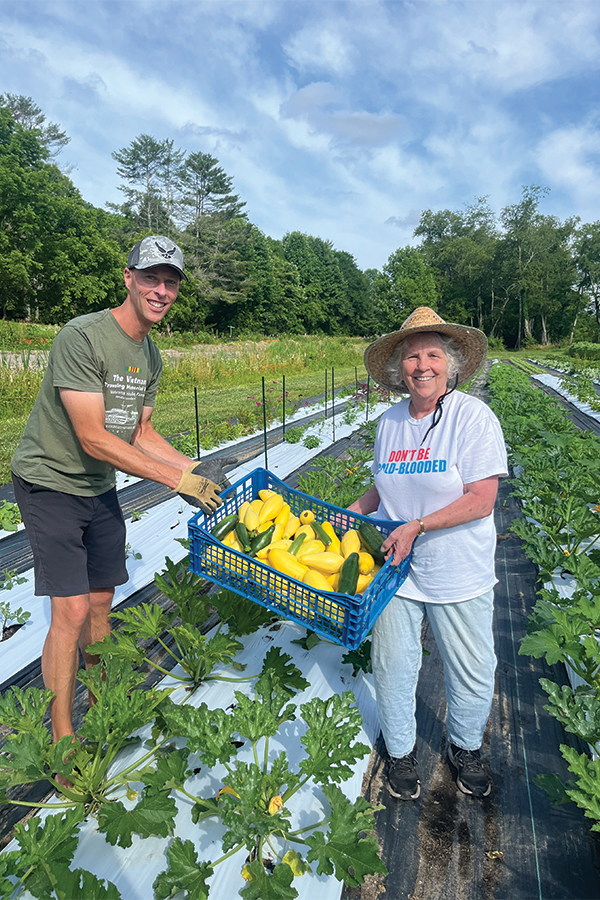
VHF also gives veterans a tangible way to support one another. In 2024 alone, volunteers grew and distributed more than 6,000 pounds of fresh produce to veterans and their families across Western North Carolina. They also cultivated 68 varieties of medicinal herbs, processing them into teas, tinctures, salves and other remedies.
This sense of accomplishment is important, says Megan Landreth, director of operations.
“It gives veterans a purpose,” she explains. “They have seen so much death, destruction and things that are really hard to get out of their brains. But on the farm, they can experience something positive while giving back to the community.”
The Veterans Healing Farm has certainly made a difference for Knudson. About a year ago, he began regularly volunteering two to four days a week, depending on the month. (Tomato season is especially busy, he says.) In that amount of time, he has developed healthier coping mechanisms to deal with his past experiences. He has also finally found some relief from his insomnia.
“When you start farming, there’s just bare soil. Then, you plant some seeds, tend to them and watch them grow,” says Knudson. “Seeing the fruits of your labor makes you realize that you’re part of something bigger than yourself. It gives you a warm feeling.”
The Veterans Healing Farm (138 Kimzey Road, Mills River, N.C.). For more information, see veteranshealingfarm.org.
The story above first appeared in our September / October 2025 issue.