Skip to content


Throughout the region, centuries-old customs remain cherished and add a touch of nostalgia to the magic of the season.
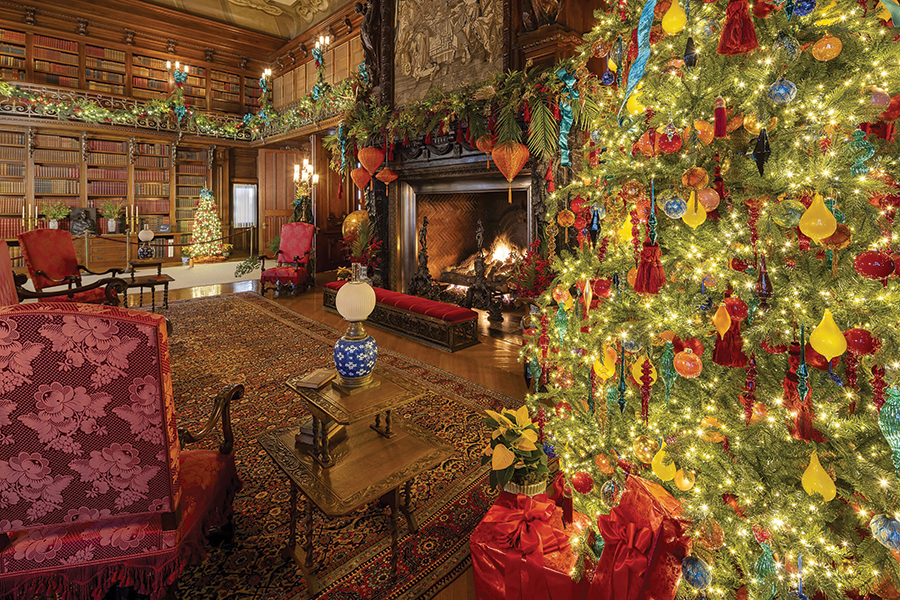
Photo Above: More than 10,000 ornaments, glowing fireplaces, soft candlelight and live music create holiday ambiance at the Biltmore Estate in Asheville, North Carolina. © The Biltmore Company
Holiday traditions come in many forms. Sometimes they are popularized by well-known folks or dictated by the seasons of nature or inspired by spiritual beliefs. Others are secular or embraced by communities, evolve from cultures or are born of necessity.

And certain traditions are created and sustained within families, which can be the simplest of things like decorations that appear each and every year. For this writer (admittedly of a certain age), the holiday hearth would look amiss without a certain pair of stockings. Made of felt with Santa felt cutouts glued to the front, they showed up in my childhood stuffed with all manner of goodies. While the contents changed as we did, the stockings became the traditional treasure. And those now-faded, fragile and beloved stockings still appear every year at Mother’s house, hung by the chimney with care.
Whether holiday traditions have traveled across the world and through time or have become a treasured part of the family, let’s explore a few that shine bright.
Gingerbread in West Virginia
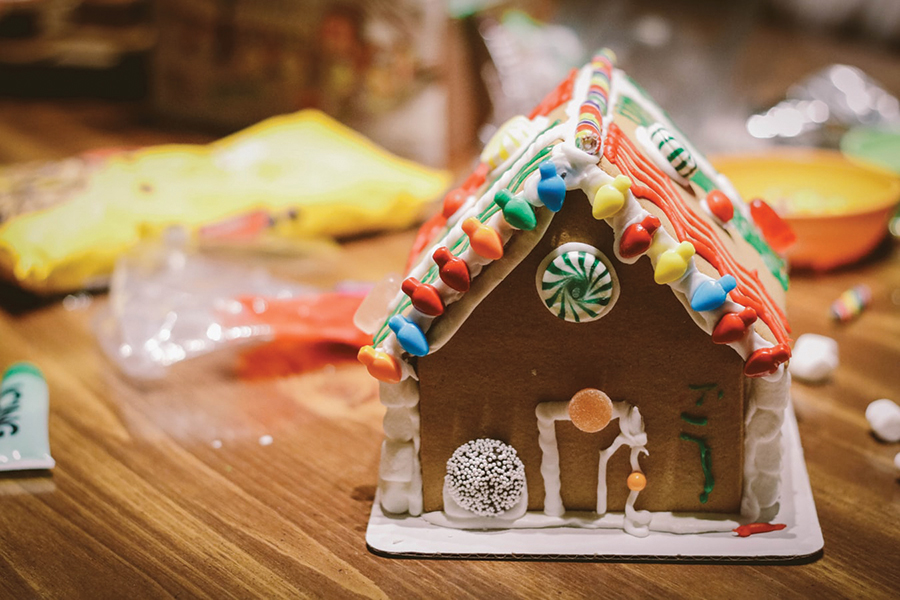
The delicious tradition of using ginger, a once rare and expensive spice, in celebrations dates to early religious ceremonies in Greece and Egypt. In 16th-century England, Queen Elizabeth is credited with the idea of gingerbread men, whom her bakers made into the likenesses of visiting dignitaries. In the 19th century, gingerbread decorations adorned evergreens for Christmas, and Grimm’s fairytale “Hansel and Gretel” boosted the popularity of gingerbread houses created centuries before by German bakers. From then, this ancient spice has become an integral part of holiday dessert flavors and received recognition with an official Gingerbread Decorating Day.
Gingerbread Festival, Fayetteville, Dec. 5-7. Nestled among the mountains near one of the world’s oldest rivers at New River Gorge National Park is a small town rich with charm, an active arts scene and a renovated historic district. Each December, this family-friendly location becomes a gingerbread-themed winter wonderland.
Bakers bring their gingerbread masterpiece creations to the town hall for visitors to view and photograph. Homes and businesses are transformed with gingerbread décor and many are open for tours. In nearby venues, makers bring homemade crafts, food trucks offer delicious treats, light displays shine, live theatrical performances of favorite Christmas stories draw patrons and there is even an “ugly sweater” contest and a fun run.
Mistletoe in Virginia
Exploring the woods around our childhood home was a year-round adventure. In winter, we would scan the tops of trees for clusters of green leaves with white berries anachronistically clustered high up on bare branches. We called it “mistletoe spotting.”
Growing on all continents except Antarctica, mistletoe species are elements of various traditions and cultures through time. It holds a place in Norse mythology, and the Celtic druids considered it a sacred plant which they gifted as a wish for good fortune. Its association with love and fertility is thought to have inspired a song and literature in the 18th and 19th centuries. This, in turn, likely led to the custom of hanging sprigs in doorways and the playful kiss for those who pass underneath.
Mistletoe Market, Abingdon, Nov. 7-9. For 26 years, the historic destination town of Abingdon has welcomed artists, artisans and makers to this event in southwestern Virginia. Shoppers flock to this event, which is considered “the Southeast’s pre-eminent boutique holiday gift mart.” Organized by the William King Museum of Art, the show presents 110 jury-selected vendors offering handmade, high-quality creations for those seeking unique presents for family and friends. As a major fundraiser for the nonprofit museum, this is an opportunity to support arts education, fine art exhibits and “preserve the region’s cultural heritage.”
Nativity Play in Kentucky
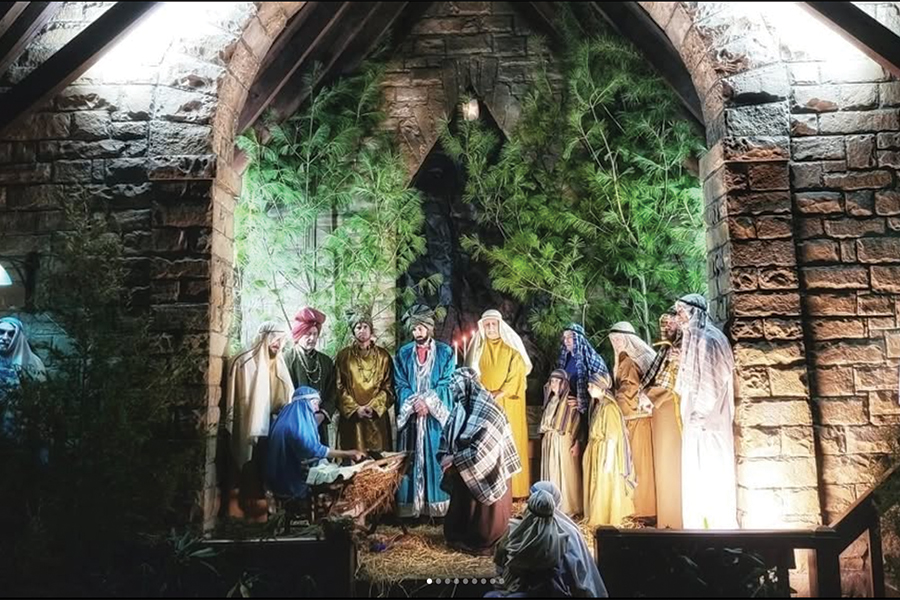
One of the earliest known live performances depicting the story of the birth of Jesus was in 1223 CE. St. Francis of Assisi gathered local people, animals and props and performed the first nativity play in a cave in Italy. This method of sharing the Christian message when literacy rates were often below 20% was highly effective and quickly spread in popularity via the travels of monks and missionaries. Today, it remains one of the most popular traditions of the Christmas season.
Community Christmas/Nativity Play, Harlan County, Dec. 11 & 14. Founded in 1913, the Pine Mountain Settlement School has been an “advocate for the beautiful people, children, cultures and wildlands of the Kentucky Mountains.” For the holidays, two events bring folks together. Community Christmas begins with dinner, followed by crafts, pictures with Santa and gifts for all the children. “The Nativity Play,” written in 1916 by Ethel DeLong, one of the founders of the Settlement, has been performed every year for the last 109 years. “This is one of the most cherished traditions of the community where people return each year (along with folks from other states) to join in the festivities of this vibrant celebration,” says Executive Director Jason Brashear. This nonprofit organization, “in the heart of Kentucky’s coalfields,” accepts monetary donations and welcomes volunteers for these (and all) programs.
Santa Claus and Bees in Tennessee
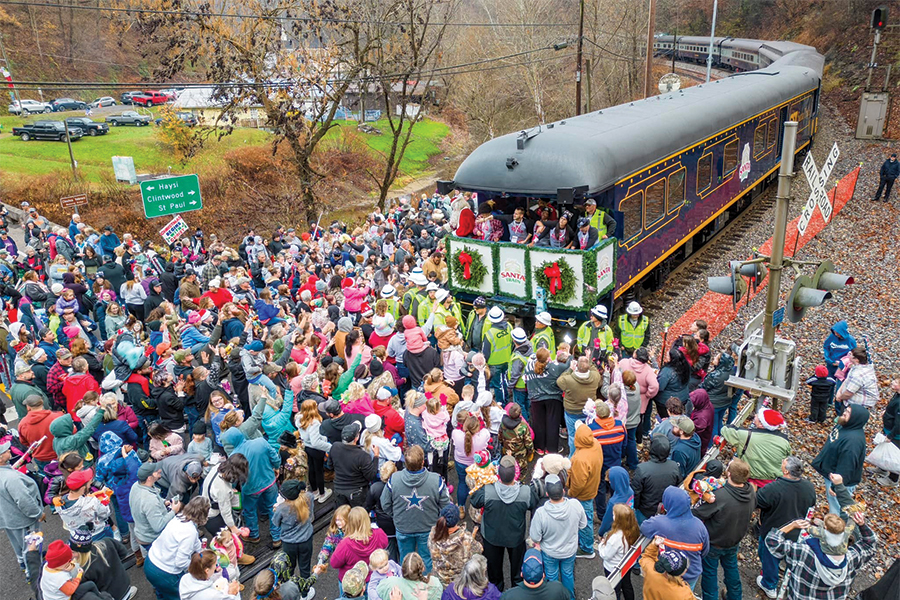
The stories of a Santa Claus date back to the fourth century and a Greek bishop named St. Nicholas. He was renowned for his kindness, generosity and a practice of “secret” gift-giving, particularly to children. The legend of this man and his traditions was carried through time by the Dutch who called him Sinterklaas. The Americanized version, Santa Claus, was transformed into a red-suited, jolly figure with a white beard traveling by reindeer via poems, cartoons and a Coca-Cola advertising campaign during the 19th and early 20th centuries.
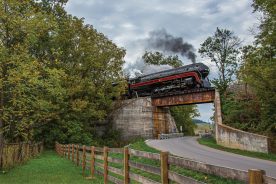
CSX Santa Train, Kingsport, Nov. 22. Since 1943, the businesses and citizens of Kingsport and CSX (formerly Clinchfield Railroad) have spread the spirit of giving and community compassion in Northeast Tennessee, Kentucky and Virginia. Across a 110-mile rail journey, the Santa Train carries “more than 15 tons of toys, gifts and winter accessories to thousand of families.” The train travels through 29 towns on their mission of giving. It then returns to Kingsport for a free community event packed with holiday events at Centennial Park.
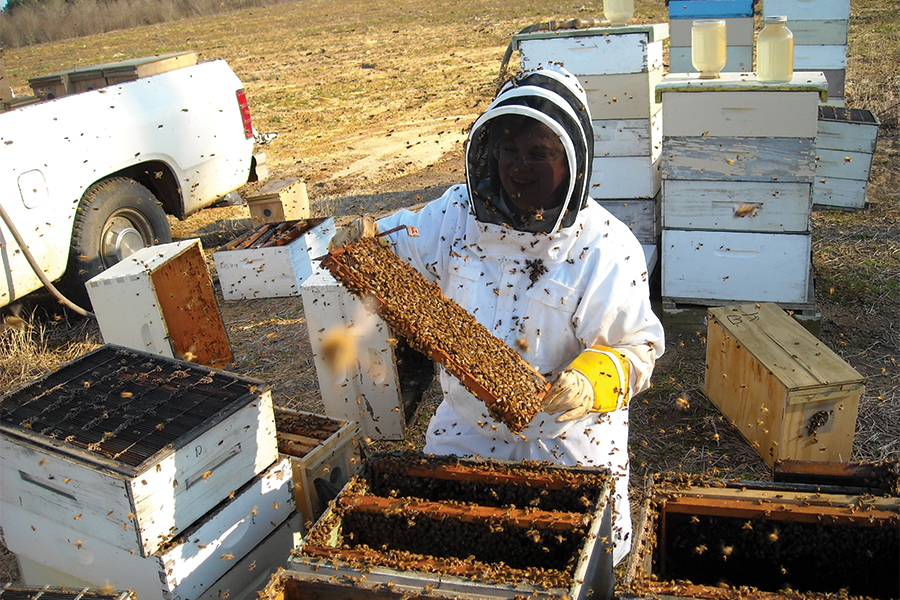
One holiday legend, seemingly counterintuitive for the winter season, is a honey bee tale. On the eve of “Old Christmas” — January 6, prior to the Gregorian calendar — a “blameless” listener could place an ear upon a hive and hear the bees humming. Later, European immigrants brought this folklore story to Appalachia with some traditions saying one could detect Psalm 100 in the music. The belief that bees are messengers between the physical and spiritual worlds dates to Celtic mythology.
Appalachian Bee Farm, Polk County, all season. Diane Ravens, a self-taught beekeeper for the past 34 years, opened her honey house to the public 17 years ago. What began “quite by accident” has grown into a thriving business with 50 colonies of bees and “artisan products from the hive.” She personally makes a popular line of gourmet honey options in a variety of flavors, a large selection of homemade soaps, a line of men’s products and bee-based personal-care items. For the holidays, customers will find gift sets, box sets and stocking stuffers along with beeswax candles and maple syrup from other reputable makers. Check honeybeesrock on Facebook for hours and bring questions for an interesting, informative and delicious visit.
Candlelight and Caroling in North Carolina
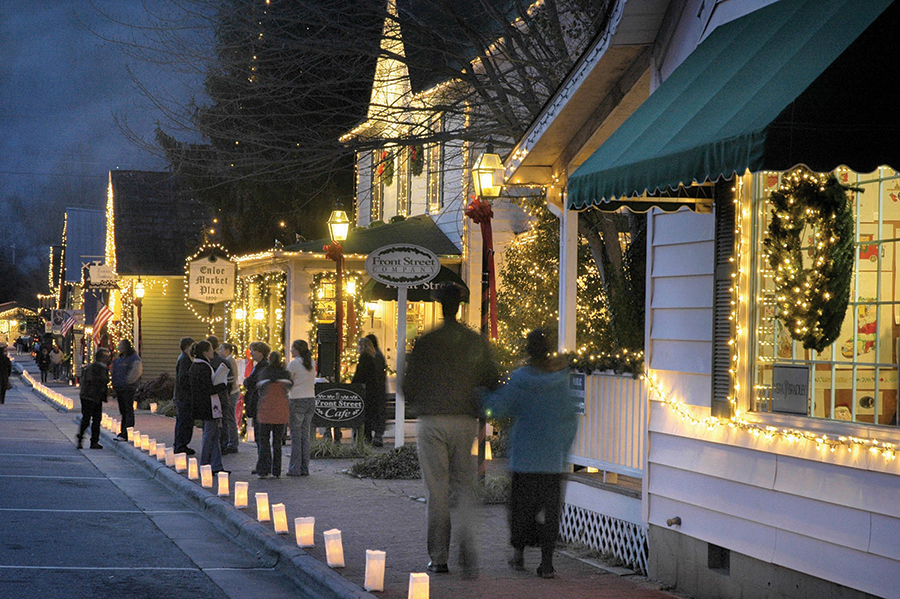
Lighting up the holiday season, which began in the 16th and 17th centuries in Europe as a tradition of attaching candles to branches of Christmas trees, is now part and parcel of festivities. This practice was expanded to placing candles in windows that represented hospitality for travelers and visiting family members as well as a signal for priests during times of religious oppression.
The symbolisms of light as dispelling darkness, bringing hope and creating a sense of warmth remain some of the intrinsic reasons that candles, luminaries and strings of electric bulbs twinkle through the season across cultures.
Dillsboro Lights & Luminaries, Dillsboro, Dec. 5-6 & 12-13. For more than 40 years, this quaint mountain town has welcomed visitors “to bask in the glow” of the holiday season. Downtown streets are illuminated with 2,500 candles and lights and filled with the aromas of cocoa and cider. Carolers sing, shops are open and complimentary horse-and-buggy rides create a nostalgic atmosphere in this “annual gathering of joy, tradition and community spirit.”
Caroling likely began with the pre-Christian ritual of wassailing, a pagan singing celebration to bring a bountiful harvest. In the 13th century, St. Francis of Assisi brought native-language songs to the people through nativity plays. These songs of praise were further spread by minstrels and adopted by wassailers who traveled in groups to homes, singing in exchange for food and drink. Standardized holiday songs in the Victorian era created a resurgence of caroling which continues today.
Christmas at Biltmore, Asheville, Nov. 1–Jan. 4. This 8,000-acre estate and 250-room French Renaissance private home is transformed into a storybook destination for the holidays. Live musical performers sing classic Christmas carols throughout the house. Choirs fill the air with song in the Winter Garden. Traditional Appalachian folk music and First Nation songs can be heard throughout the season. Visitors can see more than 100 hand-decorated trees and a 35-foot Fraser fir covered in more than 1,000 ornaments and thousands of lights in the Banquet Hall. Candlelight tours with guides in multiple languages, including American Sign Language, make this a welcoming destination for all.
Storytime in South Carolina
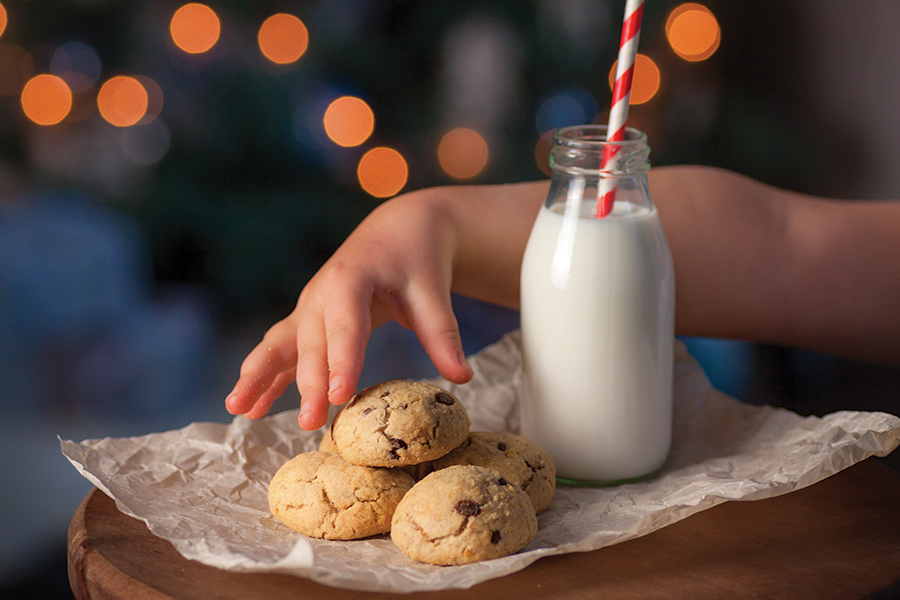
The tradition of passing along stories via the spoken word is as old as human language. The purposes of storytelling reflect our desire to understand life’s mysteries, preserve knowledge and connect with our communities in an entertaining way. The oral tradition of telling Christmas stories likely dates to pre-Christian winter solstice celebrations and was augmented with the invention of the printing press. Popular stories like “A Christmas Carol” by Dickens and Moore’s “A Visit from St. Nicholas” (better known as “’Twas the Night Before Christmas”) have become the foundation for holiday storytelling traditions.
Milk & Cookies Holiday Storytime, Greenville, Nov. 28–Dec. 7. Since 1987, the South Carolina Children’s Theatre has sought “to bring transformative theatre experiences to every young person and family in the Upstate.” For the holiday season, this includes “interactive holiday cheer for our smallest patrons and fun for the whole family.” Children get to play the Whos in “How the Grinch Stole Christmas” and be passengers on the train in “The Polar Express.” Both stories are performed each night in a 45-minute show at Younts Stage, followed by milk and cookies and photos with Santa.
Homemade Gifts in Georgia
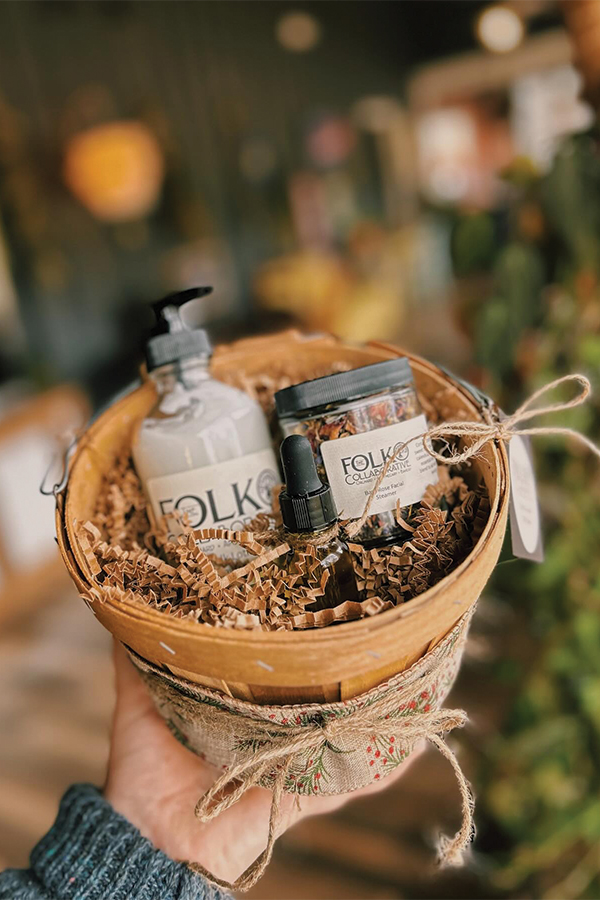
In ancient Rome, “token gifts of low [economic] value were a measure of high esteem [for the recipient], whereas expensive gifts were a sign [the giver] was trying too hard.” In many early communities, handmade holiday gifts were of a practical, useful nature, which built alliances and bonds between people.
While the practice of giving homemade gifts may have more recently been linked to economic hard times like during the Great Depression or in communities that struggle with financial stability, the greater meanings — expressions of creativity, thoughtfulness and care for the recipient — have superseded the necessity.
The Folk Collaborative, McCaysville, all season. “Created in the hills and hollers of Appalachia,” the gifts and products offered at this family-owned establishment are created with the wisdom, heritage and respect for the “simple folks who scratched out a life in these unforgiving mountains.” Select unique holiday presents from a wide variety of herbal teas, soaps, lotions, incense and “warshin’” powders made on-site. Join a campfire with an old-fashioned cookout, listen to local musicians play traditional instruments, take a November wagon-ride tour of the farm and grab homemade bakery deliciousness to go with a cup of organic, fair-trade coffee.
The story above first appeared in our November / December 2025 issue.