Echoes from earlier times commingle with soft fall light to create the romance of the covered bridge. We hope you enjoy these timeless photos from our Sept./Oct. 2018 issue.
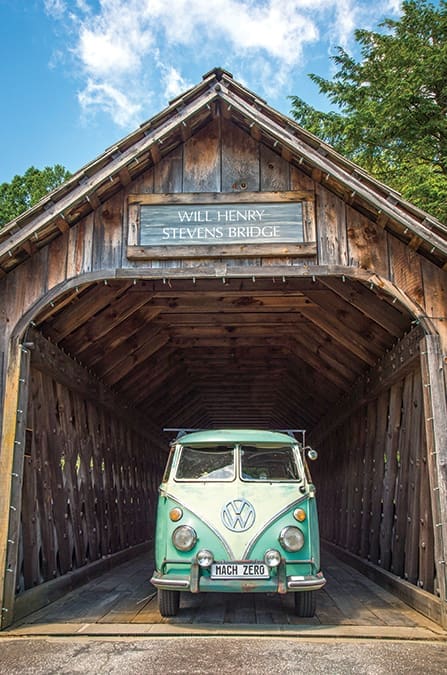
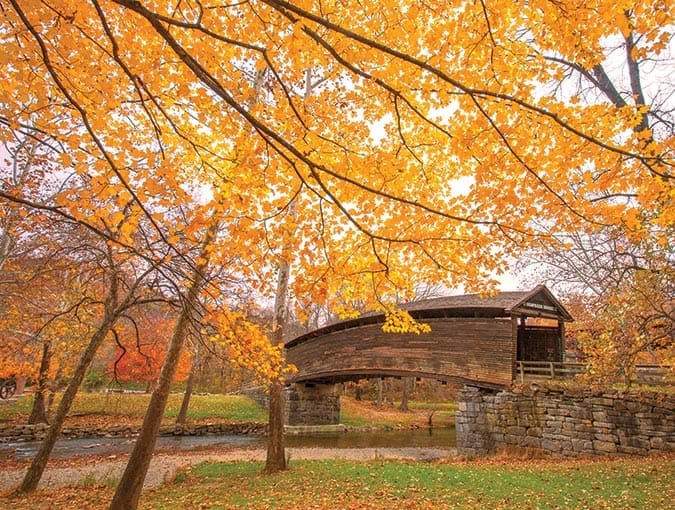
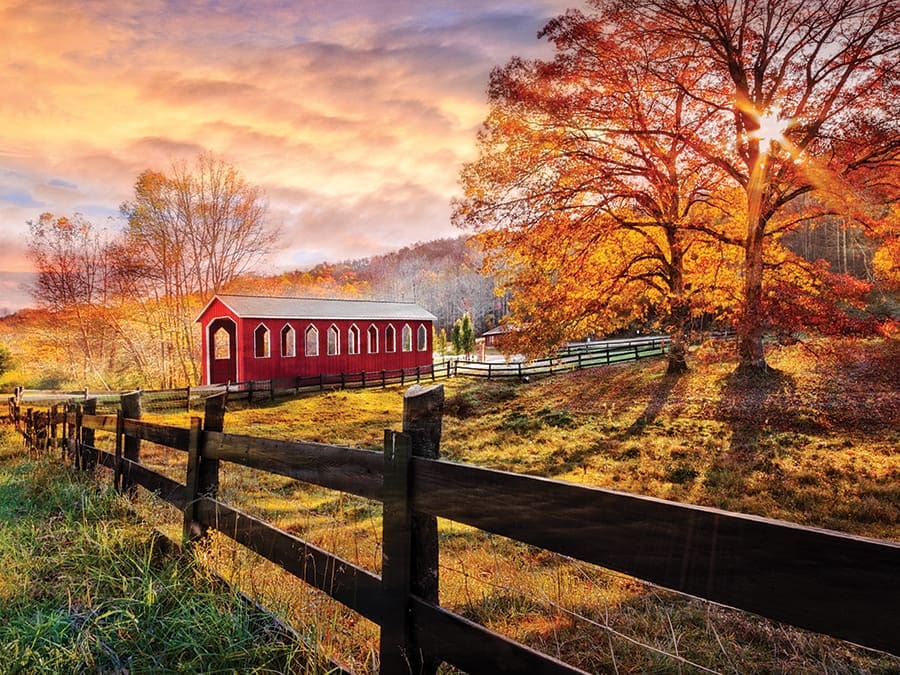
A vintage Volkswagen Bus is showcased under Will Henry Stevens bridge, just outside of Highlands, North Carolina. Meems Bottom Covered Bridge is in Shenandoah County, Virginia. The bridge, at 204 feet, is the longest covered bridge in Virginia. It was listed on the National Register of Historic Places on June 10, 1975. Campbell’s Covered Bridge, near Landrum, South Carolina, was built in 1909 and is the last covered bridge in the state. It was named for Alexander Lafayette Campbell, who owned a nearby grist mill. The low setting sun shines through the wooden beams of the Mud River covered bridge in Milton, West Virginia. The bridge that once spanned the Mud River in the mid 1800s has now been restored and relocated to Pumpkin Park in Milton and placed on the National Register of Historic Places. The Hurricane Shoals Bridge near Maysville, Georgia, was originally built in 1882 but was destroyed by vandals in 1972. In 2002 the newly rebuilt, 127-foot bridge was dedicated as part of Jackson County’s Hurricane Shoals County Park. A cascade of golden maple leaves frame the 161-year-old year Humpback Covered Bridge just outside Covington, Virginia, on a late autumn afternoon. This bridge is the only one of its design and the oldest remaining covered bridge in Virginia.
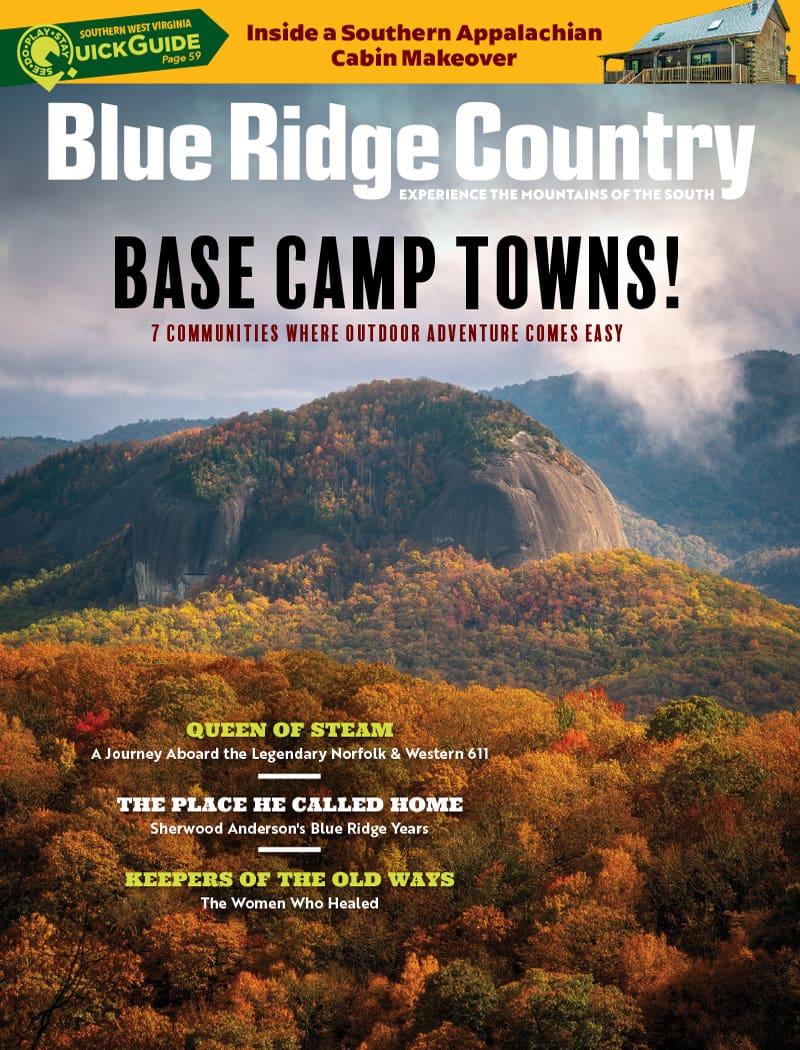
More than 70 years after she first took to the rails, the legendary Norfolk & Western Class J No. 611 continues to inspire both passengers and the volunteers who keep her running.
More than outposts for gearing up, these seven mountain communities are destinations in their own right, pairing easy access to some of the region’s best outdoor adventures with walkable downtowns, local flavor, and much more.
Long before modern healthcare reached many Appalachian communities, Granny Women became trusted healers and caregivers, delivering babies, treating illness and injury, and preserving generations of healing knowledge.
Ten years after this poll’s inaugural launch, we once again turned to our knowledgeable readers for their picks. The results? A brand-new collection of 71 exceptional Blue Ridge communities that excel at bringing big smiles to the faces of both residents and visitors.
 Skip to content