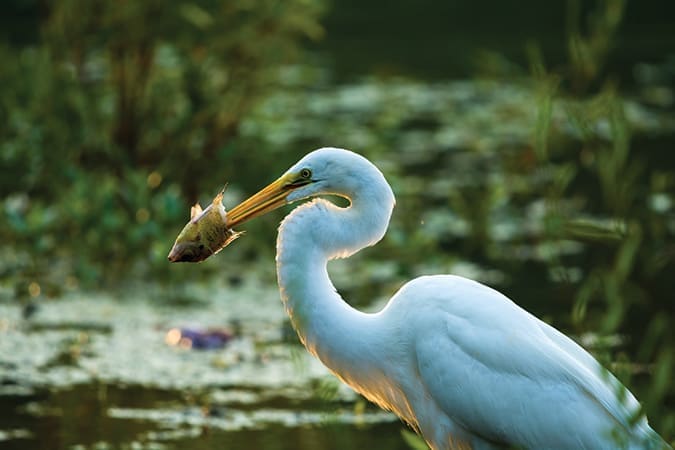
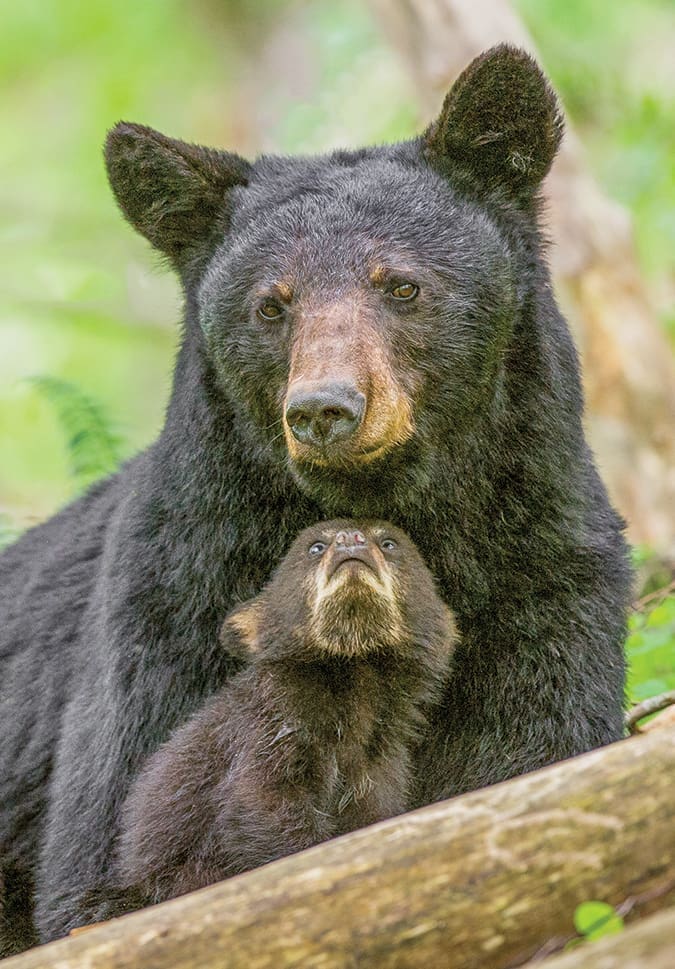
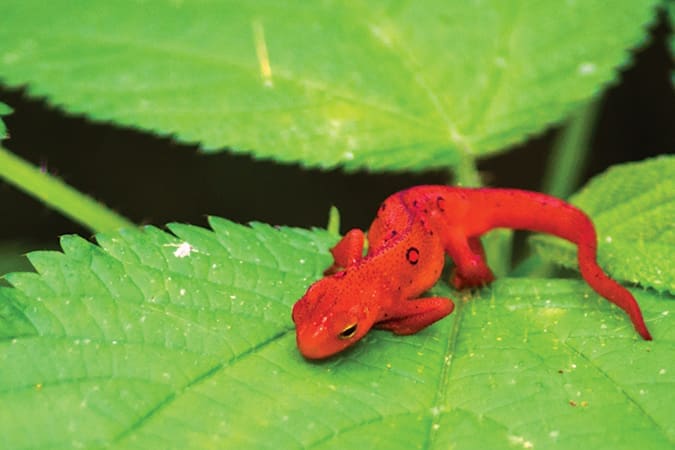
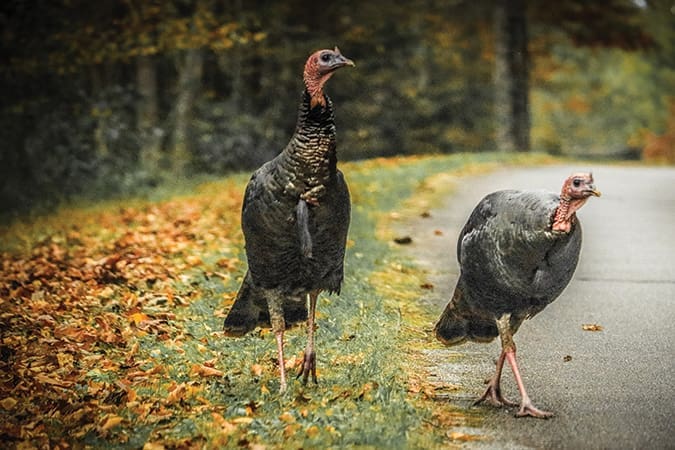
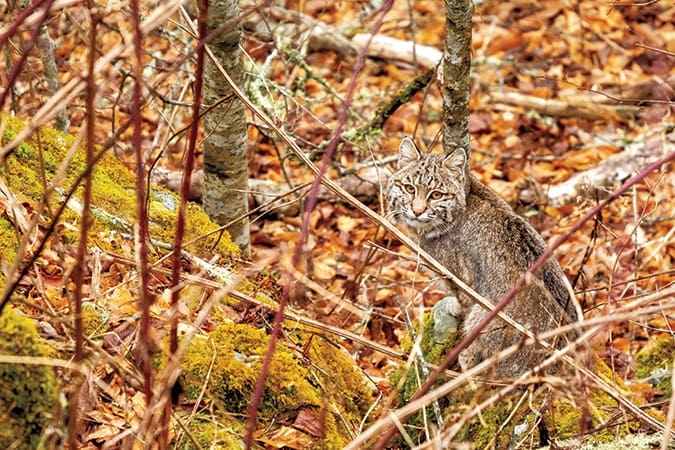
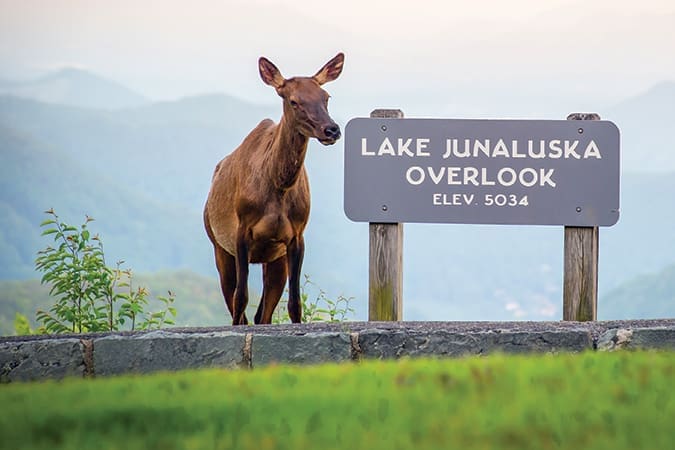
Our contributing photographers employed a combination of stealth, care and great lenses to be able to treat us to this array of mountain wildlife upon the land.A great egret catches a meal along the banks of Cherokee Lake in Rogersville, Tennessee after patiently waiting and without moving.With still-growing velvet-covered antlers, this whitetail pauses for a moment on a foggy morning in Great Smoky Mountains National Park.This image took several steps and patience, according to the photographer. She had planted the crocosmia, also known as Lucifer’s tongue, in her flower garden in Banner Elk, North Carolina, and then, during the plant’s bloom, sat for about two hours to end up with this capture.A spring black bear cub looks up at its life-sustaining protector with all the love any offspring could ever have for its mother.A juvenile eastern newt crawls along springtime green leaves at Laurel Run Park in Church Hill, Tennessee. With age, the newt’s orange color will turn to dark green.An eastern cottontail appears to pose for the camera in Washington County, Tennessee.A chipmunk stops to raid a birdfeeder in Washington County, Tennessee.These two wild turkeys were photographed near Milepost 316 of the Blue Ridge Parkway near the Linville Falls Visitor Center.The Roosevelt elk have made an amazing comeback in the Blue Ridge Mountains. They frequently wade into the creeks to cool themselves and drink their fill of water. This mature bull was photographed close to the Blue Ridge Parkway near Milepost 469 on the outskirts of Cherokee, North Carolina.A male wood duck shows off his beautiful colors on Watauga River in Carter County, Tennessee.This bluebird image was captured at Valle Crucis Park, North Carolina. He and his mate were near their nest box and flew into the weeping cherry together, where he paused on one of the branches as if posing for the photographer’s camera.A wild bobcat pauses for a brief moment along the Blue Ridge Parkway near the Devil’s Courthouse in western North Carolina before making his way down the mountain.This scarlet tanager was on a branch in Linville, North Carolina, just below Grandfather Mountain, where the photographer finds them every year, flitting from tree to tree and thus difficult to capture with a camera.
More than 70 years after she first took to the rails, the legendary Norfolk & Western Class J No. 611 continues to inspire both passengers and the volunteers who keep her running.
More than outposts for gearing up, these seven mountain communities are destinations in their own right, pairing easy access to some of the region’s best outdoor adventures with walkable downtowns, local flavor, and much more.
Long before modern healthcare reached many Appalachian communities, Granny Women became trusted healers and caregivers, delivering babies, treating illness and injury, and preserving generations of healing knowledge.
Ten years after this poll’s inaugural launch, we once again turned to our knowledgeable readers for their picks. The results? A brand-new collection of 71 exceptional Blue Ridge communities that excel at bringing big smiles to the faces of both residents and visitors.
 Skip to content