Skip to content


A cool September morning offers a chance to gain ground in the battle against persistent plant invaders.
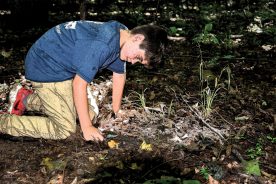
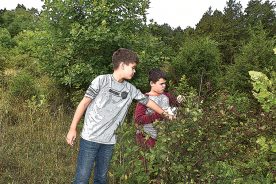
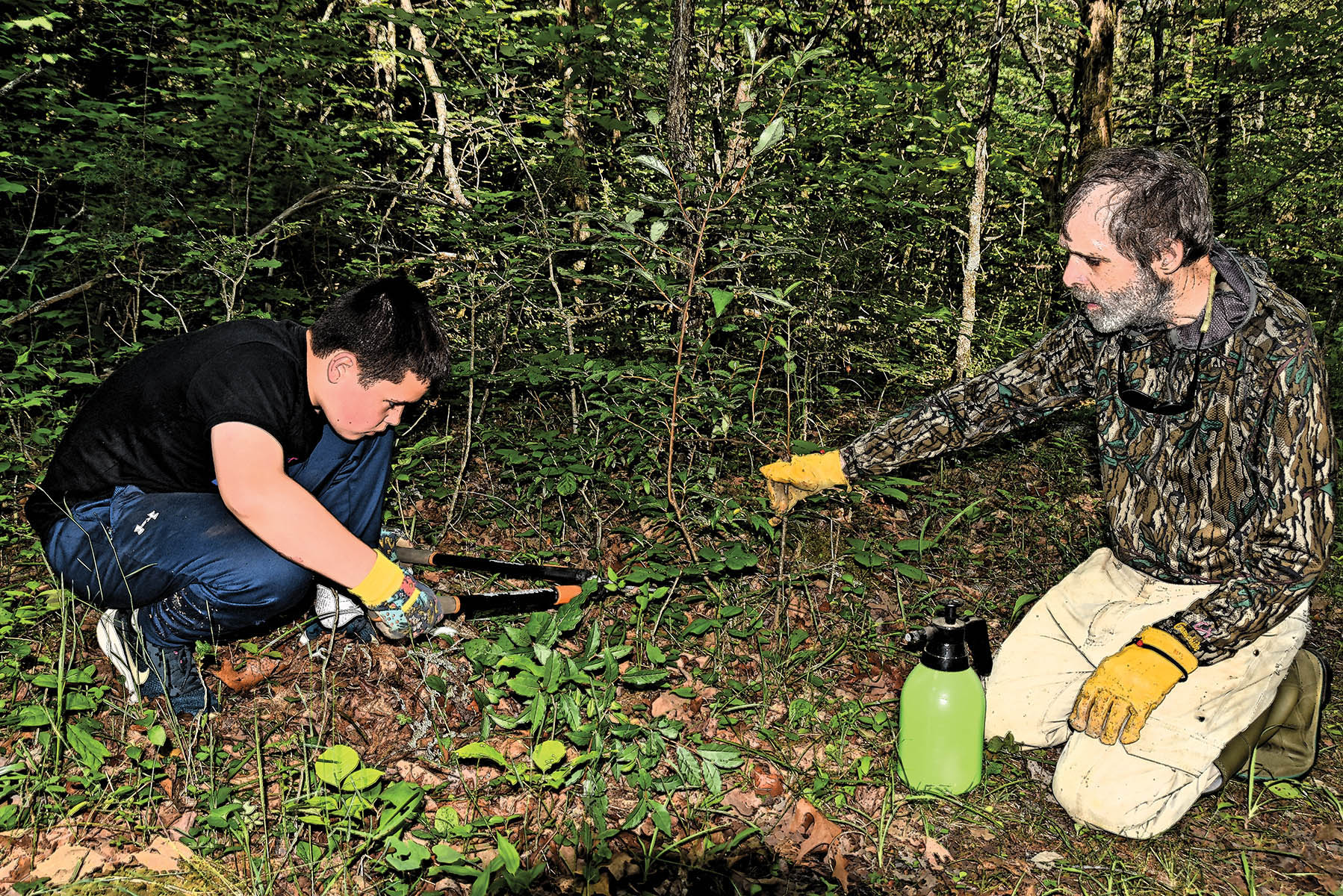
Text and photo by Bruce Ingram | Photo by Eli Reynolds / Photo Above: Sam and Granddad team up to remove invasive autumn olive. Sam and Granddad team up to remove invasive autumn olive.
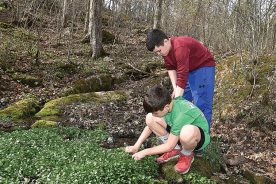
The mid-September morning is cool enough for working outside, and 13-year-old Sam and 11-year-old Eli leave their house across the hollow early enough to beat the midday heat ahead. Our task, I tell the grandsons, is to find, cut, and spray invasive plants on the two families’ 38 acres in Botetourt County, Virginia. The game plan is for Sam to do the cutting with loppers, for me to handle the herbicide spraying, and Eli, who has developed an interest in photography, to record our activities.

The grandsons know about invasive plants. Earlier, they spent nearly two months attacking two Japanese hollies that Elaine and I had foolishly planted when we moved to the land in 1989. Sam, who did most of the hacking and digging, spontaneously and triumphantly held aloft the second of the hollies after he severed the invasive’s last root still clinging to the plant’s base.
The day starts at a forsythia along the driveway, the last of five or so of the Asian shrubs that my spouse and I planted when we were ignorant about the damage that they can do to native plants. I have cut and sprayed this plant for years, and one last herbicide application should conclude the issue.
Then it’s on to a patch of autumn olive growing along our yard’s perimeter. I remind the grandsons that the best identifiers of this Asian invasive are the silvery leaf bottoms. We also need to level these plants before birds start to spread the scarlet berries that are ripening, I add.
We quickly cut and spray the first autumn olive and head for the Basketball Goal Trail, which begins appropriately enough a few yards from the backboard and intersects with our Loop Trail, which runs along the perimeter of most of the land for 0.8 miles. Partway down the trail, we pause at a pawpaw grove, knowing that the citrus-like fruits are likely ripe now. But not one of these understory trees possesses fruit. Have the bears, deer, raccoons, and squirrels consumed them already? It seems likely. I promise the boys that we will check the patch earlier next September.
We cut and spray several autumn olives along the pathway, but pause when we come to some sericea lespedeza. This Asian invasive flaunts long, green fronds, which can form massive monocultures that crowd out native plants. For future identification purposes, we cut and spray several patches, but too much of this plant dwells on our land, and we could spend all day just hammering it. I explain that today, we just need to concentrate on the autumn olive.
Next, we arrive at a small stand of immature ashes that are encircling a young oak. The grandsons know about the emerald ash borer and how it has devastated the region’s ashes. I explain that a wildlife habitat biologist has told me to cut and spray the foot-tall ashes (even though they are native to these mountains) because they will never live long enough to mature. The small oak among them will be the beneficiary, and I spray carefully so that it will not be harmed.
Then we arrive at a 10-foot-tall persimmon growing adjacent to the Loop Trail. This fruit bearer has easily grown a foot this year after some friends and I had flattened a red cedar shading it and an autumn olive patch competing for nourishment. Predictably, that first application of herbicide has not killed all the invasive, as numerous shoots indicate. I remind the boys that it often takes three or four herbicide applications to completely kill the deep-rooted scourge.
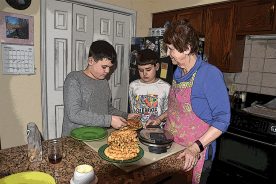
Tired and dirty but well satisfied with our labor, the three of us amble across the rest of the trail. We know Elaine is waiting for us with our reward: Golden Delicious croissants, hot from the oven.
The story above first appeared in our September/October 2026 issue.