Skip to content

A fierce streak of independence took the form, not long after the Civil War, of a set of far east Tennesseans establishing their own county.
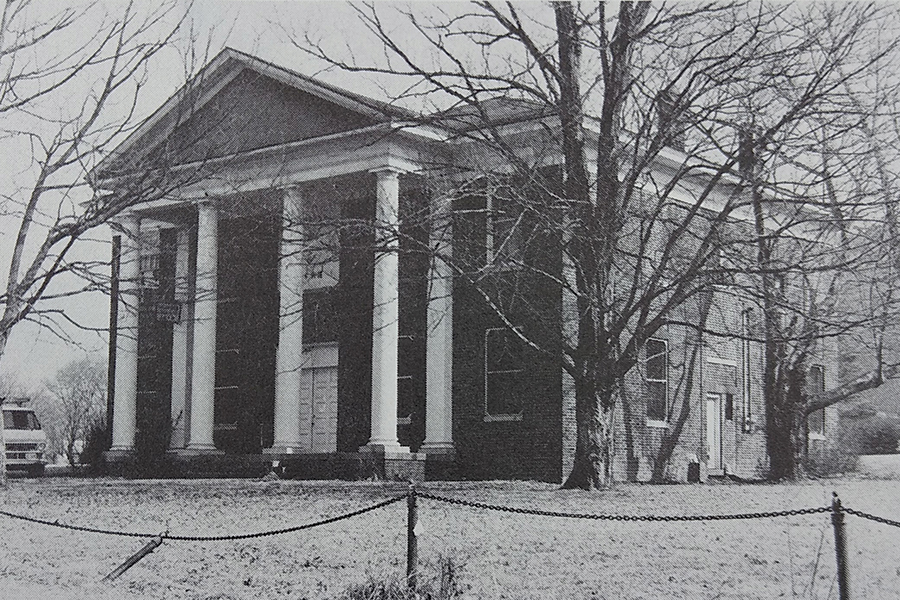
Photo Above: The Colonial Revival James County courthouse was built in 1913, still stands in Ooltewah and is on the National Register of Historic Places.
Photos Courtesy Cleveland Bradley Public Library History Branch.
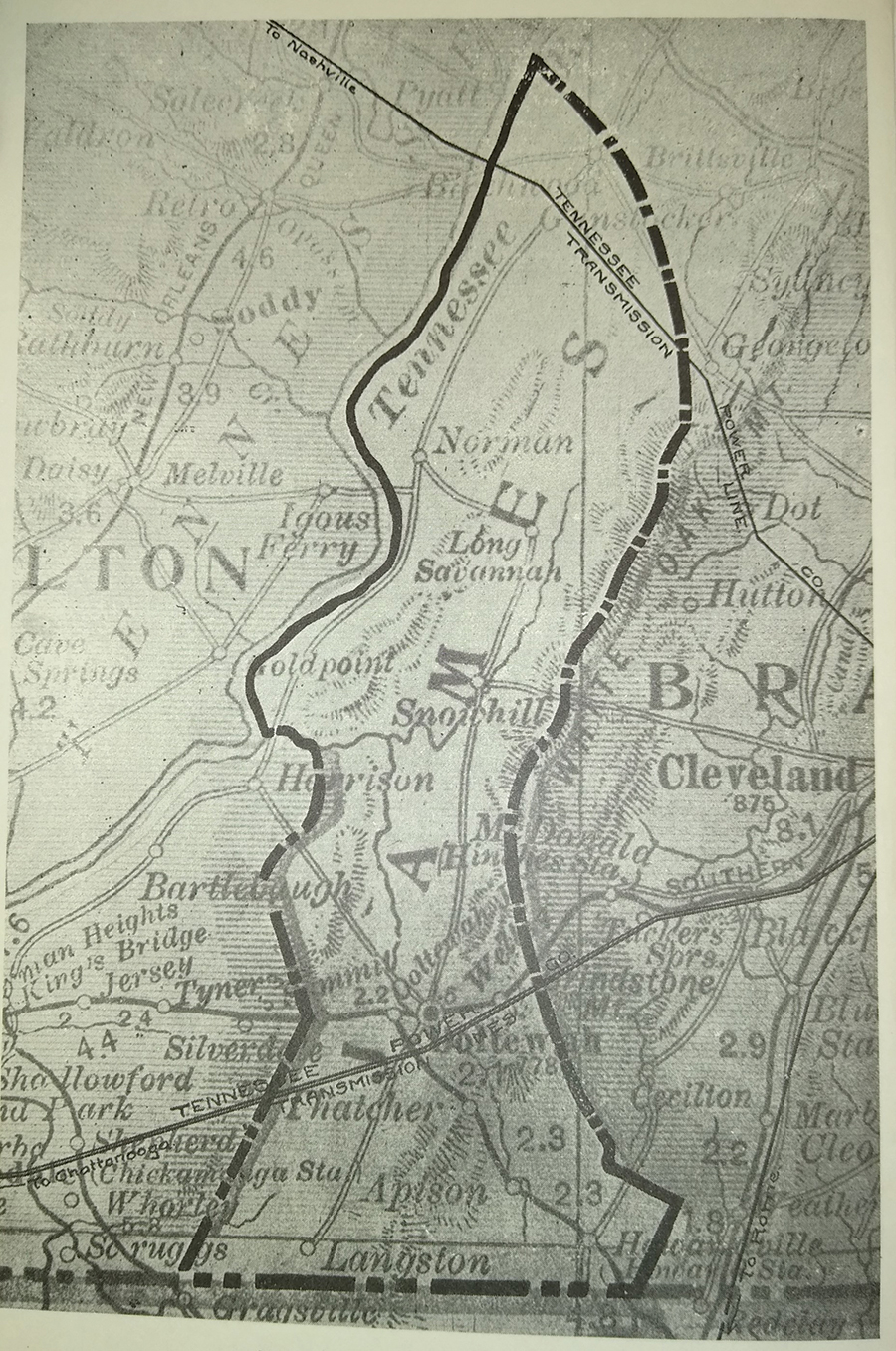
There once was a place, in a slice of the southeast corner of Tennessee, affectionately known as “Little Jim.” It was a land of fertile valleys bounded on the east by ancient mountain ridges and the waters of a magnificent river on the west. Solitary homesteads, farms and 13 sparsely populated small communities dotted the landscape. Folks went about their daily lives of raising crops and children, forging tools in the blacksmith shop and purchasing necessities at the mercantile store. Across this seemingly idyllic setting, however, the winds of change were blowing, fanning tensions that would create, inhibit and ultimately lose a county called James.

1871
Only a handful of years had passed since the Civil War, and the young country was struggling with the growing pains of reconstruction. In this slice of Appalachia at the southeast corner of Tennessee, sympathies had been divided. And now, in the aftermath in the pre-Little Jim days, another picture of political rivalry and strife was forming. The basis for this conflict, painted with a broad brush, was the rural citizens’ fierce desire for independent governance free from the urban influences of nearby Chattanooga.
These tensions simmered into bitterness when the then-Hamilton County seat was moved from the town of Harrison to the quickly growing city of Chattanooga in 1870. In response, the residents of the eastern valleys of Hamilton County petitioned the state for the permission to vote on forming their own county.
The act passed and the citizens headed to the polls to vote in 1871. At the top of the ballots was printed “New County” and “Old County.” When the votes were counted, citizens who wanted a “new” county won handily with a total of 594 to 17.
James County (named for a local Methodist minister and civic leader, Rev. Jesse James—no relation to the outlaw) was born. It was a long, slim slip of land running about 30 miles north to south and only about five miles wide, created from “fractions of Hamilton and Bradley counties.”
A mere three months after formation, despite the previously heated disapproval of moving the (then-Hamilton-) county seat from Harrison, the citizens of the newly established James County, in another politically divisive battle, voted to establish the James County seat and build a courthouse in Ooltewah, where a Southern Railway stop was located.
1890
As the seasons marched on in “Little Jim,” the daily life of an agrarian society returned and tensions abated. Folks navigated 12 miles of (substandard) roads, crossed the Tennessee River via six (known) ferries and sent their children to one of the 22 small (underfunded) schools. Twenty of these were single-room schoolhouses with a single teacher for all eight grades. And, they only “opened” four to five months of the year. But, the proponents and supporters of the new county held onto hope that the growing industrialized economy of Chattanooga would eventually spill over. It never did.
By 1890 it was clear that James County could not support itself. The tax base of this rural area was woefully insufficient despite the determination and toil of agrarian life. So, the state legislature once again stepped in by passing an act to dissolve the county 19 years after its creation “contrary to the wishes of its citizens.” This action only deepened the resolve of many officials and residents to hold onto their county.
According to local newspaper reports: “When the county registrar went to take possession of the James County records they refused him, and the officers of Hamilton and Bradley Counties were enjoined by James County citizens from taking possession of [the] county records or in any way molesting them” (Daily Journal and Journal and Tribune, April 3, 1890).
Despite the tenuous condition of financial affairs and the difficulties arising from them, the majority of citizens exercised their self-sufficiency muscles and continued the struggle.
The newspaper continues: “Though all [James County] officers were abolished [by the Legislature], the officers continue to act q1… assessing taxes, arresting criminals and making deeds and mortgages” (May 6, 1890).
Coincidentally—or perhaps not—the courthouse burned the same year under suspicious but unproved circumstances, destroying most of the records.
With a level of tenacity honed by the demands of rural life, James County’s farmers, elected officials, merchants, educators and others continued the battle. This time, it was ultimately directed at outside “interference” and the weapon was a lawsuit challenging the constitutionality of the state dissolving a county.
As reported, “If the judge decides against the county the leading citizens declare they will peacefully [accede] and organize a little State of their own” (Critic Record, May 6, 1890).
Giving up on James County was simply not an option.
The 1890 judicial decision was rendered in favor of “Little Jim,” and the county remained intact—at least for a while. A new courthouse was to be constructed and the political machinations continued for another 29 years. During that time, very few of the daily struggles changed for the population in the area; roads deteriorated, schools struggled and access to the amenities of urban life remained out of reach.
1920
Then, the fate of James County was again called into question in 1919.
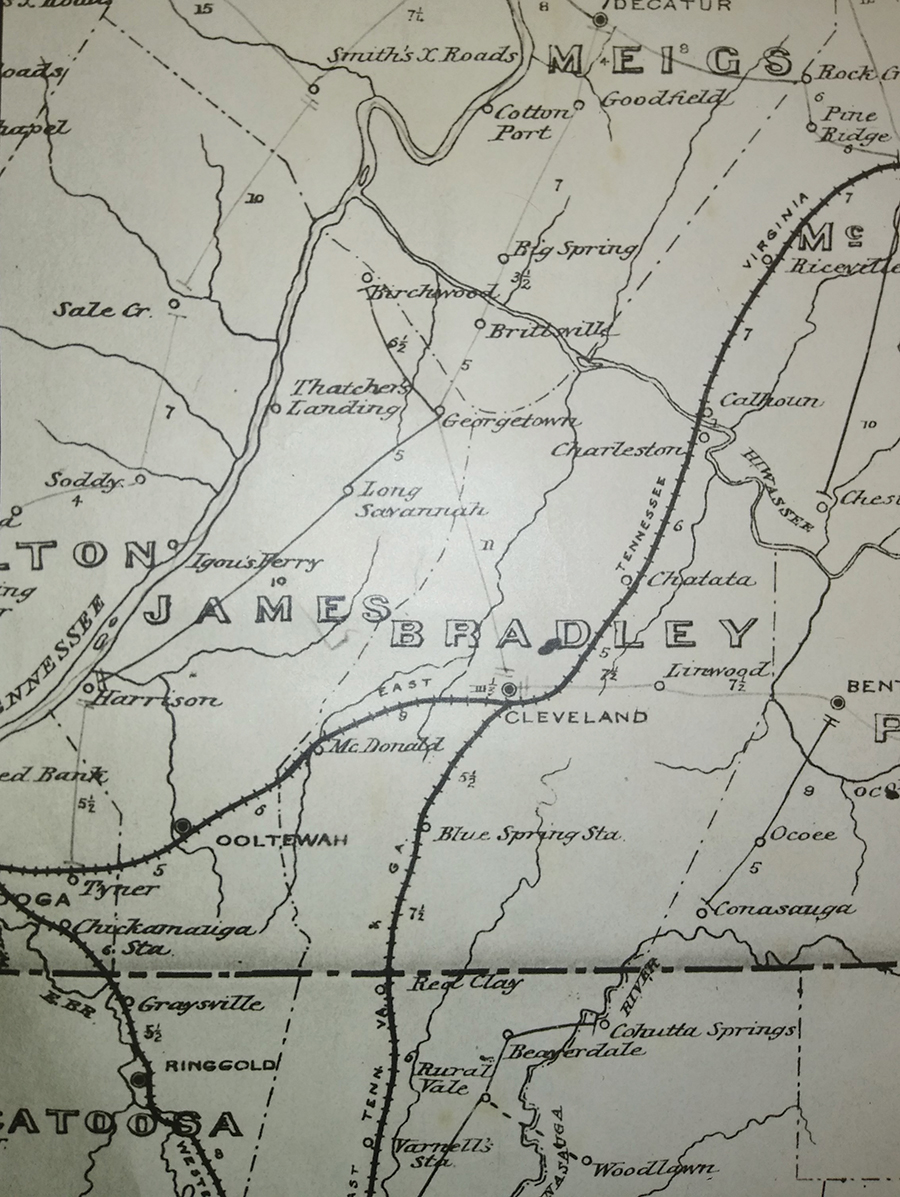
For the third time, the Tennessee Legislature passed an act regarding this narrow strip of land in the southeastern corner of the state. Based on the same reasons from 1890 that “she could not maintain herself,” James County was once again legislatively dissolved pending a local referendum. The questions before a newer generation of voters would be: Do we once again become part of Hamilton (and possibly Bradley) county? Or, do we keep James County? The future of “Little Jim” would once again be decided by the residents.
With a reported vote total of 953 to 78, the answer was clear: James County disappeared from the map in 1920.
Over 100 years have passed since the winds of change blew in a different direction across these valleys. Today, the old town of Harrison is submerged in the lake behind TVA’s Chickamauga Dam. Original home, school and road foundations are visible a few times during the year when the water levels are low. The (third) county courthouse was built in 1913, still stands as an impressive Colonial Revival structure in Ooltewah and is listed on the National Register of Historic Places. And, Hamilton County is now the caretaker of what few records remain from the lost county of James.
Read more in Polly Donnelly’s book, “James County: A Lost County of Tennessee” (1983).
The story above first appeared in our May / June 2023 issue.